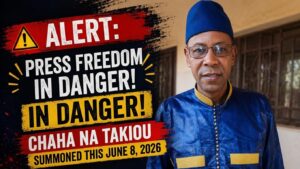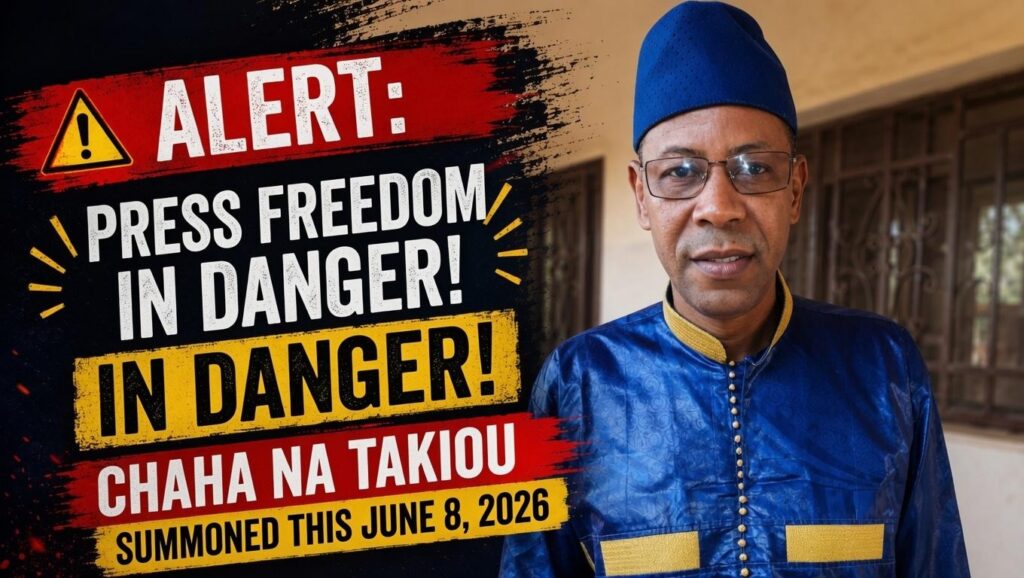
The director of the weekly publication Le 22 Septembre, Chahana Takiou, has been summoned to appear before the prosecutor of the cybercrime unit in Bamako this Monday, June 8, 2026. This legal move follows his public critical assessments regarding the ruling military authorities. This event serves as a stark reminder of the systematic repression and judicial harassment currently targeting dissenting voices and journalists who refuse to align with the official vision of the transition government.
A high-stakes summons at the cybercrime unit
The news has sent shockwaves through the Malian media landscape. Chahana Takiou, a respected figure in national journalism, must present himself to investigators specialized in cybercrime. For his peers, the underlying motive is clear: his recent public statements where he provided a candid analysis of the political, security, and economic management of the military transition. This is a significant development in Mali latest news regarding the treatment of the press.
In Mali, the cybercrime unit has increasingly become the preferred instrument of power to neutralize criticism. Under the guise of monitoring social media misconduct, the justice system frequently uses it to intimidate media professionals. For Chahana Takiou, the rigorous exercise of his profession has now turned into a high-risk judicial encounter.
Media independence sacrificed for a single narrative
Since the military transition took hold, the public space in Mali has continued to shrink. Press freedom, once a point of pride for Malian democracy, is becoming a distant memory. Information professionals now operate in an environment defined by fear and self-censorship. Reporting neutrally and independently has become an act of bravery, often treated as a major offense by those in power.
The authorities demand total adherence to their narrative. Media outlets that refuse to broadcast official propaganda or attempt to raise legitimate questions about the country’s future are immediately targeted. Financial and moral pressure, combined with administrative harassment, are now part of the daily reality for a suffocated Malian press. These Bamako current affairs highlight a worrying trend for regional stability.
A strategy of intimidation and disappearances
The pressure on Chahana Takiou is not an isolated incident but part of a global strategy of repression. Anyone daring to express a divergent opinion—whether they are politicians, civil society leaders, or human rights defenders—faces severe consequences. This is a central theme in Mali politics today.
More concerning is the escalation of methods used by the authorities. Beyond formal judicial summons, the country is witnessing an increase in kidnappings and forced disappearances. Citizens are being detained by unidentified armed men, often linked to intelligence services, and held in secret for weeks. This climate of fear is designed to paralyze any form of protest and impose a heavy silence across the territory.
Journalistic solidarity in a fragile environment
In response to the summons of the director of Le 22 Septembre, professional media organizations in Mali are organizing in solidarity. Calls for vigilance and support were issued immediately following the announcement. However, this solidarity faces the sheer power of a militarized state apparatus where fundamental judicial guarantees are increasingly ignored.
Journalist unions continue to argue that constructive criticism is essential for the nation’s survival, particularly during a crisis. Yet, for the current leadership in Bamako, any critique is viewed as a betrayal or an attempt at destabilization, effectively closing the door on pluralistic democratic debate.
The summons of Chahana Takiou on June 8, 2026, marks a concerning new phase in the authoritarian direction of the transition. By targeting a journalist of his stature, the authorities are sending a clear message: no discordant voices will be tolerated. While Mali faces immense security news challenges and humanitarian hurdles, silencing those who seek the truth will not resolve the nation’s deep-seated crises.