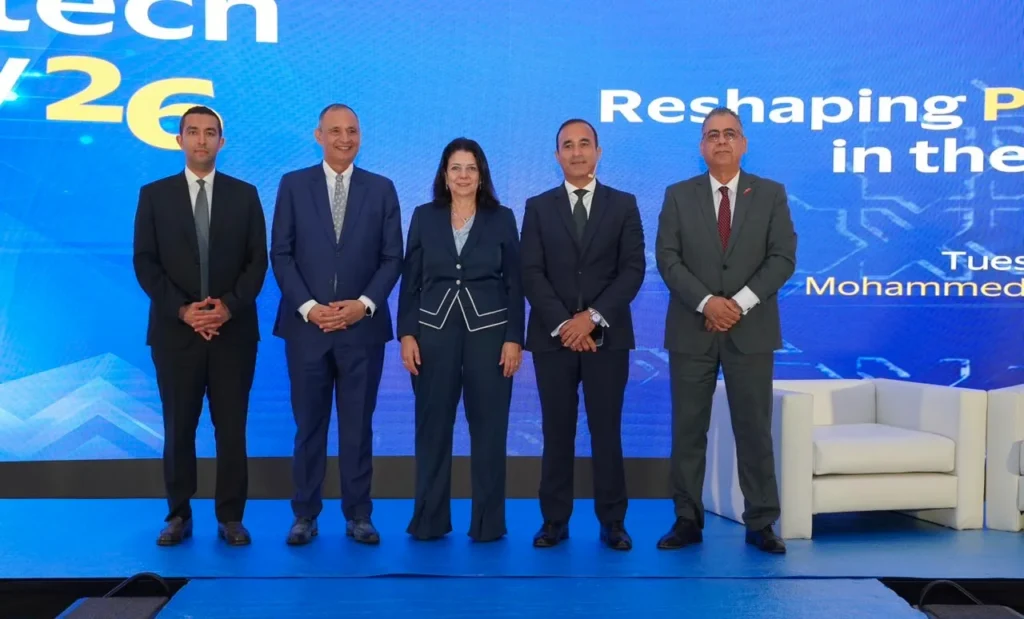
The Mohammed VI Tower in Rabat recently hosted the third edition of the “Visa Fintech Day,” a landmark event that gathered the primary architects of the Morocco financial ecosystem. The summit focused on the critical pillars of innovation, electronic payment systems, and the expansion of financial inclusion across the kingdom.
Organized by Visa in coordination with the Morocco Fintech Center (MFC), the Digital Development Agency (ADD), and Technopark, the gathering united government representatives, financial regulators, banking executives, and tech entrepreneurs. This year’s discussions placed a significant emphasis on the role of artificial intelligence (AI) in reshaping modern financial services.
Amal El Fallah Seghrouchni, the Minister Delegate for Digital Transition and Administration Reform, inaugurated the proceedings by detailing how AI can accelerate an inclusive digital shift. Furthermore, Sami Romdhane, Country Manager for Visa in Morocco, engaged in a strategic dialogue with Ryad Mezzour, the Minister of Industry and Commerce, regarding the broader economic impact of digital transformation.
Participants highlighted that digital technologies are becoming indispensable for modernizing the national economy, particularly for small and medium-sized enterprises. The adoption of digital payments, advanced data analytics, and AI-driven tools are now viewed as essential drivers for maintaining industrial competitiveness and fostering sustainable development.
Morocco leverages AI for financial evolution
A major highlight of the event was the introduction of a new white paper dedicated to the Morocco fintech landscape. Co-authored by Visa and the Morocco Fintech Center with input from various institutional partners, this report is designed to be a definitive guide for investors, industry professionals, and public policy creators.
The document outlines several strategic paths to boost financial innovation. These include the implementation of regulatory “sandboxes” to safely pilot new services, the standardization of technical integrations among market players, and the enhancement of funding pipelines for early-stage startups. Additionally, it advocates for the deeper integration of AI to broaden financial access for underserved populations.
The summit also showcased the Visa Africa Fintech Accelerator. This initiative is a component of a larger commitment to invest $1 billion across Africa by 2027, providing startups with an intensive 12-week mentorship and growth program.
Strengthening ties between startups and regulators
Since its inception, the accelerator has empowered 104 Africa-based fintechs across six successive groups, reaching a combined market valuation of over $1.4 billion. To date, ten Morocco startups have successfully navigated the program, gaining access to Visa’s global infrastructure and vital investment opportunities.
During this third edition, two Morocco startups from the most recent cohort were spotlighted for their work. Both companies are developing AI-centric solutions and data-driven platforms to solve fundamental hurdles within the financial sector.
According to Sami Romdhane, these advancements reflect a maturing national market. He observed that Morocco fintechs are increasingly moving away from disruptive models in favor of collaborative partnerships with established banks and regulatory authorities. Visa intends to continue supporting this trend by offering its technological tools and international expertise to foster financial innovation and wider economic participation throughout Morocco.