The Malian government has set a 2 billion FCFA bounty for the capture of Iyad Ag Ghaly, the notorious leader of the Jama’at Nusrat al-Islam wal-Muslimin (JNIM), and several of his associates. This decisive move follows coordinated attacks in late April by jihadist forces and separatists from the Front de Libération de l’Azawad (FLA) that resulted in the death of Defense Minister Sadio Camara.
In an official statement broadcast on national television, the Ministry of Security and Civil Protection, led by General Daoud Aly Mouhammedine, called on citizens to assist security forces in locating seven individuals deemed threats to national stability. The announcement underscores the government’s intensified efforts to dismantle jihadist networks operating across the Sahel.
Breakdown of the bounties offered by Malian authorities
The rewards reflect the severity of the crimes attributed to these individuals, with the following amounts assigned:
- 2 billion FCFA for Iyad Ag Ghaly, head of JNIM (also known as the Group for the Support of Islam and Muslims, GSIM).
- 1.5 billion FCFA each for Amadou Koufa, leader of the Macina katiba, and Abdoulaye Mohamed, alias Habib, also of the Macina katiba.
- 1 billion FCFA for Algabas Ag Intallah, a key political and military figure of the FLA.
- 500 million FCFA each for three FLA commanders: Ghita, Bilal Chérif, and Abderrahmane Al Banna.
These figures highlight the Malian government’s determination to dismantle the leadership structures of both JNIM and the FLA, which have repeatedly targeted state institutions and civilian infrastructure.
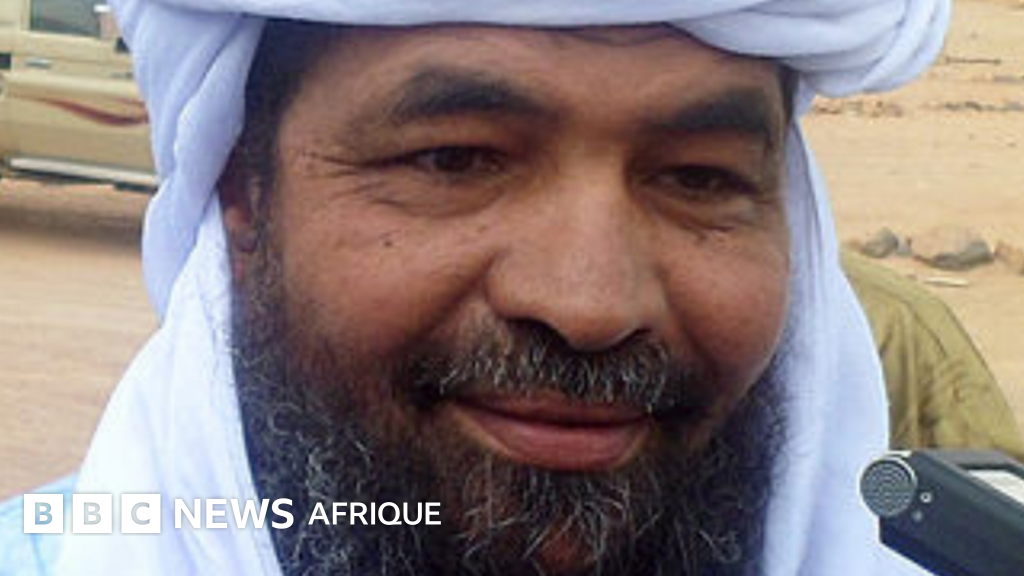
Who is Iyad Ag Ghaly?
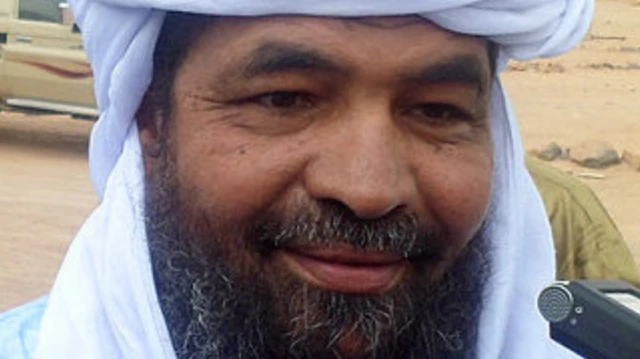
Born in 1958 in Boghassa, in the Kidal region, Iyad Ag Ghaly is a Tuareg warlord and jihadist leader whose influence has shaped decades of conflict in northern Mali. His trajectory reflects a shift from nationalist rebellion to global jihadism.
In the 1970s, he fled to Libya, where he joined Colonel Muammar Gaddafi’s forces—alongside many young Tuaregs—fighting in Lebanon and Chad. Upon returning to Mali in the early 1990s, he founded the Mouvement Populaire de Libération de l’Azawad (MPLA), launching a Tuareg rebellion against the Malian state.
After signing a peace agreement in 1992, Ag Ghaly’s ambitions turned toward Islamist extremism. By 2007, he had aligned with the Groupe Salafiste pour la Prédication et le Combat (GSPC), a faction tied to Al-Qaeda, which later became AQMI. In 2012, he established Ansar Dine, merging with AQMI to wage war across northern Mali.
In 2017, he consolidated his power by forming the Group for the Support of Islam and Muslims (JNIM), uniting several Malian jihadist factions under the banner of AQMI and Al-Qaeda. Today, JNIM is one of the most active and dangerous armed groups in the Sahel, operating across Mali, Niger, and Burkina Faso.
Analysts describe Ag Ghaly as a strategic mastermind who has evolved beyond direct battlefield confrontation. Instead, he employs a war of attrition, targeting civilian life through economic blockades, road closures, and sabotage of critical infrastructure. The goal: to strangle Bamako’s access to food, fuel, and electricity, destabilizing the government from within.
Analysts from the Timbuktu Institute warn that Ag Ghaly’s ultimate aim is not to govern Mali but to destabilize the regime and force its collapse. His influence extends beyond military operations—it now threatens the daily survival of millions of Malians.
For years, Ag Ghaly has been the subject of an international arrest warrant issued by the International Criminal Court (ICC), which accuses him of crimes against humanity and war crimes committed between 2012 and 2013. Despite this, he remains at large, orchestrating attacks and evading capture.