allegations of war crimes by malian forces and russian-backed Wagner group
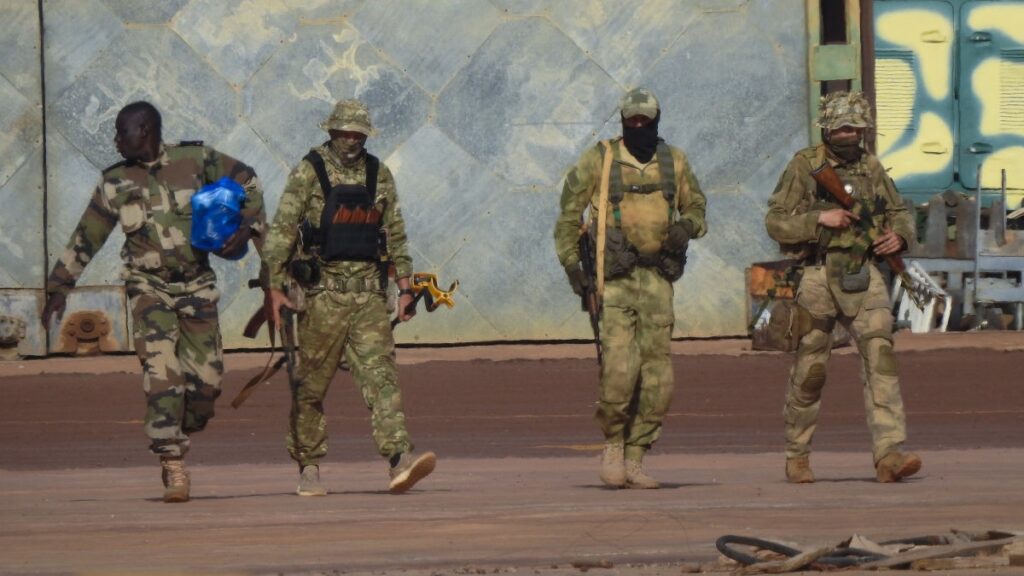
Since early 2025, the Malian army, in collaboration with the Russian Wagner group, has been implicated in a series of executions and forced disappearances targeting civilians from the Fulani ethnic group. These alleged war crimes have raised international concern, with human rights organizations calling for urgent investigations and accountability.
key findings and victim testimonies
Human rights watch has documented at least 12 summary executions and the forced disappearance of 81 individuals since January 2025. Victims, primarily Fulani men, were accused of collaborating with Islamist armed groups, including the Group for the Support of Islam and Muslims (GSIM), linked to Al-Qaeda. Witnesses report that both Malian soldiers and Wagner fighters targeted Fulani civilians indiscriminately.
In the village of Sebabougou (Kayes region), credible reports indicate that 65 Fulani herders and livestock traders were executed after being detained by Malian forces and Wagner fighters. Their bodies were later discovered near a military camp in Kwala. Relatives searching for the missing were met with no information from authorities.
In Belidanédji (Ségou region), six Fulani civilians were executed on March 30 as they fled or hid from soldiers. A witness recounted, “They shot my friend in the chest right in front of me. When the soldiers left, we recovered five bodies and evacuated one injured man, who later died at the hospital.”
international calls for action
The African Union (AU) is urged to intensify efforts to protect civilians in Mali, including supporting investigations into abuses and pressing for fair prosecutions. The AU has also been called upon to address the vacuum in accountability following Mali’s withdrawal from the ECOWAS regional bloc in January 2025, which removed the possibility of regional legal recourse for victims.
Human rights watch has emphasized that junior military leaders in Mali and Russian officials could be held accountable for crimes committed by their forces. The organization stressed, “Senior Malian and Russian officials should be aware that they may be held responsible for crimes committed by their soldiers and fighters.”
historical context and ongoing conflict
The conflict in Mali, which began in 2012, has seen successive governments battle Islamist armed groups like the GSIM and the Islamic State in the Sahel Province. The junta that took power in 2021 has relied heavily on the Wagner group for counterinsurgency operations, despite officially denying their presence. Russian officials, however, have acknowledged Wagner’s role in providing “security services” to the Malian government.
The withdrawal of the UN peacekeeping mission in 2023 and Mali’s exit from ECOWAS have further weakened civilian protections, leaving communities vulnerable to abuses by all armed factions, including Islamist groups and separatist movements.
legal framework and accountability
All parties to the conflict in Mali are bound by international humanitarian law, including the Geneva Conventions and customary laws of war. These frameworks prohibit murder, torture, and cruel treatment of detainees. Forced disappearances constitute a violation of the International Convention for the Protection of All Persons from Enforced Disappearance, to which Mali is a signatory.
The International Criminal Court (ICC) has been investigating alleged war crimes in Mali since 2012. Human rights advocates warn that perpetrators—both local and foreign—could face future prosecutions if accountability is not addressed domestically.
For a detailed account of the findings, continue reading.