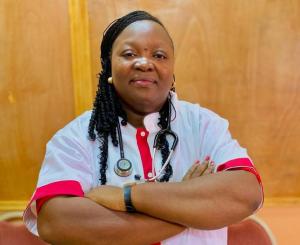
Dr. Gloria Damoaliga Berges: a dedicated advocate for sickle cell patients in Burkina Faso
Ouagadougou, Burkina Faso — With an estimated prevalence of 4.63% and nearly 2% of newborns affected by the severe SS form, sickle cell disease remains a pressing public health challenge in Burkina Faso. This hereditary condition demands a coordinated, multisectoral response involving all segments of society.
Dr. Gloria Damoaliga Berges, Vice President of the CID/B (Sickle Cell Initiative Center in Burkina Faso), has been a leading voice in the fight against sickle cell disease for over a decade. Her work spans advocacy, healthcare improvement, and community mobilization.
Why this lifelong commitment?
Dr. Berges reflects on her journey, sharing the milestones, challenges, and future goals in the battle against sickle cell disease.
A personal drive to heal
From the early days of her medical career, Dr. Berges encountered patients—especially children and young adults—suffering from the excruciating pain of sickle cell disease. Their struggles left a deep impression on her, fueling a determination to make a difference. In 2015, she took a pivotal step by helping establish a dedicated care unit within her hospital, with support from the Sickle Cell Initiative Center. This marked the beginning of her intensified commitment.
Why are children still born with sickle cell disease?
Sickle cell disease is inherited. When both parents carry the hemoglobin S gene, each pregnancy carries a 25% chance of producing a child with the severe form of the disease. Many couples, however, remain unaware of their genetic status before starting a family, often neglecting premarital or prenatal hemoglobin electrophoresis tests. Raising awareness about these critical screenings is essential to reduce the number of affected births.
Community engagement and education
One of the biggest hurdles in the fight against sickle cell disease is the lack of awareness within communities. To address this, Dr. Berges has led numerous sensitization campaigns and organized screening drives. Between January and July 2024, she coordinated a major initiative that screened nearly 15,000 children across five regions. These efforts not only improve early detection but also help dismantle the stigma often associated with the disease.
Building healthcare capacity and support systems
Dr. Berges has played a key role in implementing neonatal screening programs and training healthcare professionals in managing sickle cell-related pain. She also contributed to the launch of Drépa Minute, a free helpline (80001350) providing information in local languages. These initiatives are designed to enhance disease awareness, improve care quality, support families, and strengthen social mobilization.
The CID/B works closely with Burkina Faso’s Ministry of Health, particularly the Division for the Prevention and Control of Non-Communicable Diseases (DPCM), with funding from partners like the French Development Agency, the Pierre Fabre Foundation, and the Principality of Monaco. Together, they provide comprehensive care to sickle cell patients, including medical treatment, psychosocial support, and socioeconomic assistance.
Comprehensive support for patients
Through its 11 regional branches, CID/B offers a range of services: referrals to specialized care, therapeutic education groups, peer support sessions, and psychological coaching. The organization also promotes income-generating activities to help patients achieve financial independence. By collaborating with health mutuals, CID/B advocates for universal health coverage, ensuring better access to care for all.
Progress and ongoing challenges
Thanks to collective efforts, sickle cell disease has gained visibility in Burkina Faso’s public health policies. The Ministry of Health, through the DPCM, has developed a dedicated strategic plan and is mobilizing resources for its implementation.
Awareness has grown significantly among both the general public and healthcare providers. More professionals are being trained, and diagnostic and screening services have improved. The perception of the disease has shifted: once shrouded in myths and misconceptions, sickle cell disease is now understood as a manageable condition. Many patients lead fulfilling lives, pursuing careers and families with proper care and support.
Remaining obstacles
Despite progress, critical challenges persist. Access to early screening and diagnosis in rural areas remains limited, as does the availability of essential medications like hydroxyurea, pain relievers, and antibiotics. Vaccination against preventable diseases and transfusion support are also areas needing improvement. Strengthening coordinated action between the Ministry of Health and its partners is vital to address these gaps.
Dr. Berges emphasizes the urgency of amplifying efforts: “The silent cries of sickle cell patients must be heard. It’s time to invest in early neonatal screening, improve care, and ensure no patient is left behind.”
Her unwavering dedication underscores that the fight against sickle cell disease is not just about health—it’s about restoring dignity and hope to thousands of lives.