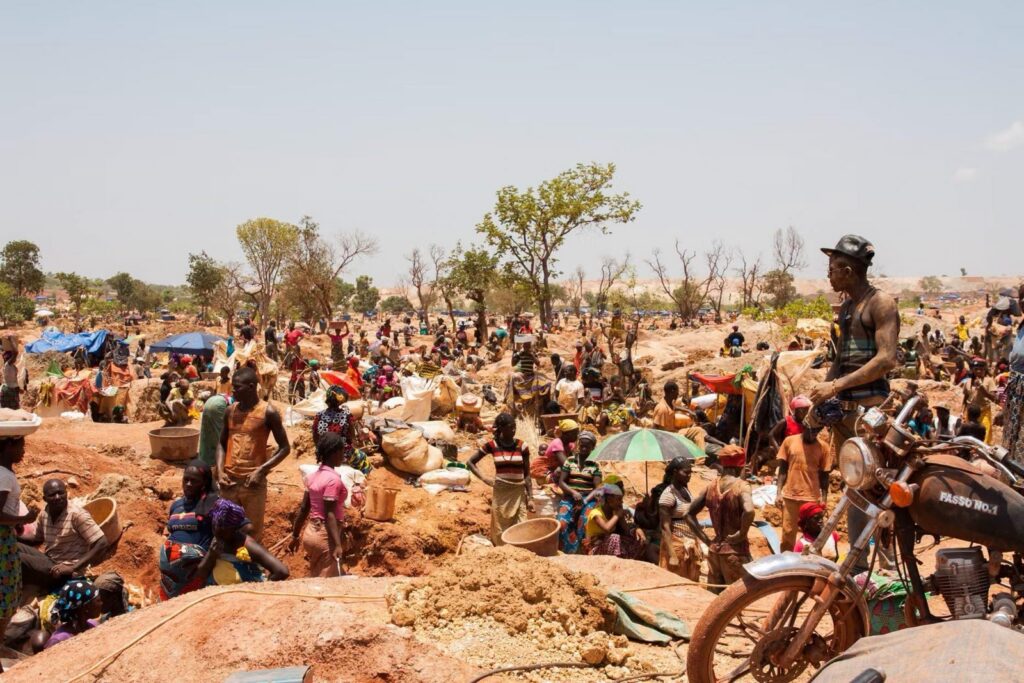
Across West Africa, illegal gold mining operations do not respect national boundaries yet the environmental and social consequences are often felt far from where the extraction occurs. When Burkinabè nationals cross into neighboring countries to engage in clandestine mining, the ripple effects extend beyond borders, leaving local populations to grapple with irreversible damage to their land, water sources, and livelihoods. For these communities, the question is no longer about where the miners come from, but who will be left to clean up the mess.
The human and environmental toll of cross-border gold extraction
The environmental destruction wrought by illegal gold mining is stark and immediate. Soils stripped of vegetation, rivers choked with mercury and sediment, and vast deforested areas are among the most visible scars. But the damage runs deeper: agricultural lands become barren, water supplies become unsafe, and hazardous pits left unattended pose fatal risks to children and livestock. For rural communities that depend on the land for survival, these consequences are not theoretical they are daily realities.
Communities in countries like Benin, Côte d’Ivoire, and Ghana are increasingly bearing the burden of these activities when Burkinabè miners operate without legal authorization. While some may view gold extraction as a means of survival, the unregulated nature of these operations means there are no environmental safeguards, no safety standards, and no accountability for the harm inflicted on local ecosystems and people.
A ripple effect on local economies
The impact extends beyond the environment into the economic fabric of these regions. When fertile land is destroyed or water sources are contaminated, farmers lose their ability to grow crops, fishermen see their catches dwindle, and entire villages face food insecurity. The short-term financial gains of illegal miners rarely compensate for the long-term losses suffered by host communities, many of which are already vulnerable.
In some cases, the arrival of illegal miners has led to violent clashes with local populations over access to land and water. The strain on resources fuels social unrest, displaces families, and erodes trust between communities and governments struggling to enforce environmental laws.
Why cross-border mining challenges regional stability
The issue of illegal gold mining is not confined to one country’s borders. It is a regional challenge that demands coordinated solutions. When Burkinabè nationals are expelled from neighboring countries for illegal mining, the response from their home government often focuses on repatriation without addressing the root cause of the problem: unchecked mining activities that disregard both national and international environmental laws.
This approach fails to acknowledge that the environmental degradation occurring abroad could one day occur within Burkina Faso itself. If illegal mining practices continue unchecked in neighboring states, it sets a dangerous precedent one that suggests environmental laws can be circumvented if the perpetrators can simply move to a new location after facing consequences. This mentality undermines regional efforts to protect shared ecosystems and promotes a harmful cycle of exploitation.
The double standard in environmental responsibility
There is a growing disconnect between how neighboring countries perceive their own environmental responsibilities and how they enforce them across borders. Governments have every right to protect their natural resources and uphold their laws, yet this stance is often met with resistance when applied to their own citizens operating abroad. The message sent is clear: some nations are more equal than others when it comes to environmental accountability.
This double standard is unsustainable. The environment does not recognize borders, and neither should the principles of sustainability and stewardship. If Burkina Faso expects other countries to respect its concerns about its citizens’ actions, it must also uphold the same standards for how its own land and resources are treated by outsiders.
A call for accountability and regional cooperation
Accountability must be the cornerstone of any solution. When Burkinabè citizens are found culpable of illegal mining abroad, their actions should be met with consequences not just expulsion, but measures that prevent recurrence. This could include fines, legal action, and educational campaigns that highlight the broader impacts of their activities. Repatriation without reflection does little to deter future violations.
At the same time, Burkina Faso must take proactive steps to curb illegal mining within its own borders. Stronger enforcement of environmental laws, support for legal artisanal mining cooperatives, and incentives for sustainable economic alternatives can reduce the push factors that drive citizens to exploit neighboring countries. Additionally, regional cooperation on environmental monitoring and cross-border law enforcement could create a unified front against illegal practices.
The message to Burkinabè miners and to all who might consider crossing borders to extract resources should be unequivocal: the earth’s resources are finite, and their exploitation comes with consequences. Whether the damage occurs in Benin, Côte d’Ivoire, or Burkina Faso itself, the environmental reckoning will eventually arrive. The only question is whether societies will act now to prevent it or wait until their own lands bear the scars of unchecked greed.
Protecting one nation’s land is protecting all of them
The principle is simple yet profound: the environment does not belong to any single nation, and its protection must be a shared responsibility. When Burkinabè miners destroy lands in neighboring countries, they are not just harming foreign soil they are diminishing the regional ecological balance that sustains all West African communities. The same winds that carry pollution across borders also carry the long-term costs of environmental neglect.
If Burkina Faso wishes to advocate for its citizens abroad, it must also advocate for the principle that no nation should serve as a sacrifice zone for illegal resource extraction. Regional solidarity in environmental protection is not optional; it is essential for a sustainable future. Until all nations uphold this principle equally, the cycle of exploitation and environmental degradation will continue leaving communities everywhere to pay the price.
By Rose Njoya — Journalist





