The Grand Exercise 2026 (GEX 2026) is more than a military drill—it’s a calculated move to redraw the security map of West Africa. As France adapts to shifting geopolitical sands, the multinational exercise brings together Côte d’Ivoire, Gabon, and Paris in a bold demonstration of interoperability. But the real impact? It will ripple through local economies, governance, and daily life for millions.
From training drills to economic aftershocks: What GEX 2026 means for West African citizens
When soldiers train, economies react. GEX 2026 isn’t just about armored convoys or fighter jets—it’s about securing the Gulf of Guinea, a corridor that carries $100 billion in annual trade. Ports in Abidjan, Libreville, and Dakar depend on this stability. Disruptions here mean delayed shipments of cocoa, oil, and manufactured goods. For the region’s 300 million people, disrupted trade means job losses, inflation spikes, and delayed development projects.
The exercise spans two high-stakes phases: FANGHA 2026 in Côte d’Ivoire (November 7–14) and WAIYA 2026 in Gabon (November 24–29). The timing isn’t coincidental—it coincides with peak harvest and export seasons. A single-day delay in port operations can ripple across supply chains, affecting farmers in the Sahel and manufacturers in Europe.
- Cocoa farmers in Côte d’Ivoire: delayed exports could mean lost income during the main harvest, directly impacting 600,000 smallholder families.
- Fisheries in Gabon: piracy and illegal fishing already cost the country $200 million annually—GEX 2026’s maritime drills aim to curb this, protecting the livelihoods of 50,000 coastal workers.
- Transport corridors: the Dakar-Abidjan corridor is the backbone of West African trade; any security breach could paralyze logistics for months.
Businesses on the front line: How GEX 2026 impacts regional investors and logistics
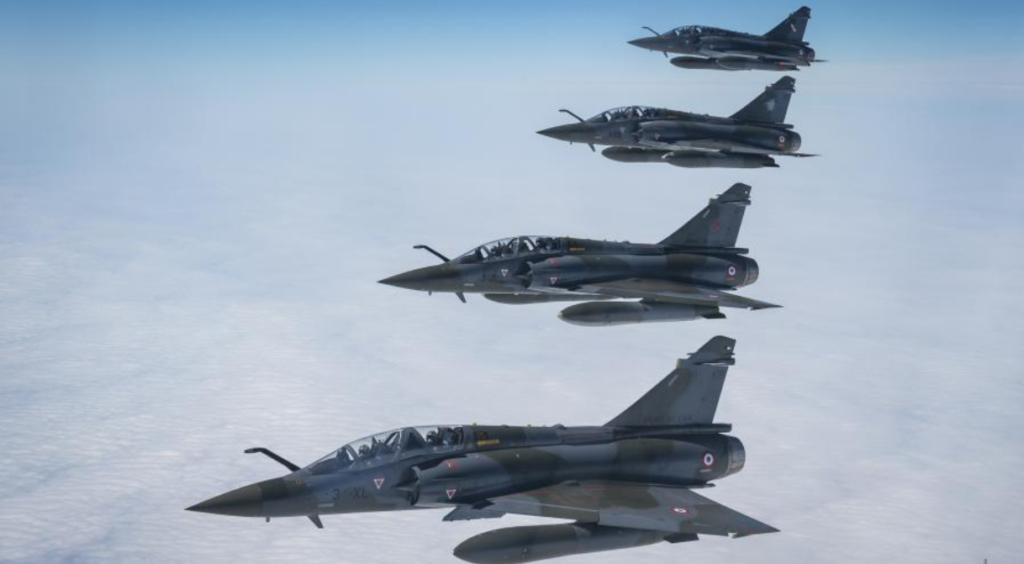
The Gulf of Guinea is the economic heartbeat of West Africa. Oil rigs off Gabon, cocoa plantations in Côte d’Ivoire, and gold mines in Burkina Faso all depend on stable maritime routes. When GEX 2026 tests France’s Mistral amphibious ship and Mirage 2000 jets in amphibious landings and air support drills, it’s sending a message: security is a cost center—and a growth enabler.
For regional businesses, the stakes are clear:
- Insurance premiums: companies operating in high-risk zones see rates drop when military cooperation improves—saving logistics firms millions annually.
- Foreign direct investment: countries with strong maritime security attract more FDI. Gabon saw a 12% rise in port investments after increasing naval patrols in 2024.
- Supply chain resilience: the exercise tests real-time coordination between Ivory Coast’s air force, Gabon’s navy, and France’s rapid-response teams—critical for just-in-time logistics.
But there’s a flip side. Small-scale traders in coastal villages often face collateral disruptions—roadblocks for “security checks,” restricted access to ports during drills, and sudden fuel shortages as military convoys monopolize supply chains.
The Sahel spillover: How instability in the north threatens coastal economies
The rise of armed groups in the Sahel isn’t a remote crisis—it’s a ticking time bomb for coastal nations. Côte d’Ivoire’s northern regions, already vulnerable, are seeing an influx of displaced farmers and traffickers. When GEX 2026 simulates cross-border raids and refugee flows, it’s preparing for a worst-case scenario: violence crossing into urban centers.
Gabon, though more stable, faces indirect threats:
- Armed smuggling: weapons and drugs from conflict zones in Nigeria and Cameroon often transit through Libreville before reaching Europe.
- Migration pressures: as instability grows in Niger and Burkina Faso, thousands flee southward, straining social services in coastal cities.
- Maritime piracy: West Africa now accounts for 40% of global piracy incidents—costing fisheries and shipping $1.5 billion a year.
The question isn’t whether GEX 2026 can stop these threats—it’s whether it can prepare local forces to respond before they escalate.
France’s strategic pivot: From permanent bases to flexible partnerships
Paris is rewriting the rulebook on military presence in Africa. After withdrawing from Mali, Burkina Faso, and Niger, France is no longer chasing large, permanent garrisons. Instead, it’s betting on agile, scenario-based cooperation. GEX 2026 embodies this shift: a temporary but high-impact deployment that tests real-world interoperability.
This model carries both opportunities and risks:
- Local ownership: Côte d’Ivoire and Gabon gain access to French expertise without the political baggage of foreign bases.
- Scalability: smaller, targeted exercises can be adapted to emerging crises—like a sudden coup or a spike in piracy.
- Accountability: France avoids the optics of “occupation,” but must prove its deployments deliver tangible security gains.
The gamble? That this lighter footprint will be enough to deter threats before they spiral into full-blown crises.
Can GEX 2026 deliver lasting security or just temporary drills?
Exercises end. Real threats don’t. The success of GEX 2026 hinges on one critical factor: sustaining the momentum beyond the drills.
Observers from Benin, Guinea, Liberia, and Senegal aren’t just passive attendees—they’re vying for inclusion in future iterations. The goal? A regional rapid-response network that can coordinate across borders, share intelligence, and intervene before violence spreads.
But translating training into action requires three things:
- Shared intelligence platforms: real-time data on smuggling routes and militant movements must flow across national agencies.
- Sustainable funding: relying on ad-hoc exercises won’t suffice—dedicated budgets are needed for joint patrols and training programs.
- Local capacity-building: African armies must develop their own command structures, not just mirror French models.
Without these pillars, GEX 2026 risks becoming another footnote in a long history of symbolic military cooperation.
What comes next: A new era of African-led security?
The Gulf of Guinea could become the proving ground for a decentralized, African-led security architecture. Côte d’Ivoire and Gabon aren’t just partners—they’re emerging leaders in a multipolar security landscape.
France’s role is recalibrating too. No longer the sole security guarantor, Paris is positioning itself as a facilitator and enabler. The Mistral’s amphibious drills and Mirage 2000 sorties are less about projecting power and more about proving capability.
Yet the final verdict belongs to the region. Will GEX 2026 spark a lasting shift—or just another season of drills?
The answer lies in what happens after the last exercise concludes. The Gulf of Guinea’s future—its ports, its people, its prosperity—depends on it.





