The Burkina Faso government’s decision to reinstate the death penalty has sent shockwaves through the nation, raising urgent questions about whether extreme punishment will truly curb violence or deepen systemic insecurity. As jihadist attacks continue to devastate communities, the new penal code passed unanimously by legislators signals a dramatic shift toward harsher justice. But will this strategy deliver tangible safety, or will it erode public trust in a state already struggling to balance security with fundamental freedoms?
From abolition to execution: a penal system under pressure
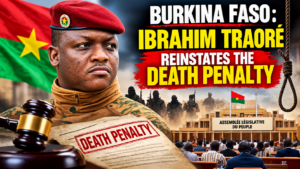
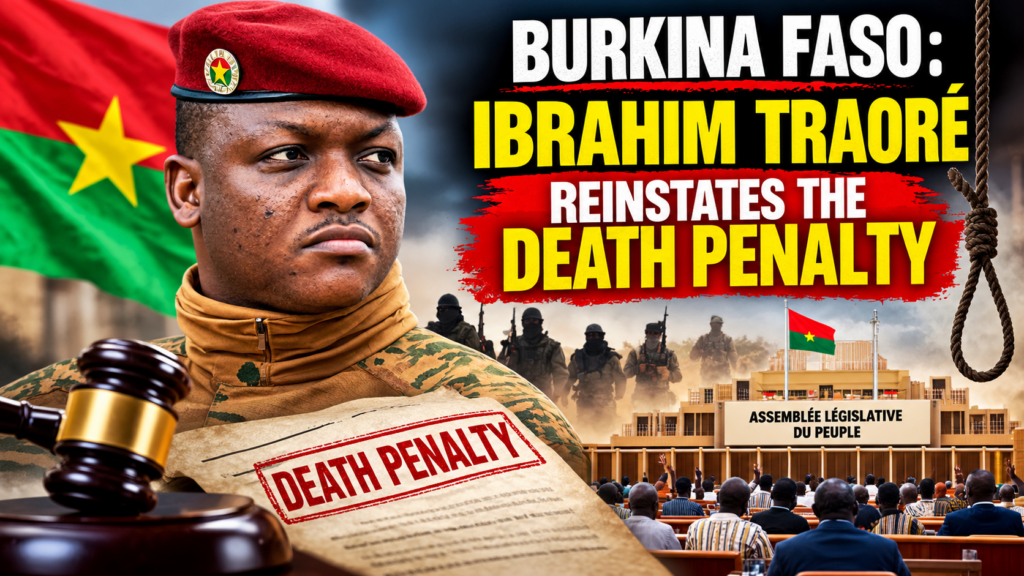
The Burkina Faso National Legislative Assembly’s vote on October 20, 2026, marked the end of a decade-long moratorium on capital punishment. Abolished in 2018, the death penalty now returns under a revised penal code championed by the military-led government of Captain Ibrahim Traoré. Authorities argue that extreme penalties are necessary to combat terrorism, espionage, and other grave crimes, including the importation of hazardous substances that result in fatalities. Yet critics warn that such measures risk prioritizing retribution over prevention, leaving communities no safer despite the state’s show of force.
Can fear replace strategy in Burkina Faso’s fight against terror?
For years, Burkina Faso has grappled with a spiraling security crisis, as armed groups exploit ungoverned territories to launch deadly attacks. The public’s demand for protection is undeniable families want to send children to school without fear, farmers need to till their land, and traders must move goods without constant threat. The government frames the death penalty as a critical tool to deter such violence, but experts question whether punitive measures alone can address the root causes of instability.
Protecting civilians requires more than harsh sentences. Effective counterterrorism hinges on intelligence gathering, rapid response capabilities, and a judicial system capable of delivering fair trials. Without these pillars, even the most severe penalties may fail to prevent attacks or restore stability. The true test of success will not be the number of executions carried out, but whether the state can demonstrate a measurable reduction in violence while upholding the rule of law.
Ibrahim Traoré’s gamble: justice or authoritarian control?
Captain Traoré’s administration has framed the death penalty as a cornerstone of its security policy, but the move also reflects a broader trend toward centralized authority. In late September, the president publicly declared that traitors and spies would face “uncompromising” punishment, signaling a willingness to use the penal system as a tool to silence dissent. This rhetoric raises concerns about the independence of the judiciary and the potential for politically motivated prosecutions.
The irreversible nature of the death penalty amplifies these risks. Unlike imprisonment, which can be overturned upon appeal, an execution cannot be undone. This demands ironclad safeguards: rigorous investigations, transparent trials, and robust defense rights. Yet in a climate where critics, journalists, and even magistrates have reportedly faced intimidation or arbitrary detention, the government’s commitment to due process remains uncertain.
Press freedom in the crosshairs: a crackdown disguised as security?
The penal code’s revisions extend beyond terrorism to include the re-criminalization of certain press offenses, according to official statements. While national security is a legitimate concern, the timing of these changes amid reports of enforced conscriptions and crackdowns on dissent paints a troubling picture. In a functioning democracy, citizens must be able to question authority, journalists must investigate without fear, and judges must operate without political interference. When penalties for speech crimes are reintroduced alongside capital punishment, the line between protecting the state and shielding the regime begins to blur.
This convergence of legal and political pressures demands scrutiny. Is the government genuinely prioritizing security, or is it exploiting the crisis to consolidate power? The answer will shape not only Burkina Faso’s legal landscape but also its social fabric in the years to come.
The cost of governing through fear
History offers a cautionary tale: states that rely on fear to maintain order often find that repression breeds resentment rather than compliance. In Burkina Faso, where entire communities have been displaced by violence, the government’s focus on punitive justice risks alienating the very people it claims to protect. Fear may suppress dissent in the short term, but it cannot build the trust necessary for long-term stability.
For the average Burkinabè, the stakes are clear. They need to know that their children can walk to school, that markets remain open, and that their villages will not be targeted overnight. These are the benchmarks by which the regime’s policies should be judged not by the number of executions or arrests, but by whether life becomes measurably safer. The death penalty, by its very nature, cannot undo the damage of a bomb blast or bring back a lost loved one. Its effectiveness must be measured in prevention, not retribution.
A fork in the road for Burkina Faso’s future
The reinstatement of the death penalty is more than a legal reform; it is a defining choice for Burkina Faso’s trajectory. The government argues that this measure reinforces sovereignty and deters crime, but the international community and domestic observers alike will be watching closely to see if it delivers on its promises. Will the state’s newfound severity translate into tangible security gains, or will it further erode public confidence in institutions?
The path forward requires a delicate balance. Burkina Faso needs a justice system that is both strong and just one that punishes grave crimes without sacrificing the rights of the accused or the safety of the population. As the country grapples with extremism, the true measure of leadership will be its ability to protect its people while preserving the democratic values that define its future.
Key takeaways for citizens and policymakers
Security vs. repression: Extreme penalties may satisfy a demand for firm action, but they cannot replace comprehensive counterterrorism strategies.
Judicial independence: The death penalty’s irreversibility demands ironclad due process to prevent miscarriages of justice.
Press and dissent: Re-criminalizing press offenses alongside the death penalty risks stifling criticism under the guise of security.
Public trust: Governing through fear may suppress dissent, but it cannot build the lasting peace that communities desperately need.
By Rose Njoya — Journalist