Why Côte d’Ivoire must embrace industrialization for sustainable economic growth
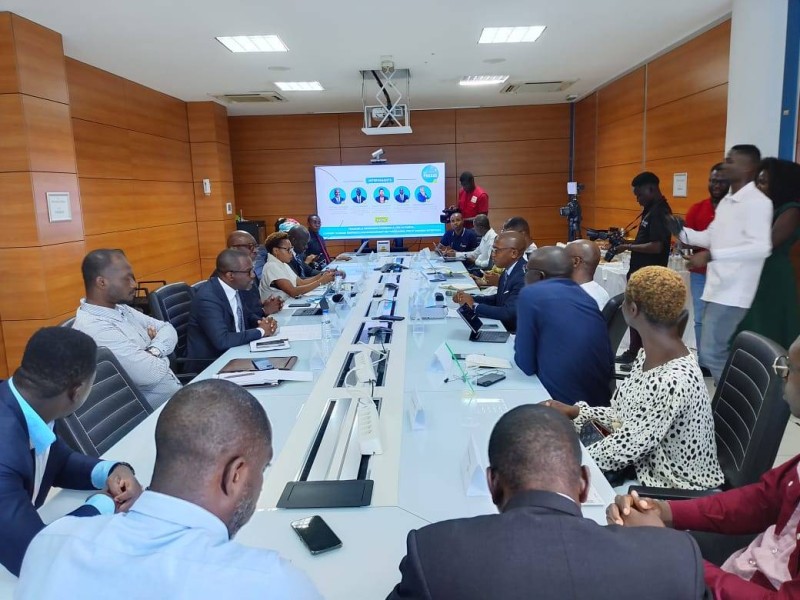
At a high-profile press breakfast held in Abidjan-Plateau on May 8, 2026, economic stakeholders converged to examine Côte d’Ivoire’s industrial future. Among them, Paul-Harry Aithnard, Director General of Ecobank Côte d’Ivoire and UEMOA Regional Director, shared his vision on why industrialization is not just beneficial but essential for the country’s economic transformation.
From agrarian roots to industrial powerhouse: a strategic necessity
Côte d’Ivoire’s current GDP stands at $100 billion—a figure that mirrors Malaysia’s economic size a quarter-century ago. Yet, while Malaysia progressed to over $400 billion by 2025, Côte d’Ivoire remains at a crossroads. Aithnard emphasizes that without industrialization, the country risks stagnation, missing a historic opportunity to scale its economy fourfold within a generation.
« Côte d’Ivoire cannot achieve true emergence without industrialization, » he asserts. « The path to doubling or even quadrupling GDP is paved with factories, value-added production, and technological innovation—not just raw commodity exports. »
Digital finance and infrastructure: the twin pillars of industrial expansion
To catalyze this industrial leap, Aithnard proposes a two-pronged strategy: financial inclusion through digitalization and robust infrastructure development.
1. Financial inclusion as an economic accelerator
The vision hinges on enabling Ivorians to participate meaningfully in the formal economy. This means:
- Access to savings and credit: Expanding bank accounts, microloans, and investment tools to mobilize domestic capital.
- Digital payment ecosystems: Reducing transaction costs and increasing financial transparency through mobile money and fintech solutions.
- Scaling smallholder productivity: Enabling farmers and artisans to access financing for mechanization and market linkages.
« Financial inclusion isn’t just about banking—it’s about unlocking dormant capital, » Aithnard explains. « When people save, invest, and transact digitally, the economy grows organically. »
2. Infrastructure and energy: the backbone of industry
No industrialization is possible without reliable power and logistics. Côte d’Ivoire has already made progress in energy production, but scaling electricity access—especially in rural zones—remains critical. The call to action extends to:
- Energy diversification: Expanding renewable sources to stabilize costs and reduce reliance on fossil fuels.
- Transport and logistics: Modernizing ports, roads, and rail to connect factories to markets efficiently.
- Special economic zones: Creating hubs with tax incentives to attract manufacturing and agro-industrial projects.
The private sector’s role: financing the future
Aithnard highlights the pivotal role of banks and private investors in funding infrastructure and industrial ventures. « Banks must go beyond traditional lending to support long-term, high-impact projects, » he states. « At Ecobank, we’ve prioritized financing critical infrastructure because we believe in Côte d’Ivoire’s potential. »
Education and innovation: empowering the next generation
Industrialization demands skilled human capital. Aithnard stresses the need to strengthen education in:
- STEM fields: Science, technology, engineering, and mathematics to drive innovation.
- Managerial training: Equipping entrepreneurs with leadership skills to run modern enterprises.
He commends Côte d’Ivoire’s recent strides in education reform but urges faster implementation of technical and vocational programs aligned with industrial needs.
A call to action for Côte d’Ivoire’s leaders
The message is clear: Côte d’Ivoire stands at a pivotal moment. By embracing industrialization through digital finance, infrastructure investment, private-sector partnership, and education reform, the country can transition from an agrarian economy to a diversified, high-value industrial powerhouse—mirroring the success stories of nations like Malaysia.
Bottom line: Industrialization isn’t optional—it’s the only pathway to sustainable economic emergence. The question now is not *if* Côte d’Ivoire will industrialize, but how quickly it can position itself as a leader in Africa’s next industrial revolution.