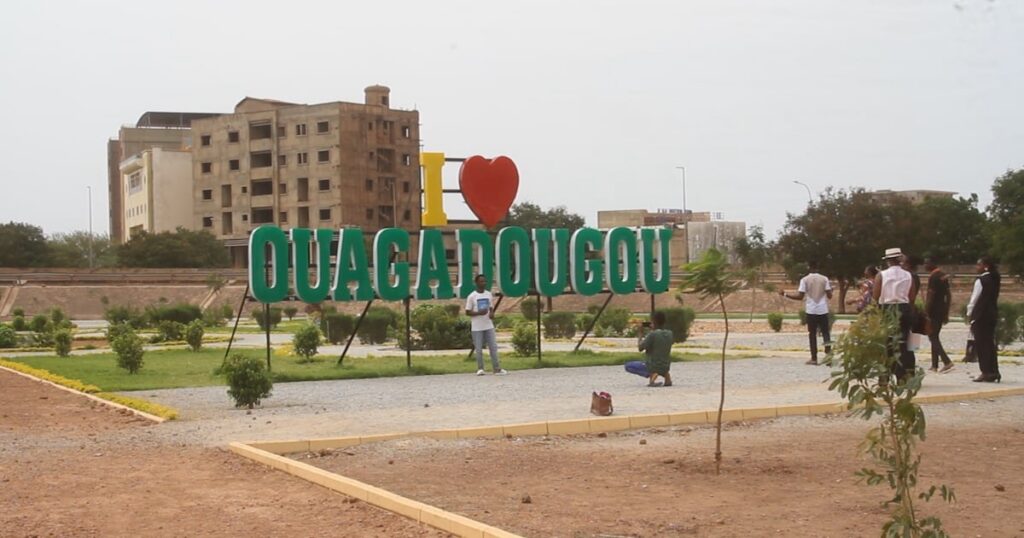
A national landscape development program is underway in Burkina Faso, aiming to significantly enhance its urban environments. This ambitious initiative includes the creation of 80 distinct green spaces, the revitalization of 60 roundabouts, and the development of 65 kilometers of tree-lined urban roadways. These extensive plans underscore a clear commitment to gradually transforming the appearance and ecological health of Burkinabè cities.
In several urban centers, which often contend with pervasive dust, intense heat, and a scarcity of recreational areas, these new developments offer a much-needed respite. Projects like the verdant space at the base of the Ouaga 2000 interchange exemplify how such improvements can significantly better the daily lives of residents and visitors alike.
«You cannot imagine my delight at seeing these developed spaces. I am part of the Burkinabè diaspora, I live in Sénégal, and I’ve been here for a week. When I arrived, I discovered these areas and was completely captivated,» expressed Dr. Ines Bationo, a Burkinabè visiting her home country.
«It genuinely transforms the surroundings. Before, it was just barren, red earth, with nothing noteworthy. But now, it’s beautiful; a microclimate has been established, which is precisely what we need. While we are a Sahelian nation, when heatwaves strike, it’s crucial that ecological concerns are more widely addressed,» urged Mahamadi Ouedraogo, a community leader.
Numerous global studies have consistently demonstrated that increasing urban vegetation provides a natural defense against rising city temperatures. Street trees, in particular, offer crucial shade, substantially reducing the perceived heat.
«Expanding green spaces, implementing green roofs, and planting more trees could collectively lower the average city temperature by approximately 2°C, thereby mitigating the health impacts of heatwaves,» affirm research findings. These studies further indicate that under forest cover, maximum temperatures are, on average, 4°C cooler compared to open areas.
Beyond their environmental advantages, these initiatives also foster stronger civic pride and a sense of community among citizens. Green spaces evolve into vibrant hubs for social interaction, relaxation, and occasionally, even strengthening social bonds.
However, the long-term success of this program hinges critically on its sustainability. While planting trees is a significant first step, ensuring their continuous care and maintenance over an extended period presents a distinct challenge.
«After the initial development, conditions for accessing these spaces will need to be established. This would allow the city council and the Ministry of Environment to generate revenue, which can then be reinvested into maintaining these areas,» suggested Lassané Sawadogo, a civil society advocate and visitor.
«We are extremely pleased. This is primarily a place for relaxation and also helps to promote Burkinabè tourism,» shared Sidoine Nakanabo, another visitor.
Through this extensive effort, Burkina Faso is conveying a powerful message: a truly modern city is defined not solely by its roads and buildings, but equally by its trees, its shade, and the vital spaces where its citizens can breathe freely and connect with one another.