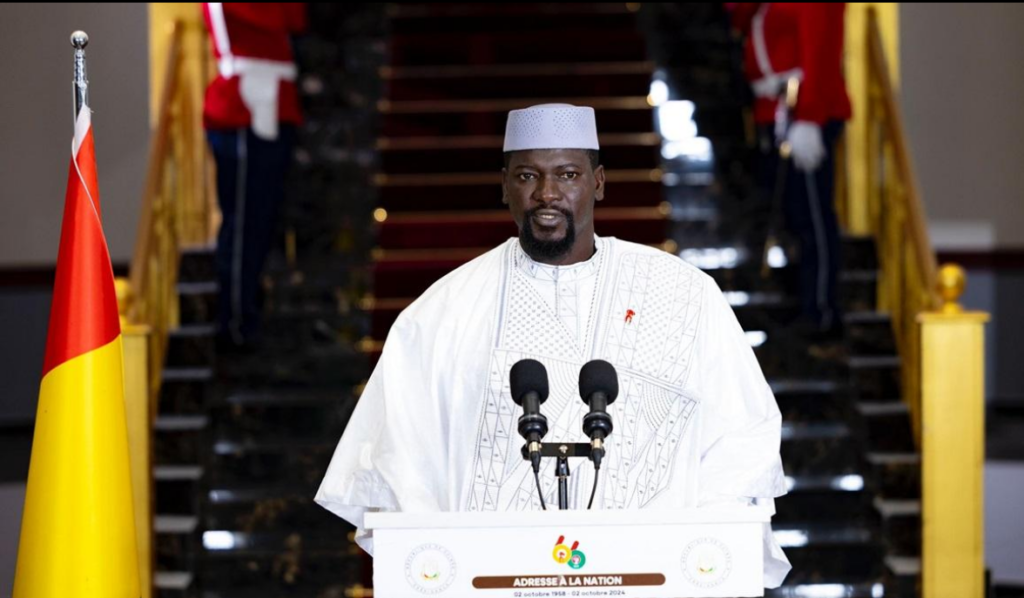
In a bold move against corruption and environmental degradation, Guinea’s president Mamadi Doumbouya has removed 22 public officials and security personnel from their posts. The decision, announced via presidential decree, targets leaders accused of complicity in illegal gold mining and environmental crimes. This unprecedented action underscores the government’s commitment to restoring order in the country’s mining sector.
Among those affected is Colonel Fayimba Mara, prefect of Siguiri—one of Guinea’s most critical gold-producing regions. The removals come just days after the inauguration of the Nimba Gold Refinery, signaling a dual offensive: cracking down on illegal practices while investing in local gold processing infrastructure.
Why 22 officials were dismissed—and what the fallout means
The suspensions span multiple administrative levels, from prefects and sub-prefects to police and military officers. Key figures include:
- Captain Mohamed Lamine Keita, interim prefect of Kintinian
- Captain Sory Camara, interim prefect of Siguirini
- Commander Fodé Isaac Camara, sub-prefect of Niagassola
- Lieutenant-Colonel Pépé Doualamou, sub-prefect of Bankon
These removals target officials linked to illegal gold panning, land degradation, and water pollution. The decree highlights severe environmental consequences, including:
- Destruction of arable land and farmlands
- Contamination of rivers and water sources
- Destruction of fish stocks in mining zones
- Use of toxic chemicals in unregulated mining operations
The government has tasked multiple ministries—including Defense, Security, Justice, and Environment—with enforcing the decree, emphasizing a coordinated national effort.
Siguiri’s gold rush: economy versus environment
Siguiri, a gold-rich region in Upper Guinea, has long grappled with uncontrolled mining activities. While artisanal mining supports local livelihoods, unregulated practices have led to:
- Loss of agricultural productivity due to land degradation
- Health risks for communities exposed to mercury and cyanide
- Economic instability as illegal gold bypasses formal markets
The latest sanctions aim to curb these abuses, but enforcement remains a critical challenge. Authorities must now prove that disciplinary actions translate into real change on the ground.
Nimba Gold Refinery: turning gold into national wealth
The timing of the official refinery inauguration—on November 1, 2026—could not be more symbolic. Located in Conakry’s Cité de l’Air, the Nimba Gold Refinery is positioned as Guinea’s first large-scale gold processing plant. Its launch marks a pivot toward domestic value-addition and economic sovereignty.
By refining gold locally, the government seeks to:
- Reduce reliance on raw material exports
- Increase revenue through higher-value processing
- Create jobs in the gold processing and manufacturing sectors
Officials frame the refinery as part of the broader Simandou 2040 initiative, which aims to industrialize Guinea’s mining sector and ensure fairer distribution of mineral wealth. Still, success hinges on two factors: eliminating illegal mining networks and ensuring transparent trade of refined gold.
Balancing enforcement and economic ambition
The dual strategy—disciplinary action against corrupt officials and investment in industrial infrastructure—reveals Guinea’s vision for its gold sector. Yet, real success depends on robust follow-through:
- Stronger surveillance: Deploying drones, satellite monitoring, and community reporting to detect illegal mining sites.
- Judicial clarity: Establishing clear legal pathways for charges against implicated officials and miners.
- Community inclusion: Engaging local leaders and residents in sustainable mining initiatives.
The stakes are high. If enforcement remains inconsistent, illegal practices will persist, undermining both environmental recovery and economic progress. Guinea’s ability to enforce these changes will determine whether its gold sector becomes a source of sustainable development—or another cautionary tale of resource mismanagement.
A turning point for Guinea’s mining future
These recent actions send a clear message: Guinea will no longer tolerate unchecked exploitation of its mineral wealth. The removal of 22 officials and the launch of the Nimba Gold Refinery signal a new era—one where legal compliance and local transformation take precedence over short-term gains.
As the government moves forward, the world will watch closely: Can Guinea balance economic ambition with environmental stewardship and social equity? The next chapter in its mining policy begins now.