The geopolitical chessboard of the Sahel is undergoing a profound transformation, and Niger has unexpectedly emerged as its central player. In recent weeks, a series of high-level diplomatic and military movements have illustrated how regional powers are reshaping influence, alliances, and economic stakes—with consequences that extend far beyond Niger’s borders.
Niger’s new diplomatic front: from Benghazi to Paris
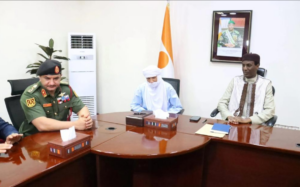
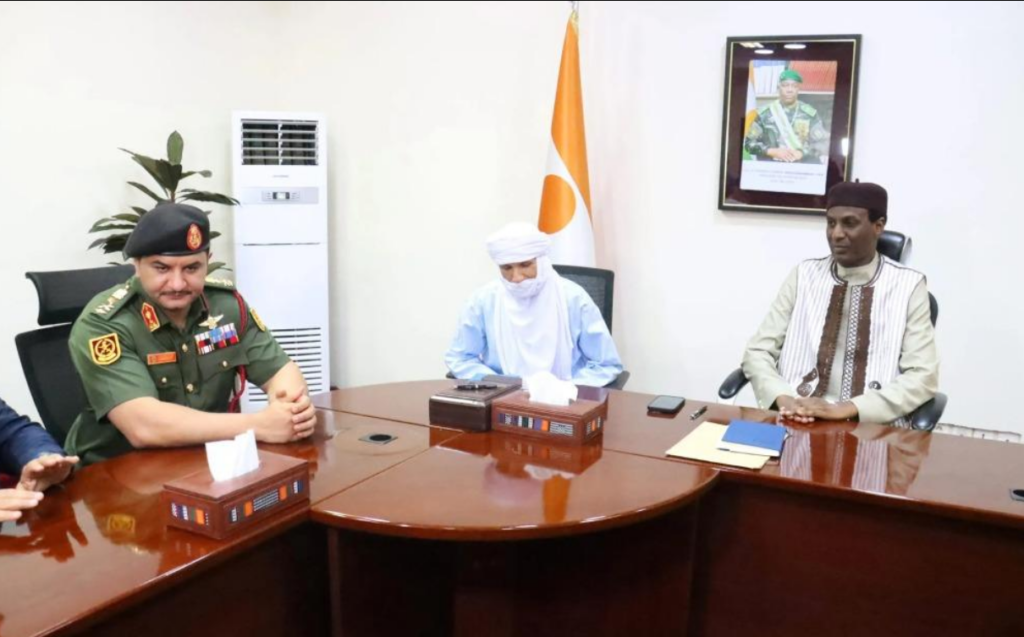
In early November, Niger’s Prime Minister, Ali Mahaman Lamine Zeine, traveled to Benghazi for a landmark meeting with Saddam Haftar, deputy commander of the Libyan National Army loyal to Marshal Khalifa Haftar. The visit culminated in the signing of a strategic cooperation protocol, signaling Niamey’s intent to diversify its security and political partnerships in a volatile neighborhood.
Just two days later, General Khaled Haftar, Libya’s eastern military chief, arrived in Paris for talks with General Fabien Mandon, France’s chief of defense staff. While specific outcomes remain undisclosed, the timing of these engagements suggests a broader shift in regional alignment—one where Niger is no longer a passive observer but a key player in shaping security agreements.
Algeria’s strategic pivot: securing influence in a shifting Sahel
As alliances realign, Algeria has intensified its diplomatic efforts to maintain its historical influence. On November 3, Algerian Foreign Minister Ahmed Attaf traveled to N’Djamena as a special envoy of President Abdelmadjid Tebboune. His discussions with Chadian President Mahamat Idriss Déby Itno focused on bilateral relations, cross-border security threats, and the implementation of 27 previously signed agreements.
This outreach comes amid rising tensions between Niger and Chad, with Niamey accusing N’Djamena—without public evidence—of supporting destabilization efforts with French backing. Meanwhile, Chad and France have renewed their military and diplomatic ties following the collapse of a 2024 defense pact. For Algeria, this presents both a challenge and an opportunity: to prevent the Sahel’s security landscape from evolving without its participation.
The UAE factor: a complicating variable in Algeria’s calculations
The United Arab Emirates has long backed Marshal Haftar’s forces in eastern Libya, providing political and military support that has only grown in recent years. This alliance has drawn Algeria’s scrutiny, particularly as Haftar’s influence expands southward into Libya’s Fezzan region—a critical corridor linking Libya to Niger. The UAE’s presence in Benghazi raises concerns in Algiers, where leaders view Libyan stability as directly tied to national security.
For Algeria, the prospect of Haftar consolidating control over southern Libya—especially in areas rich in energy resources and trade routes—poses a direct threat to its own strategic interests. Meanwhile, Niger’s growing ties with Benghazi risk further destabilizing the region, prompting Algiers to accelerate its engagement with Niamey.
Morocco-Algeria rivalry: extending beyond the Maghreb
The long-standing diplomatic feud between Algeria and Morocco has spilled over into the Sahel, where both nations compete for influence. Morocco has strengthened ties with several Sahelian nations, while Algeria seeks to preserve its historical role. The fact that General Khaled Haftar visited Morocco in mid-October—just weeks before his Paris trip—has not gone unnoticed in Algiers. The convergence of interests between Rabat, Abu Dhabi, and Haftar’s camp has fueled speculation about emerging regional blocs.
While no formal alliance has been declared, the overlapping interests of these actors suggest a fluid, opportunistic alignment—one that Algeria cannot afford to ignore as it navigates the Sahel’s shifting sands.
Niger’s balancing act: diversifying partnerships to avoid isolation
Niger’s geographical position—sandwiched between Libya, Algeria, Chad, and Mali—has turned it into a strategic crossroads. In late October, Algeria’s parliament approved the deployment of military forces to Niger, marking a significant shift in Algiers’ security posture. The subsequent military agreement and rapprochement with Benghazi demonstrate Niamey’s determination to avoid over-reliance on any single partner.
France, once a dominant force in the region, has scaled back its military presence but maintains low-profile engagement with regional actors. While Paris has engaged Haftar’s camp, there is no clear evidence of a coordinated French strategy centered on Niger. Instead, the Sahel is increasingly defined by competition—not just over security, but over trade routes, energy resources, and political alliances.
The ripple effects: economic and security consequences for Sahelian citizens
The real-world impact of these geopolitical maneuvers is already visible. For Sahelian citizens, the shifting alliances translate into new security threats, changing trade dynamics, and uncertain economic prospects. The militarization of key corridors, such as those linking Libya’s Fezzan to Niger, risks disrupting local economies dependent on cross-border commerce.
Businesses operating in the region face heightened instability, with foreign investors reassessing their presence amid uncertain diplomatic alignments. Meanwhile, governments are under pressure to navigate a landscape where traditional allies are recalibrating their strategies, and new players are vying for influence.
Niger, in particular, stands at a crossroads. Its decisions in the coming months will determine whether it becomes a stabilizing force—or a flashpoint for further regional tensions.