Morocco’s economic outlook 2025: resilience and growth despite global challenges
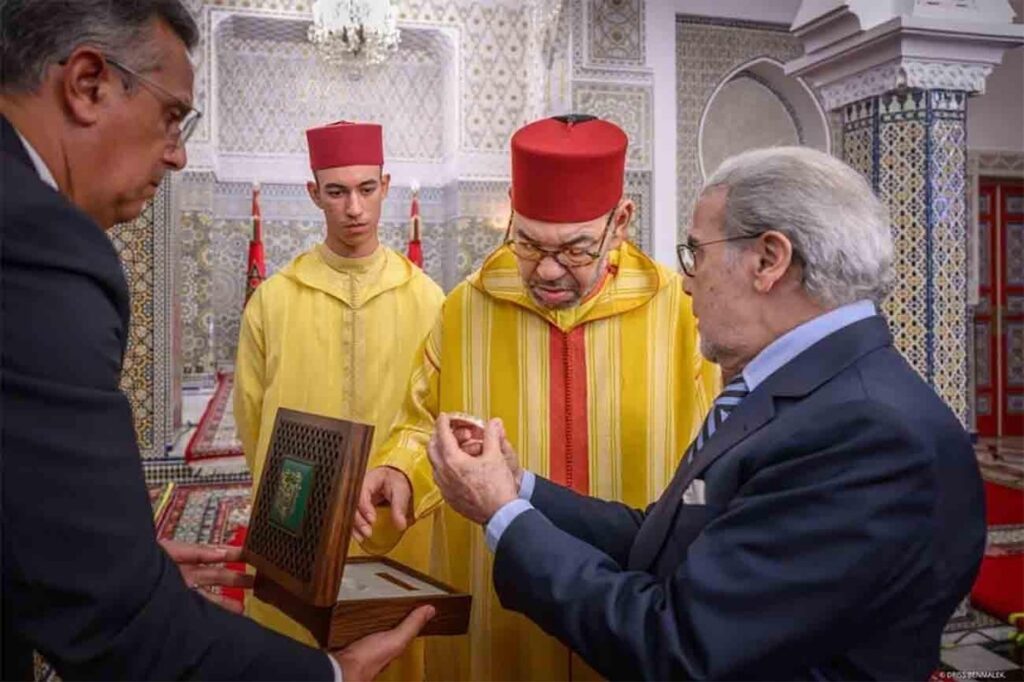
King Mohammed VI of Morocco received Bank Al-Maghrib Governor Abdellatif Jouahri at the Royal Palace in Tetouan this week to review the central bank’s annual economic report for 2025.
During the meeting, Jouahri presented a comprehensive analysis of Morocco’s economic, monetary, and financial landscape, highlighting key achievements and challenges for the year.
robust economic growth despite global headwinds
Morocco’s GDP expanded by 4.9% in 2025, driven primarily by substantial investment initiatives across multiple sectors. This growth occurred despite persistent international shocks and economic uncertainties that characterized the global environment.
The central bank’s report noted that inflation remained exceptionally stable throughout the year, averaging just 0.8%. To support economic activity, Bank Al-Maghrib maintained an accommodative monetary policy, reducing its key interest rate to 2.25% while ensuring adequate liquidity for commercial banks. The institution also intensified efforts to improve access to credit for small and medium-sized enterprises.
employment and fiscal health: progress with room for improvement
While economic growth has boosted job creation, the unemployment rate remained stubbornly high at 13%. The budget deficit continued its downward trend, narrowing to 3.5% of GDP, supported by strong tax revenues and innovative financing mechanisms.
Morocco’s external accounts demonstrated remarkable resilience, buoyed by record tourism receipts, robust remittances from Moroccans abroad, and strong export performance in phosphates, phosphate derivatives, and aerospace. These factors contributed to the strengthening of official reserves, which reached 443 billion Moroccan dirhams—sufficient to cover nearly five and a half months of imports.
addressing the perception gap and structural reforms
Jouahri emphasized that while macroeconomic indicators point toward emerging market status, sustainable progress requires more inclusive growth. He highlighted a growing global phenomenon in Morocco: a disconnect between measured economic growth and public perception of economic conditions.
This perception gap stems from two critical challenges: slow labor market integration and persistent social inequalities. The governor stressed the need to enhance education and vocational training systems, maximize investment returns, and accelerate structural reforms to improve private sector participation. He also underscored the importance of better targeting social safety nets to reach the most vulnerable populations, aligning with the King’s 2025 Throne Speech warning against a “two-speed Morocco.”
To maintain fiscal flexibility amid rising fixed costs and imminent pension system reforms, Jouahri called for strict resource rationalization, regular expenditure reviews, and accelerated implementation of the organic finance law.
strategic priorities for long-term resilience
The central bank governor outlined several strategic priorities for Morocco’s future:
- strategic reserves: With global supply chains remaining vulnerable to disruptions, implementing the royal directives from October 2021 to build strategic reserves of essential goods will shift Morocco from a reactive to a preventive approach.
- energy transition: Accelerating the shift to renewable energy will reduce external dependencies and prepare Moroccan exporters for increasingly stringent climate standards imposed by major trading partners.
- water governance: Given the severe impact of climate change on water resources, improved management and valorization of water must become a top priority for public policy.
- advanced regionalization: Following royal directives from 2024, efforts to advance regionalization must continue, mobilizing local talent to foster regional economic hubs and reduce territorial disparities.
In his closing remarks, Jouahri stressed that consolidating Morocco’s economic gains requires sustained coordination among all public and private stakeholders, guided by the Monarchy. Following the presentation, he formally submitted the 2025 annual report to King Mohammed VI, along with a commemorative gold coin minted by Bank Al-Maghrib to mark the first anniversary of the Aid Al Wahda initiative.
By Rose Njoya — Political News Reporter