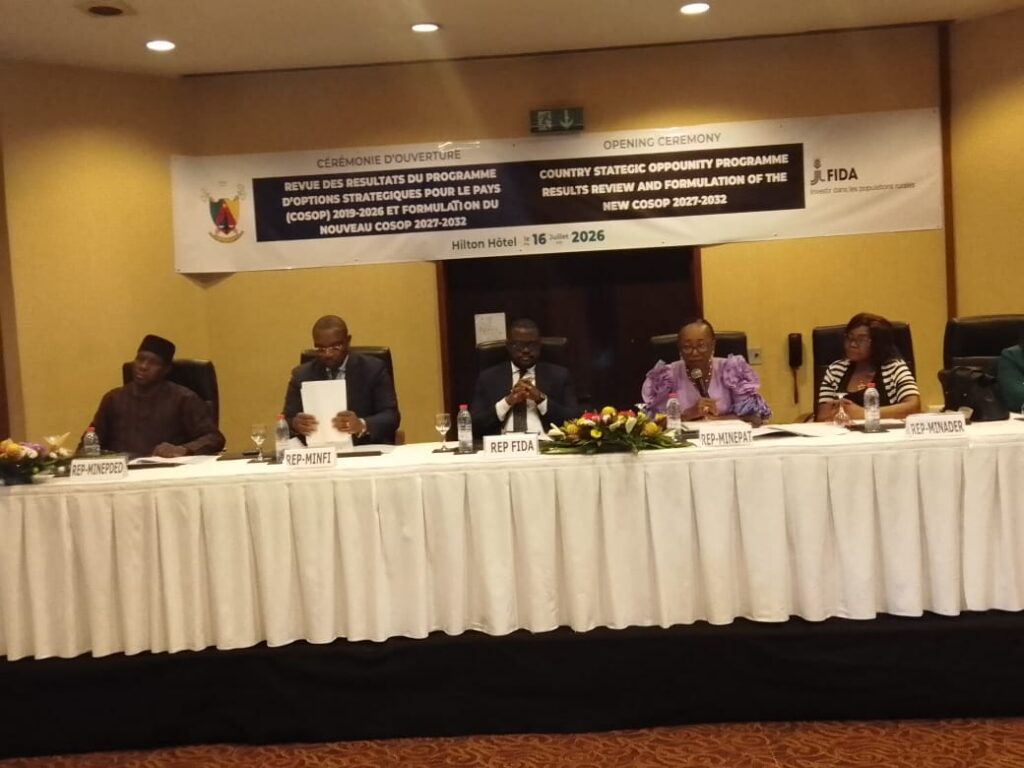
The Cameroun–IFAD partnership has delivered impressive results in agricultural productivity, as revealed during a high-level review session in Yaoundé on July 16, 2026. The joint event focused on assessing the progress of the Country Strategic Opportunities Programme (COSOP) for 2019–2026 and laying the groundwork for the next phase, 2027–2032.
The COSOP, a seven-year initiative, outlines priority investments funded by IFAD to support rural communities, especially women and youth, across Cameroun. The programme aligns with Cameroun’s National Development Strategy 2020–2030 and the United Nations Sustainable Development Cooperation Framework, ensuring interventions remain relevant to national priorities.
Key achievements in agricultural productivity and rural entrepreneurship
The review highlighted substantial progress in key programme areas:
- Sustainable productivity boost for small farms and rural businesses: A remarkable 98% completion rate was recorded, with 139 cooperatives in rice and onion value chains now fully operational. These cooperatives support 10,505 farmers, including 39% women and 49% youth—exceeding the 2024 target of 10,000 members, with over half led by women and young leaders. Each cooperative benefits from an environmental and social management plan.
- Youth agropastoral entrepreneurship: The Programme d’Entreprenariat Agropastoral des Jeunes (PEA-Jeunes) saw 99% of targeted youth adopt improved techniques, far surpassing the 50% goal. However, only 43% of the planned 1,600 hectares for hydro-agricultural rice and onion production were developed by mid-2026.
- Rice and onion production surge: Phase II of the Programme d’Appui au Développement des Filières Agricoles (PADFA II) delivered notable results:
- Rice: Average yield for lowland rice reached 3.7 tonnes per hectare (74% of the 5-tonne target), while upland rice produced 2.5 tonnes per hectare (63% of the 4-tonne goal). Total paddy rice output hit 52,996 tonnes—70.38% of the 74,750-tonne target.
- Onions: Production averaged 18 tonnes per hectare (86% of the 21-tonne target), with 45,000 tonnes of bulbs harvested against a 85,562-tonne goal (52.47% completion).
- Climate-smart agriculture adoption: The programme achieved 100% compliance in implementing ecosystem-based adaptation guidelines and climate-smart practices. A strategic plan for 17 reforms was finalised, alongside draft legislation for the agropastoral sector and three supporting strategies for bamboo restoration policies.
Strategic alignment with national and global goals
The 2019–2026 COSOP was initially approved in 2019 and extended to December 31, 2026, following a mid-term review in July 2021. This extension reflects Cameroun’s commitment to accelerating rural development and achieving the Sustainable Development Goals (SDGs). The next phase, COSOP 2027–2032, will build on these gains, further integrating climate resilience, gender equality, and youth inclusion into agricultural value chains.
By prioritising equitable access to resources and technology, the partnership is fostering a more inclusive and sustainable agricultural sector in Cameroun—one that empowers farmers, enhances food security, and strengthens rural economies.