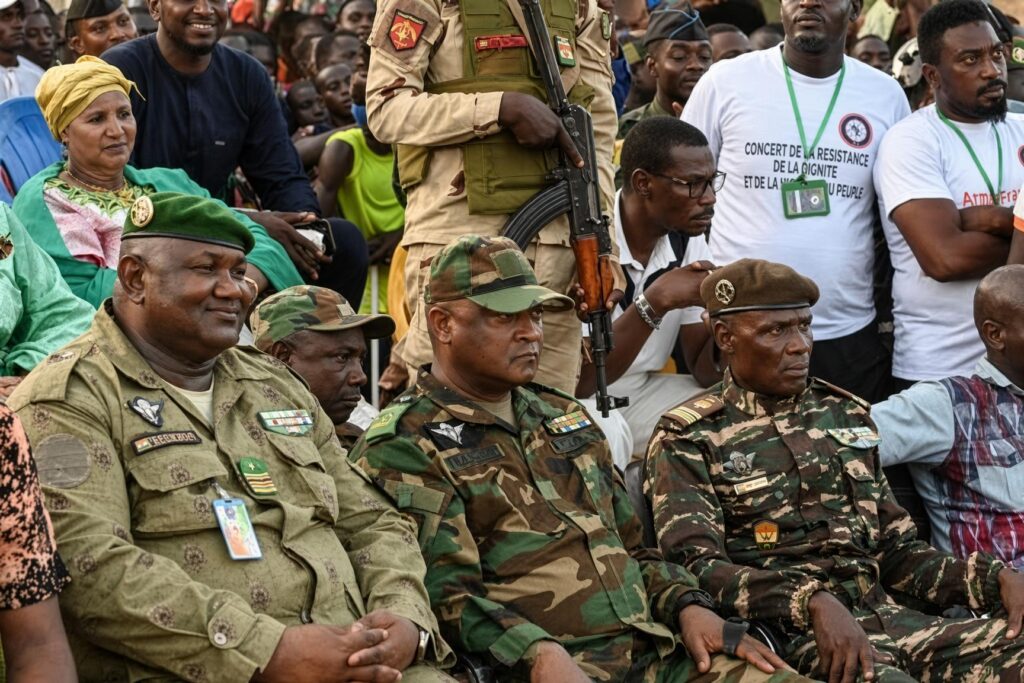
The career of Major General Moussa Salaou Barmou continues to spark debate across Niger and beyond, as observers weigh the fallout of his deep immersion in American military institutions and ask what comes next for the country’s armed forces. Long before his political prominence during the events of July 2023 in Niamey, Barmou built a reputation as one of the Sahel’s most seasoned tacticians — a reputation rooted in training received at the most prestigious military schools in the United States.
A doctrinal imprint shaped in the United States
The academic and military path of General Barmou reflects a passage through the elite of American military education:
- Fort Moore (formerly Fort Benning, Georgia): He completed training at the U.S. Army Infantry School, a benchmark institution for infantry tactics, assault techniques and toughening for close-quarters combat.
- National Defense University (NDU) in Washington: Holding a diploma from the College of International Security Affairs (CISA), Barmou developed expertise in strategic planning, counterterrorism and analysis of asymmetric threats.
This dual theoretical and practical immersion allowed him to absorb American military doctrine, which emphasizes responsiveness, the autonomy of small units and the integration of intelligence assets.
From the American model to the creation of Niger’s special forces
The skills acquired in the United States translated concretely into action on the ground in Niger:
- Establishment of the Special Forces (PFS): As commander of Niger’s special forces, Barmou structured this elite unit along the lines of the U.S. Special Operations Command (USSOC). He imposed strict selection criteria, rapid interception drills and intensive use of small mobile patrols.
- Joint counterterrorism operations: Working directly with American forces stationed at Agadez (Base 201) and Niamey, he orchestrated complex counterinsurgency operations in the Lake Chad basin against Boko Haram and in the tri-border area against groups affiliated with the Islamic State.
- Mastery of military diplomacy: His understanding of American codes made him the natural and privileged interlocutor for the Pentagon. During the delicate negotiations that followed the 2023 coup, this credibility and rigorous training allowed him to maintain a direct channel of discussion with American diplomacy.
A central figure in the military transition
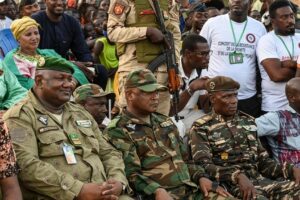
Alongside General Abdourahamane Tiani within the CNSP, Moussa Salaou Barmou served as Chief of Defense Staff (CEMA), reorganizing Niger’s security map and the arrangement of the Alliance of Sahel States (AES) before the restructuring of the military command carried out in September 2026. His mark on the Nigerien Armed Forces remains that of an officer who successfully adapted modern warfare methods and American pragmatism to the tactical realities of the Sahelian theater.
Reactions and what lies ahead
The debate over Barmou’s American training shows no sign of fading. Supporters credit him with professionalizing Niger’s elite units and opening a rare channel to Washington; critics question how much of that doctrine can survive outside its original ecosystem. What comes next will depend on how Niger’s military leadership balances this inherited know-how with its current strategic partnerships and the evolving threat landscape across the Sahel.