Signature: hS+QnthdGAzA1h/g1WbvCtGGIWzNTEe/Tpmx57SQMHuS/E7t1umUJVZ6WNvH1SXNqo4Qu6dD3SQHB/jdOkF4Q8ihibJpjqvhsGXwaiGbpk2PouuGTtD3WeGssciEM/XJZ5g3b1qu4QimoSHDoCgmoO2Dc4KRfZoId30jQFgeNLNUT7PYgRE6kJUdP7CBYp5xNMaA7xk8avy7IMGjGIN/DuTdoQkrFOWDvCllO8Qn+I3zUWDIoXWXAzpE+0ZLV/0oQQalEbpnsVmxaLZ3LR+WEWETb9KBbj65PaZ5Sx11m3nnWEN02sRpHdbVw/C8aRUav4ZJpxZC0vxo6KvdeyfpWyKi2IMEADKO5XA4cUFT7bCUSHwZJB3JpzG67oAXpjyMd6Ws1xmRIqZlNs8/7aCBBy7hzPadxEeF0od2nal7uypHDwTWmPO/j0Gme0Mtbb83hAECO1CdvbVzVox3Cpvl8wEsoiMwd6KR6/M1pjBSixVf0IrWK1lF/NpWEZLE+hrXTxtiwYoIl4aFhuFoAu6wPvu1Gx5X22YdNAmF8ZO0wwvslGazI+j+ww8qcd9U8cAy71HDLgBGeDFws8X6v3U06gRA7NbkLD3/dhLhh69j8IukbmMrGRJXvFEl+sekPJwKQ0S8Z/iyFSlYuKBohL11jPkErmh+rz/Fu22NgO/wSWlgCnA7jHRuD2QCcRKSjrJyCDqEwda4chvblYFQ0ZCYK1Wo8N1qcAVZPtFlGOX9FRCtA53NBEGXAw8HvX6Qkj+ZkJH9q7jlcpfesFVY92e+90A9a1hlcmcFdTFfRiqhczaJOL+l4UX5Cb36iBuxzfzH8On8Rug3uK6Amou0TJcm0+Bhpz8NSwGHLby4t6/pscJJZbk2QmuMs8qh1D48zbAFkreto13Ck6u4H44Ql4SGYnzlLKUiK/oEbrNqqagS3uQsQSrJixT+ve9HxmNdnZdf26WfwbSJVVN+MyLgr1+DUiVN7nUhphz59VGdJeMrzaE=
The ambush that triggered a nation’s upheaval
The afternoon of September 26, 2022, was supposed to be just another logistical mission in northern Burkina Faso. Instead, it became a bloodstained turning point. A military convoy carrying vital supplies to the besieged town of Djibo was ambushed near Gaskindé, a locality now etched in the country’s recent history. The attack, claimed by the Group for the Support of Islam and Muslims (Jama’at Nusrat al-Islam wal Muslimin, JNIM), an Al-Qaeda affiliate, left at least 37 dead—27 of them soldiers—and dozens wounded.
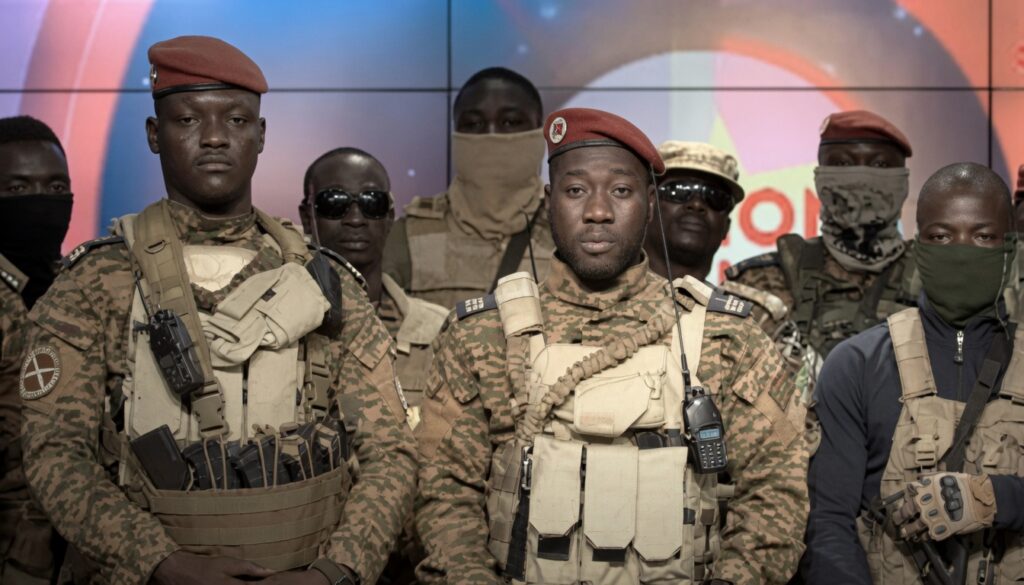
What followed was not just a humanitarian disaster, but a political earthquake. Four days later, on September 30, 2022, Captain Ibrahim Traoré deposed Lieutenant Colonel Paul-Henri Sandaogo Damiba in a swift coup d’état. The rapid succession of violence and regime change has since fueled persistent questions about the precise circumstances surrounding the Gaskindé ambush and its broader implications.
A stalled investigation and lingering doubts
In the immediate aftermath, calls emerged for a thorough internal inquiry to determine how such a heavily armed convoy could be so precisely targeted. Early reports raised critical concerns:
- Tactical precision of the attackers, suggesting meticulous planning and knowledge of the route;
- Security failures in the convoy’s escort and protective measures;
- Possible internal leaks or collusion within military ranks;
- Command chain breakdowns that may have compromised operational integrity.
Yet, before any official findings could be released, the political landscape shifted dramatically. The coup interrupted the investigative process, leaving the tragedy under a shroud of unanswered questions. Nearly four years later, no comprehensive public report has clarified how or why the ambush occurred.
Institutional silence and the erosion of trust
In most democratic or even transitional systems, a national tragedy of this scale would prompt a formal investigation, a detailed public report, and—where necessary—judicial proceedings. In Burkina Faso, none of these steps have materialized. The result is a climate of uncertainty that extends beyond the battlefield:
- No official communication on investigative conclusions;
- No visible accountability for internal failures;
- No closure for the families of the fallen soldiers.
This lack of transparency has not only fueled speculation but has also eroded public confidence in military institutions. When a nation’s security apparatus cannot account for its own vulnerabilities, the foundations of trust begin to crack.
From tragedy to political justification
The Gaskindé ambush quickly became a cornerstone of the narrative used to justify the overthrow of Damiba’s government. Captain Traoré framed his takeover as a necessary response to escalating insecurity and the state’s inability to protect its citizens. Yet, once in power, his administration has not addressed the central unresolved issue: why has an attack that helped trigger regime change itself remained shrouded in mystery?
If the coup aimed to break from past failures, it also missed a crucial opportunity to establish accountability for Gaskindé. Transparency in such matters is not optional—it is a cornerstone of legitimacy. When a government demands transparency from predecessors but withholds it from its own actions, it risks reinforcing the very skepticism it seeks to overcome.
The cost of unexamined internal failures
Counterinsurgency campaigns in fragile states often fail not only because of enemy strength, but because of internal weaknesses. History shows that armed groups exploit systemic flaws: intelligence gaps, corruption, infiltration, command rivalries, or logistical breakdowns. The Gaskindé ambush exemplifies how such vulnerabilities can be weaponized.
To suggest that Burkina Faso’s crisis is solely the result of external attacks is to ignore the role played by preventable internal errors. When a military convoy is ambushed with such devastating efficiency, the question of command responsibility, intelligence lapses, and operational integrity cannot—and should not—be ignored.
An army’s strength is measured not only by its combat readiness, but by its integrity and transparency. When major disasters remain unexplained, morale among soldiers suffers. When families of the fallen receive no answers, resentment festers. When the public sees no accountability, faith in institutions wanes.
The enduring demand for truth
Nearly four years after the attack, Gaskindé remains a raw wound in Burkina Faso’s national consciousness. The families of the victims, the soldiers who survived, and the broader public deserve clarity—not as a political favor, but as a fundamental right. Justice delayed is justice denied, and memory unpreserved is memory at risk.
The nation cannot heal on the basis of unanswered questions. It cannot move forward when one of its darkest hours remains partially illuminated. A credible, independent, and transparent inquiry into Gaskindé is not just an option—it is a moral and civic imperative. Until the truth is fully uncovered, the legacy of September 26, 2022, will continue to haunt the country’s path to stability and dignity.