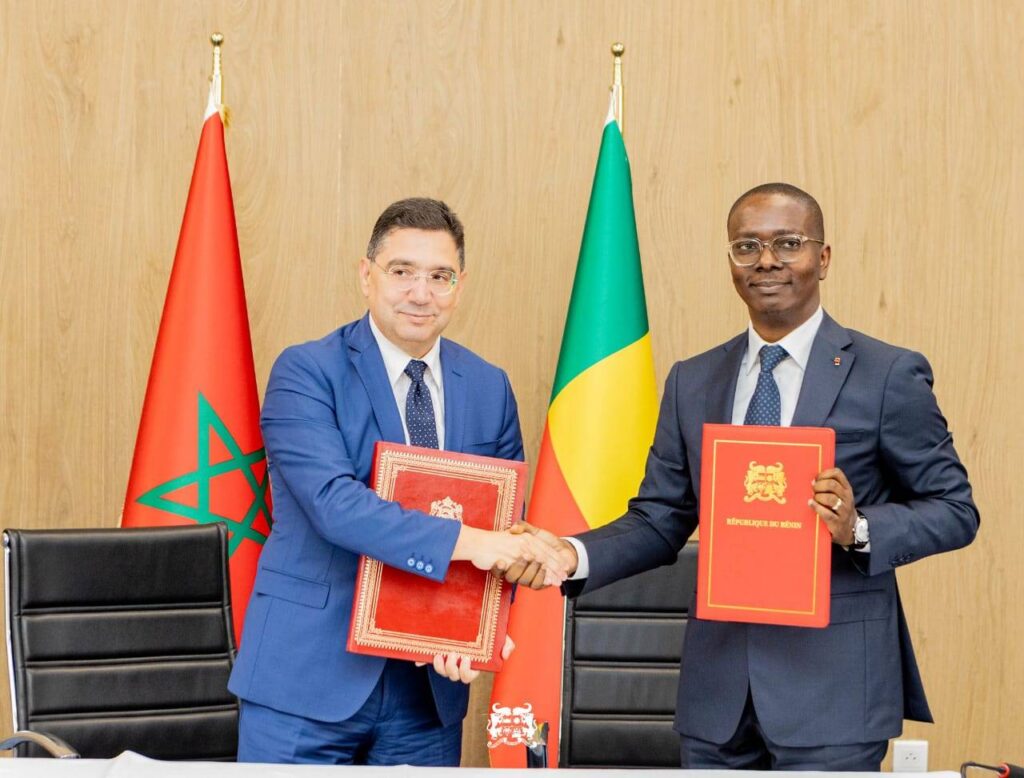
The 7th session of the Beninese-Moroccan Joint Cooperation Commission has concluded in Cotonou with a groundbreaking set of agreements that promise to reshape economic collaboration between the two nations. Held in the heart of Benin’s economic capital, the summit brought together high-ranking officials from both governments to chart a bold new course for bilateral relations, emphasizing shared prosperity and sustainable development across West Africa.
diplomatic momentum strengthens west african partnerships
This week’s gathering marked a pivotal moment in Benin’s international engagement, as delegations from Rabat and Cotonou convened to review progress and set ambitious new goals. Among the attendees were key figures such as Sèdami Medegan Fagla, Benin’s Minister of Higher Education, and a high-profile Moroccan delegation led by Nasser Bourita, Minister of Foreign Affairs, African Cooperation, and Moroccans Abroad. The discussions underscored the deepening trust between the two nations and their shared commitment to fostering regional stability and economic growth.
Bourita commended Benin’s democratic resilience and praised the strategic vision of President Romuald Wadagni, reaffirming Morocco’s readiness to serve as a cornerstone partner in Benin’s development trajectory. The dialogue emphasized not just diplomatic harmony, but the tangible benefits of South-South cooperation in an era of global uncertainty.
economic integration takes center stage in west africa
The summit’s core focus was the economic dimension, with both parties prioritizing job creation, financial attractiveness, and cross-border trade facilitation. Hugues Oscar Lokossou, Benin’s Minister Delegate for External Resource Mobilization and Debt Management, highlighted the transformative potential of this partnership:
« The South-South cooperation model we are building with Morocco is a direct response to the aspirations of our people. By pooling our strengths, talents, and resources, we are laying the foundation for shared prosperity across the region. »
The agreements signal a new era of economic synergy, particularly in sectors where Morocco excels—such as banking, port logistics, and agro-processing—aligning seamlessly with Benin’s modernization agenda. Analysts anticipate a ripple effect, with enhanced financial flows, streamlined business mobility, and expanded market access for local enterprises in both countries.
fourteen strategic accords to drive transformation
The cornerstone of the summit was the signing of 14 comprehensive cooperation agreements, covering a wide spectrum of sectors. These include:
- Economic and commercial cooperation: frameworks for trade facilitation, investment protection, and joint ventures to stimulate bilateral commerce.
- Financial and industrial collaboration: initiatives to strengthen banking ties, expand access to capital, and support industrial development.
- Education and human capital: expanded scholarship programs, technical training exchanges, and academic mobility to nurture a skilled workforce.
- Security and governance: joint initiatives to bolster regional stability and combat transnational threats.
- Cultural and social exchanges: programs to promote mutual understanding, including sports, arts, and interfaith dialogue.
Together, these accords create one of the most robust bilateral frameworks in West Africa, setting a benchmark for future partnerships on the continent.
from vision to action: a roadmap for results
The energy in the room extended beyond the signing ceremonies, with both sides emphasizing the need for swift implementation. Corinne Amori Brunet, Benin’s Minister of Foreign Affairs for Afro-descendant Integration, captured the collective enthusiasm:
« The true test of this partnership will be in turning these signed agreements into tangible projects that deliver real benefits to our people. I am confident that within a short time, we will be in Rabat to advance the next phase of this dynamic collaboration. »
The announcement of the next meeting in Rabat sends a clear message: the Benin-Morocco alliance is not merely symbolic but a living, action-oriented partnership with measurable outcomes expected in the coming months and years.
a model for africa’s future
By weaving together economic ambition, security imperatives, and cultural exchange, Cotonou and Rabat have demonstrated that pragmatic African integration is not only achievable but highly effective. This alliance could well serve as a template for other bilateral relationships across the continent, proving that cooperation rooted in mutual respect and shared goals can yield transformative results. As implementation begins, all eyes are now on the first wave of financial and industrial dividends from this historic partnership.