Gabon’s industrial leap with the Kobe-Kobe port project

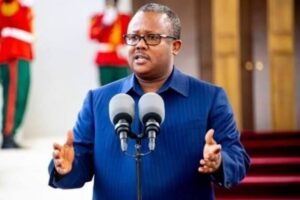
Shortly after initiating the construction of the Kobe-Kobe deep-water port on the Atlantic coast, President Brice Clotaire Oligui Nguema convened a strategic meeting in Nyonie with ambassadors and representatives from key global powers. This gathering was more than a diplomatic formality; it served as a clear declaration of Gabon‘s intent to become a major industrial, logistics, and mining hub in Central Africa.
During this high-level exchange, the Head of State delivered a firm message to international partners. The Kobe-Kobe project is not merely an infrastructure development; it is the foundation of a restructured economic model designed to prepare for a post-oil future, bolster economic sovereignty, and integrate Gabon more deeply into global value chains.
A transformative economic doctrine
The Kobe-Kobe project centers on one of the most significant strategic assets in Africa: the Belinga iron ore deposit. With estimated reserves of nearly 7.5 billion tonnes and an exceptional iron content of approximately 65%, it ranks among the world’s premier untapped mineral resources.
The true innovation lies in the shift away from traditional extractive models. For decades, the regional economy has relied on exporting raw materials. The vision presented by the President aims to break this pattern by creating an integrated complex featuring four interconnected components: the Belinga mine, a 500-kilometer electric railway, a deep-water port capable of hosting the largest international vessels, and the energy infrastructure required to power the entire industrial network.
This vertical integration is specifically designed to keep more added value within the country, fostering the rise of a domestic steel industry capable of processing mineral production locally.
The strategy of diverse partnerships
Addressing the diplomats at Kobe-Kobe, Brice Clotaire Oligui Nguema detailed a core pillar of his international strategy: the diversification of partnerships. He emphasized that the nation’s future cannot depend on a single partner or influence zone, but must instead rely on open cooperation with various economic and industrial powers.
This multi-polar approach is already evident in the international consortium involved. China is contributing to the rail and mining infrastructure, while France is active through several logistics operators. Furthermore, Italy, India, the United States, and Australia are providing expertise in finance, energy, engineering, and commerce.
This international framework is intended to secure both the funding and technology necessary for large-scale projects while safeguarding Gabon‘s autonomy in decision-making. Ambassadors from France and China have expressed their support for this balanced strategy, noting that it opens new avenues for cooperation and investment.
Industrial ambitions for Central Africa
Beyond the physical infrastructure, Kobe-Kobe represents a significant economic venture. Government forecasts suggest the project could create over 100,000 direct and indirect jobs, stimulate a network of national subcontractors, and provide a massive boost to the broader economy. Sectors such as transport, energy, metallurgy, and industrial maintenance are expected to benefit from this expansive economic corridor.
The geopolitical implications are equally vital. With the completion of this deep-water port, Gabon is positioned to become a primary maritime gateway for Central Africa at a time of increasing regional competition for logistics dominance. By inviting diplomats to share this vision with their respective governments and investors, the administration seeks to further expand the circle of stakeholders.
Ultimately, Kobe-Kobe is a symbol of a national strategy to turn natural resources into a catalyst for industrialization. If successful, Gabon could transition from a raw material exporter to a major industrial player on the global stage within the next decade.