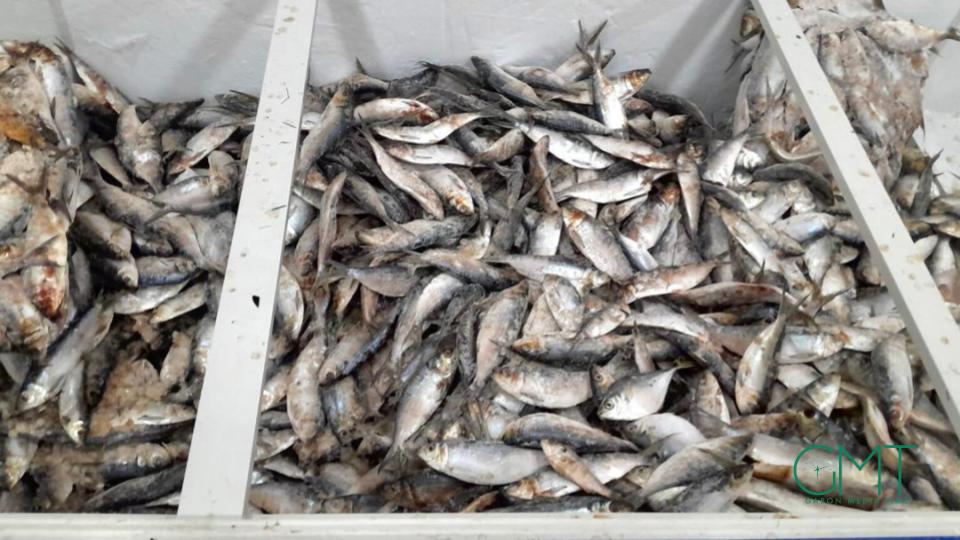
The Gabonese government has taken decisive action to safeguard the nation’s fish supply by imposing a temporary ban on the export of sardine (Ethmalosa fimbriata) and the locally known “sans nom” fish (Heterotis niloticus). Effective since March 26, 2026, the restriction applies across the entire country. Two official decrees issued by the Ministry of the Sea, Fisheries, and the Blue Economy, published in the Official Gazette on April 16, 2026, address a growing shortage of these fish in domestic markets. While these species are still being exported to neighboring countries—particularly through border areas such as Cocobeach—the authorities have decided to prioritize local consumption and curb uncontrolled outflows of these vital resources.
On May 30, Marie Françoise Dikoumba, the Governor of the Estuaire Province, traveled to Cocobeach to emphasize the mandatory nature of the ban to fishermen, traders, and transporters. This awareness campaign follows widespread concerns among consumers about the scarcity of sardines in markets. Authorities argue that cross-border shipments exacerbate supply imbalances, driving up prices and making it harder for households to access this staple food.
Securing fish stocks and boosting food security
The temporary ban aims to streamline production and distribution networks, stabilize domestic supply, and stabilize rising prices. The government also seeks to enhance the traceability of fishery products, ensure compliance with health standards, and strengthen control over future exports. This initiative aligns with broader efforts to combat inflation and reinforce food sovereignty—key priorities for national leaders.
The Ministry of the Sea reports increasing pressure on sardine populations in Gabonese waters and “sans nom” fish in river and lake basins. By halting exports temporarily, the state hopes to allow depleted stocks to recover, ensuring sustainable exploitation of these species. Violators face penalties under the Fisheries Code, including cargo seizures, revocation of fishing licenses, or even legal action, unless special authorization is granted by the competent authority.