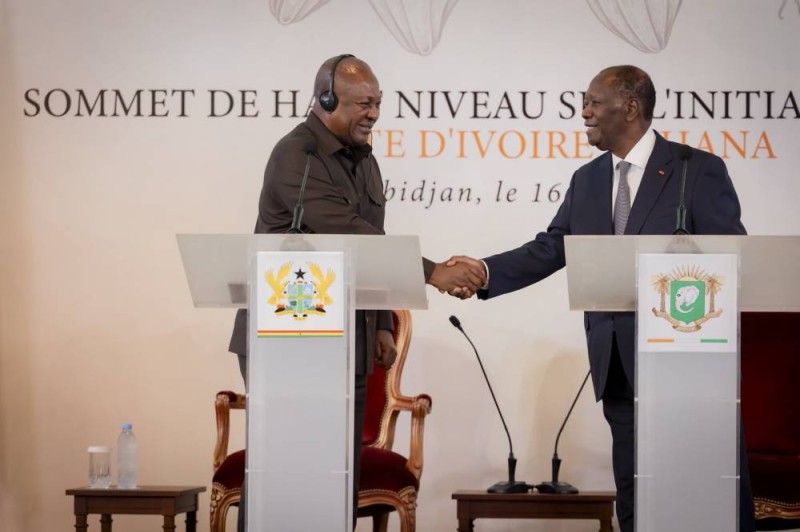
The Presidents of Côte d’Ivoire and Ghana have reaffirmed their dedication to fostering a sustainable cocoa industry during a high-level summit held at the Ivorian Presidential Palace in Abidjan-Plateau. This gathering, co-chaired by Alassane Ouattara and John Dramani Mahama, marked a pivotal moment in their ongoing collaboration to reshape the cocoa sector across West Africa.
The two leaders outlined a series of strategic decisions aimed at creating a fairer, more robust, and eco-conscious cocoa economy. These measures include aligning their pricing policies at the farm gate level, boosting value addition within the sector, and extending this collaborative initiative to other cocoa-producing nations on the continent. The objective is clear: to secure better livelihoods for farmers while strengthening the economic foundations of both countries and Africa as a whole.
Cocoa as a cornerstone of economic and social progress
As the world’s top cocoa producers—responsible for 60% of global output, with Africa contributing 80%—Côte d’Ivoire and Ghana play a vital role in the global chocolate supply chain. The cocoa industry sustains millions of livelihoods across the region, making it a linchpin for economic and social development.
President Ouattara emphasized the sector’s significance, stating, “At the heart of this industry is the farmer. It is their daily labor that fuels the global chocolate industry and gives this sector its strength, legitimacy, and future. Every decision we make must prioritize their well-being.”
Milestones and challenges in the cocoa sector
The partnership between Côte d’Ivoire and Ghana has already yielded tangible results. Since the landmark Abidjan Declaration on March 26, 2018, the two nations have worked together to stabilize cocoa prices through coordinated policies. This approach has notably improved incomes for farmers and demonstrated the power of unified action in shaping global market trends.
However, the sector still faces significant hurdles. Volatile prices, climate change impacts, aging cocoa trees, illegal mining encroaching on farmland, and evolving international sustainability standards—particularly in Europe—pose ongoing challenges. Addressing these issues remains critical to ensuring the long-term viability of the industry.
A shared vision for the future
President Mahama echoed his counterpart’s optimism, highlighting the success of the Ivorian-Ghanaian cocoa partnership and expressing confidence in even greater achievements ahead. “Our goal is to empower farmers by equipping them with the resources and support they need to sustain production,” he stated.
The two leaders committed to sharing best practices, increasing investments in the sector, and rallying other African cocoa-producing countries to adopt a unified, market-driven approach. By fostering collaboration and innovation, they aim to create a more resilient and prosperous cocoa economy for generations to come.