Gabon and European Union redefine partnership for a new era
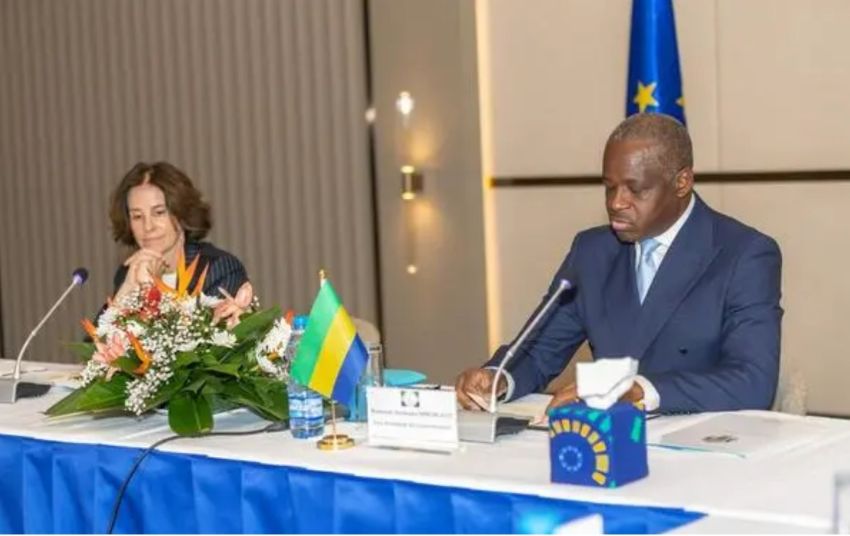
The strategic dialogue recently held in Libreville between Gabon and the European Union marks a turning point that goes far beyond standard diplomatic protocol.
Following the 2025 presidential elections and the establishment of the Vth Republic, this meeting highlights a fundamental transformation in the ties between Libreville and Brussels. Gabon is actively moving away from its image as a recipient of international assistance, seeking instead to be recognized as a vital economic, political, and environmental ally.
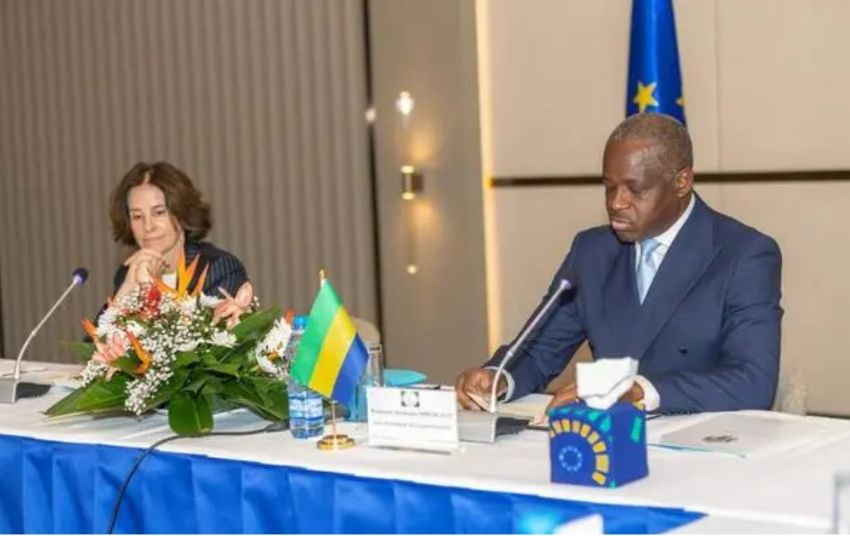
During discussions at the Palais des Congrès Omar Bongo Ondimba, led by Vice President Hermann Immongault and the European Union Ambassador Cécile Abadie, a fresh cooperation framework emerged. This new approach prioritizes direct investment, local value production, skill sharing, and the acknowledgement of Gabon‘s critical role in regional and global stability.
The Vth Republic under international review
This second session of the Gabon–European Union political dialogue was highly anticipated, serving as the first major international assessment of the country’s new institutional path following the political transition and the 2025 national vote.
Governance and political reforms were at the heart of the agenda. François Ndong Obiang, Minister of Reform and Institutional Relations, provided a detailed look at the new Constitution. He described the document as a tool for national unity, citizen engagement, and sustainable progress.
The Gabonese government highlighted key innovations, such as the formal institutional recognition of indigenous communities and the inclusion of the diaspora within state institutions. These steps are intended to create a more inclusive governance model that reflects the modern realities of the nation.
The 2025 elections were also analyzed. Libreville presented the process as transparent and peaceful, noting a voter turnout exceeding 70%. For the authorities, this high level of participation confirms public support for the current institutional order. Establishing this democratic credibility is essential for Gabon to attract foreign investment and bolster its economic appeal.
Shifting from assistance to strategic co-investment
A powerful message was delivered regarding the future of bilateral relations. Vice President Hermann Immongault advocated for a complete paradigm shift, suggesting it is time to move past the donor-recipient dynamic.
The goal is to transition toward a structural economic partnership centered on productive investment and human capital development. This vision aligns with the Samoa Agreement, which governs the updated relationship between the European Union and Africa, the Caribbean, and the Pacific.
Libreville aims to draw European capital into vital sectors including industrial manufacturing, infrastructure, local processing of natural resources, digital technology, and renewable energy. This strategy matches the economic goals of President Brice Clotaire Oligui Nguema, who seeks to diversify the economy and move away from raw material exports.
Ambassador Cécile Abadie echoed this sentiment, noting the importance of evolving cooperation tools to focus on mutual interests and tangible economic outcomes.
Gabon’s green diplomacy and climate leadership
Environmental protection remains a cornerstone of the relationship. With nearly 88% of its territory covered by forests, Gabon is a primary guardian of the Congo Basin, the world’s second-largest ecological lung.
Gabonese authorities argue that their contribution to global climate stability deserves significant financial compensation. Hermann Immongault emphasized that protecting these ecosystems is a heavy responsibility for forested nations. Consequently, Libreville is calling for stronger international funding mechanisms to bridge the gap between conservation and economic development.
This demand resonates within global climate circles, where nations protecting massive forest reserves are increasingly seeking fair payment for the ecological services they provide to the world.
The dialogue also touched on regional security in Central Africa, the role of ECCAS (CEEAC), safety in the Gulf of Guinea, and the promotion of multilateralism. Ultimately, Gabon is redefining its international standing as a more stable, assertive, and ambitious partner, aiming for a relationship with the European Union built on reciprocity and shared growth.