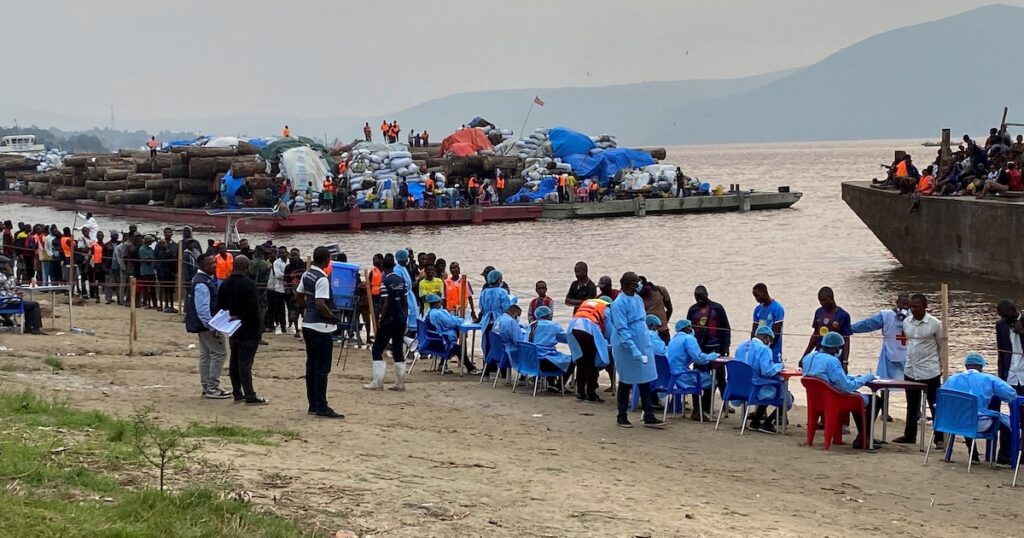
As the Ebola crisis in the Democratic Republic of Congo (DRC) deepens, medical authorities report no signs of slowing. On August 5, health officials sounded the alarm during a high-level inspection of the outbreak’s epicenter in the eastern region. Two and a half months after the first case was confirmed on May 15, this epidemic has already become the second-deadliest in history, with a fatality rate exceeding 40%. Among the nearly 4,000 reported cases, 1,850 lives have been lost to the virus.
The strain driving this devastation, Bundibugyo, has proven far deadlier than previous outbreaks. According to the Africa Centres for Disease Control and Prevention (Africa CDC), its spread has outpaced all prior recorded instances of the same strain. During the last major Ebola outbreak in the DRC—spanning 2018 to 2020—it took over a decade to reach a similar death toll. During a late July briefing, Africa CDC Director General Jean Kaseya admitted, “Today, I cannot claim we have full control over this outbreak.”
Violence and instability cripple response efforts
The eastern DRC remains one of the most volatile regions in Africa, where medical intervention faces insurmountable challenges. The outbreak’s focal point, Ituri Province, is plagued by relentless attacks from the Allied Democratic Forces (ADF), an armed group originating from Uganda. Neighboring North Kivu suffers similar turmoil, with large swathes under the control of the M23 rebel faction—backed by neighboring Rwanda—after months of fierce clashes with government forces.
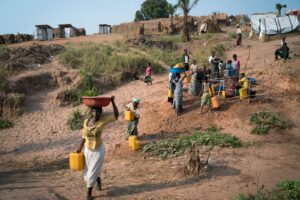
Years of conflict have displaced millions, pushing survivors into overcrowded displacement camps with dire hygiene conditions. The lack of early detection further compounded the crisis, as limited resources delayed the identification of cases. Even now, tracking efforts remain critically insufficient. In Bunia, the provincial capital, Médecins Sans Frontières (MSF) reports that 90% of admitted patients were not previously registered contacts. Across Ituri, only 59% of potential exposures have been traced—a stark contrast to the estimated 40 contacts required per confirmed urban case. Current efforts cover just 13% of the necessary follow-up, while 20% of recorded individuals receive no monitoring at all, either due to personnel shortages or ongoing violence.
The consequences are dire: 60% of fatalities occur within communities, not in healthcare facilities, highlighting the breakdown in containment measures. Weak surveillance systems and delayed international support have left health workers overwhelmed.
Experimental treatments offer a glimmer of hope
Despite the grim outlook, scientific breakthroughs are emerging. At the University of Oxford, researchers have initiated the first clinical trial of a Bundibugyo-specific vaccine, administering the first dose to a volunteer this month. The trial, involving 50 adults, aims to assess safety and efficacy. Meanwhile, the Coalition for Epidemic Preparedness Innovations (CEPI) is funding a second vaccine candidate developed by Hilleman Laboratories in Singapore, with rapid deployment and testing planned in the DRC.
In the absence of a Bundibugyo-targeted vaccine, health authorities are deploying the Zaire strain vaccine as a precautionary measure. Early data suggests it may provide partial protection, as vaccinated patients exhibit milder symptoms and survival rates improve. Over 40 individuals are also participating in a trial combining multiple experimental treatments to enhance recovery odds.
Jean Kaseya has advocated for expanded use of remdesivir, an antiviral that proved effective in neighboring Uganda, where officials credited it with reducing the fatality rate to just 10%. “If we apply the same strategy here, we could save countless lives,” Kaseya stated. Projections warn this outbreak may surpass the 2014–2016 West Africa epidemic—the deadliest on record, which claimed over 11,000 lives.
Global aid arrives too late to curb the crisis
The delayed international response has exacerbated the situation. Earlier this year, cuts to U.S. Agency for International Development (USAID) funding—long a lifeline for Congolese health programs—left the country vulnerable. On August 5, the U.S. State Department announced a $242 million pledge, bringing total American aid for Ebola response to $512 million. While this infusion enables the World Health Organization (WHO) and CDC to activate their six-month response plan, valued at $518 million, experts argue the sum falls short of past allocations for humanitarian crises.
The U.S. remains the largest contributor to the Ebola response, far outpacing contributions from the European Union. Yet even with renewed funding, the window to contain the outbreak is narrowing. Without accelerated action, the virus threatens to claim thousands more lives—and rewrite the grim legacy of the world’s deadliest Ebola crises.