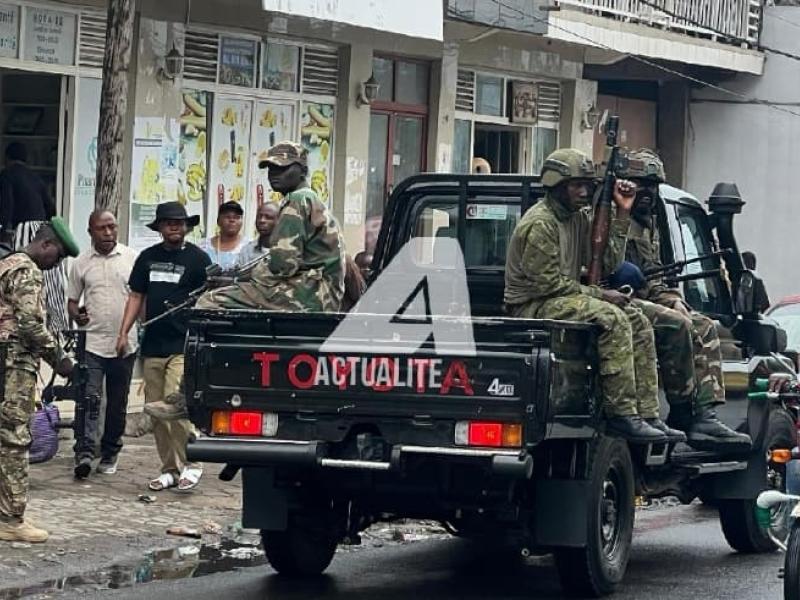
DRC east: Russia accuses Ukraine of backing M23 rebels
In a significant escalation of regional tensions, Russia has publicly accused Ukraine of providing military support to the M23 rebel group, which has been active in the eastern provinces of the Democratic Republic of Congo (DRC). The allegations were made by Russian Foreign Minister Sergei Lavrov during a joint press conference with his Burundian counterpart, Édouard Bizimana, in Bujumbura on Friday, July 10, 2026.
Speaking to reporters, Lavrov stated that his country has identified foreign interference in Congolese affairs, with Ukrainian operatives allegedly playing a direct role in supporting the M23. The Russian diplomat emphasized that this support is part of a broader strategy to destabilize legitimate governments in Africa that maintain close ties with Moscow.
“We are witnessing blatant attempts at foreign interference in African affairs, particularly in the Democratic Republic of Congo. The legitimate authorities of the DRC, with the support of Burundi, are currently facing aggression from the so-called M23 group, which is backed by foreign actors, including Ukrainians,” Lavrov declared.
According to Lavrov, Ukraine’s involvement in the conflict is not isolated but part of a wider pattern where Kyiv seeks to undermine governments perceived as allies of Russia while positioning itself as a key player on the African continent.
“Ukrainian operatives are increasingly involved in conflicts across Africa. Their goal is to bolster forces opposing legitimate governments solely to enhance their own influence and create obstacles for countries friendly to Russia,” he added.
Russia’s growing concerns over drone warfare in eastern DRC
The accusations come amid rising international alarm over the escalating use of armed drones in the conflict, a development that has intensified both humanitarian and security crises in the region. Addressing the United Nations Security Council during a session on the DRC’s deteriorating situation, Russian UN envoy Anna Evstigneeva highlighted the dangers posed by this evolving warfare tactic.
Evstigneeva specifically referenced the March 11 drone strike in Goma, which resulted in the death of a UNICEF staff member. She also expressed Moscow’s deep concern over reports indicating the presence of foreign mercenaries with military experience in Ukraine, now reportedly operating as drone instructors and operators in eastern DRC.
“We are particularly troubled by reports of foreign mercenaries, some of whom gained combat experience in Ukraine and are now being recruited as drone operators or instructors,” Evstigneeva stated during her address on June 26, 2026.
Diplomatic deadlock complicates peace efforts
The Russian accusations add another layer of complexity to the already stalled diplomatic processes aimed at resolving the conflict. Despite the signing of the Washington Agreement and subsequent follow-up meetings, the security and humanitarian situation in eastern DRC continues to deteriorate. Disagreements between Kinshasa and Kigali over the interpretation of the agreement’s provisions have further hindered its implementation.
The Doha Process, mediated by Qatar, has also faced significant challenges. Multiple rounds of negotiations between the DRC government and the Alliance Fleuve Congo (AFC/M23), which is backed by Rwanda, have failed to bridge the gap between the two sides on key issues. A much-anticipated meeting in Montreux, Switzerland, did not yield the expected breakthroughs, leaving the peace process in a precarious state.
Calls for adherence to commitments made under various peace frameworks continue at national, regional, and international levels. However, these appeals have yet to translate into tangible progress. Diplomatic inertia persists as conflicting interpretations of agreements by the involved parties maintain the deadlock, delaying their effective implementation.
The rising tensions and unaddressed grievances in eastern DRC underscore the urgent need for concerted international action to prevent further escalation and protect civilian lives.