why Benin’s president wadagni is shuttling between Niamey, Ouagadougou and Abuja
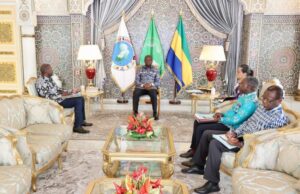
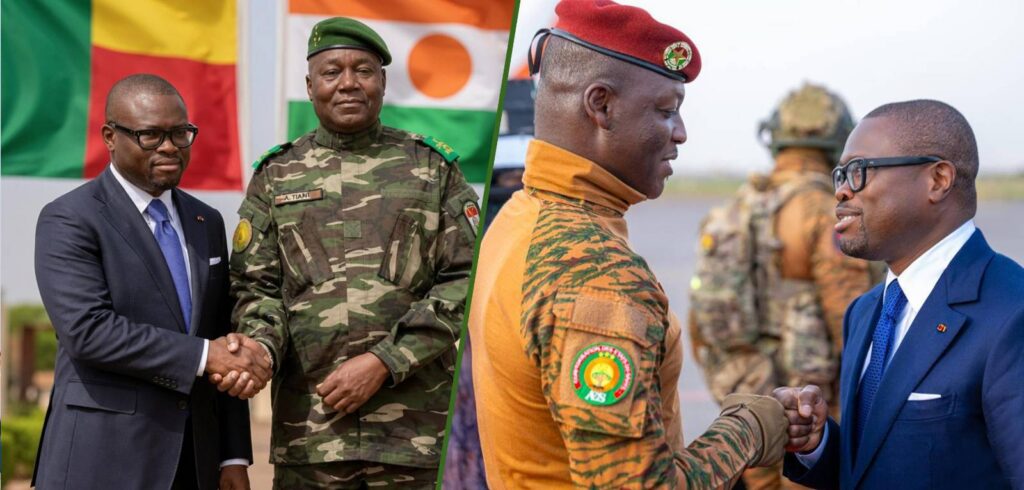
President Romuald Wadagni of Bénin has been crisscrossing West Africa in recent weeks, making official stops in Nigeria, Niger, and Burkina Faso. This high-level shuttle diplomacy signals a deliberate effort to restore and strengthen regional ties at a critical juncture. The resurgence of direct diplomatic engagement follows a prolonged period of strained relations, exacerbated by political transitions across the Sahel and evolving regional institutional policies.
The timing and scope of these visits suggest a coordinated strategy to reopen vital communication channels, driven by pressing economic and security imperatives shared by all four nations. Rather than relying solely on multilateral frameworks, Bénin appears to be taking a proactive, bilateral approach to rebuild trust and functionality in cross-border cooperation.
economic ties: how Benin, Niger, and Burkina Faso depend on each other
The economies of Bénin, Niger, and Burkina Faso are deeply interwoven, forming a tightly knit regional network. For landlocked Niger and Burkina Faso, access to global markets hinges on the efficiency of transit corridors through coastal states—most critically through Bénin. The Cotonou-Niamey route and the supply lines to Ouagadougou are lifelines, enabling the movement of essential goods, fuel, and agricultural products.
Similarly, the economic health of Bénin is closely tied to the volume of trade passing through its ports and logistics networks. The Port Autonome de Cotonou, a vital commercial gateway, relies heavily on transit traffic to and from the Sahel. This mutual dependency extends into energy infrastructure as well. The pipeline linking Niger‘s Agadem oil fields to the Sèmè-Kpodji terminal is a prime example: it enables Niger to export crude oil while generating transit revenue for Bénin.
A newly formed expert committee has been tasked with identifying and removing barriers to free movement within 15 days. This urgency underscores the shared economic stakes—each nation stands to lose if trade flows are disrupted, making the preservation of these corridors a non-negotiable priority.
securing the Sahel: Benin’s role in countering transnational threats
The resurgence of militant groups and cross-border criminal activity has intensified security challenges across the Sahel. Bénin, Niger, and Burkina Faso share a vulnerable frontier zone: the Parc W region. This interconnected landscape demands coordinated security responses that no single country can sustain alone.
The recent diplomatic overtures to Ouagadougou and Niamey reflect a strategic pivot toward joint security measures. By restoring direct dialogue, these nations aim to enhance intelligence sharing, clarify military coordination protocols, and reinstate joint patrols. The goal is to neutralize asymmetric threats and protect territorial integrity—especially for Bénin, whose southern border is only as secure as the Sahel’s stability allows.
balancing regional alliances in a shifting west african landscape
This diplomatic initiative unfolds against a backdrop of shifting regional alliances. While multilateral bodies like ECOWAS continue to play a key role, the emergence of new coalitions—such as the Alliance des États du Sahel (AES)—has introduced fresh complexities. Bénin‘s approach seeks to maintain open communication channels with AES member states while upholding broader regional commitments.
The sequence of visits—starting in Abuja, then moving to Niamey and Ouagadougou—demonstrates a calculated effort to serve as a functional bridge. This strategy aims to reduce geopolitical risks, ensure the continuity of economic flows, and safeguard the safety of local populations in a rapidly evolving regional order.
a new chapter for west african diplomacy
The restoration of bilateral diplomatic channels by Bénin is not merely symbolic. It is a pragmatic response to the realities of interdependence, geography, and shared vulnerability. By prioritizing direct engagement over institutional channels, the administration is positioning itself as a catalyst for regional stability and economic recovery. As these nations navigate a complex geopolitical landscape, the success of this initiative may well determine the future of cross-border cooperation in West Africa.