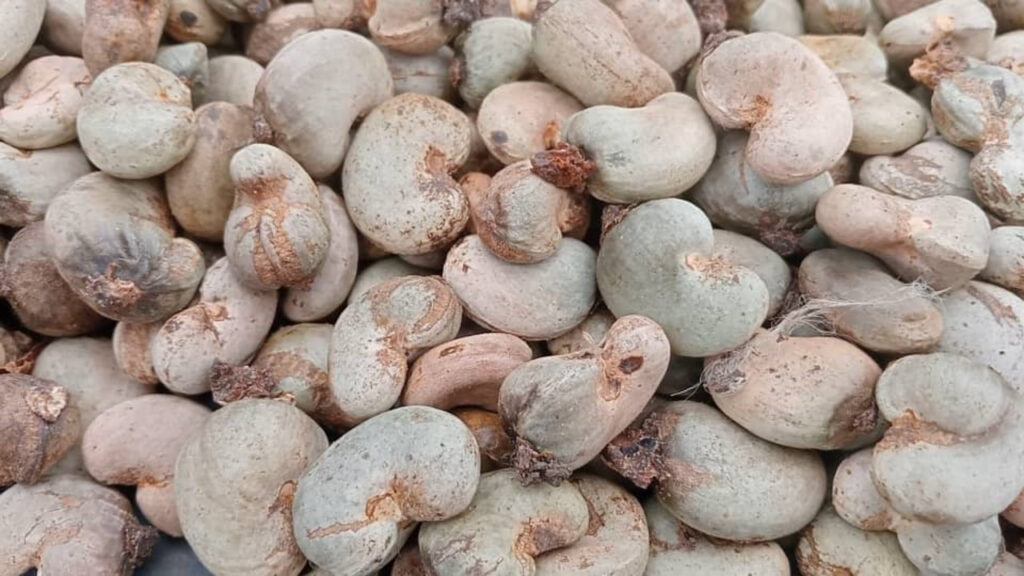
Côte d’Ivoire’s cashew production is experiencing a sharp downturn this year, with the Bounkani region in the northeast hit particularly hard. The Council for Cotton and Cashew (Conseil Coton Anacarde) had projected a harvest of 1.3 million tonnes, a stable figure compared to recent years. However, this optimistic outlook has been revised downward by 200,000 tonnes due to adverse weather conditions and poor agricultural practices.
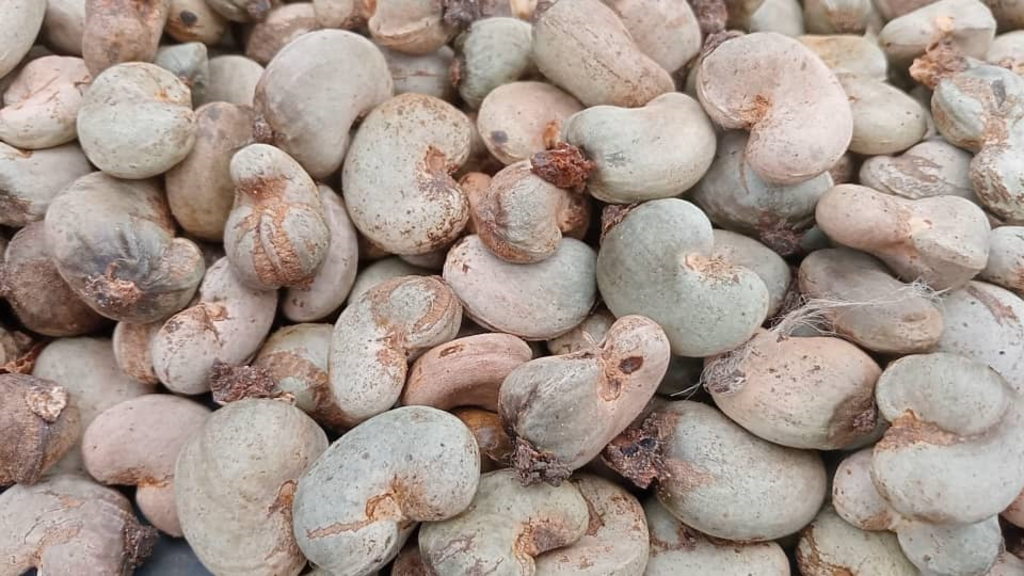
From Bouna, a key cashew-growing hub in the Bounkani region, farmer Kouamé Ouattara shared his struggles. His 3-hectare plantation, which once yielded 500 kg per hectare, produced barely two sacks this season. Ouattara blames the disruption in rainfall patterns. “Traditionally, heavy rains between November and December spur flowering in cashew trees. This year, the rains stopped in October, leaving us with no significant precipitation until February,” he explained. “Without flowering, there can be no harvest. This season has been a complete failure.”
The impact extends beyond cashew farmers. Local beekeepers, who rely on cashew plantations for their hives, are also suffering. Koffi Ouattara, president of the Koflangué beekeepers’ association, reported a drastic drop in honey production. “Last year, we harvested 100 litres. This year, we barely managed 30 litres,” he lamented. “It’s a massive loss for our community.”
climate change and farming practices worsen the crisis
Dr. Sibirina Soro, a researcher at the University of Daloa and coordinator of the national cashew research project, pointed to both climate factors and subpar agricultural techniques. “Many plantations resemble dense forests due to improper spacing at the time of planting,” he noted. “The recommended density is 100 trees per hectare. Without it, trees compete for resources, stunting growth and reducing yields.”
Soro emphasized the need for farmer education to combat pest infestations naturally, as chemical use is minimal in Ivorian cashew fields. “Pests thrive in overcrowded plantations. Training farmers in best practices is crucial to safeguarding future harvests,” he urged.