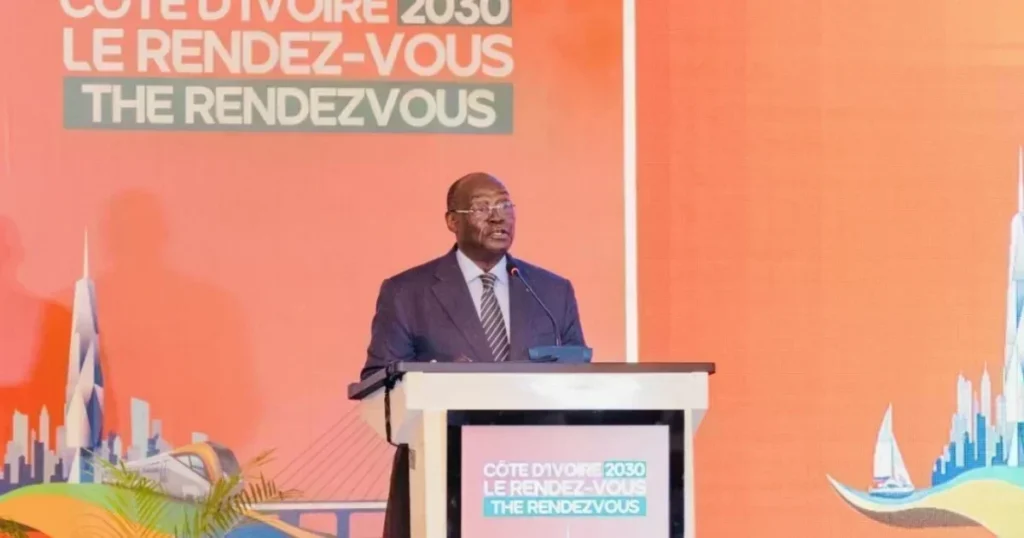
Côte d’Ivoire has secured an unprecedented level of international financial backing, with commitments exceeding 80 billion dollars for its National Development Plan 2026-2030. This remarkable achievement underscores the country’s economic resilience and renewed investor confidence.
Unprecedented financial commitments from global partners
During a high-profile event in Abidjan, government officials and investors finalized agreements that far surpass initial projections. The minister of Planning announced that while the country had sought 20 billion dollars in public funding, international partners committed over 80 billion dollars—four times the original target.
Key contributors include the World Bank, African Development Bank, and European Union, signaling strong confidence in Côte d’Ivoire’s economic trajectory. The minister emphasized that “all indicators are virtually green,” highlighting the nation’s economic stability and growth potential.
Sectoral focus of the National Development Plan
The 209 billion dollar plan prioritizes several critical areas:
- Security enhancement to maintain social stability
- Agricultural modernization, accounting for 20% of GDP
- Development of national champions through business support initiatives
- Major infrastructure projects, including a high-speed rail network
Strong private sector participation expected
Over 70% of the total funding is anticipated from private investors, with commitments already surpassing 147 billion dollars. This reflects growing confidence in Côte d’Ivoire’s business environment and long-term growth prospects.
Recent economic milestones
The country has demonstrated its financial credibility through:
- A successful 1.3 billion dollar international bond issuance in February
- An 833 million dollar IMF disbursement approved in June
- Consistent 6.5% annual GDP growth over recent years
While the IMF projects a slight growth moderation to 6% in 2026, inflation is expected to remain controlled at around 3.3%. The government continues its diversification efforts beyond traditional agriculture, capitalizing on recent mineral, gas, and oil discoveries to fuel long-term development.