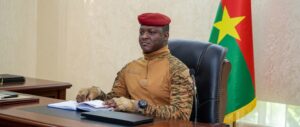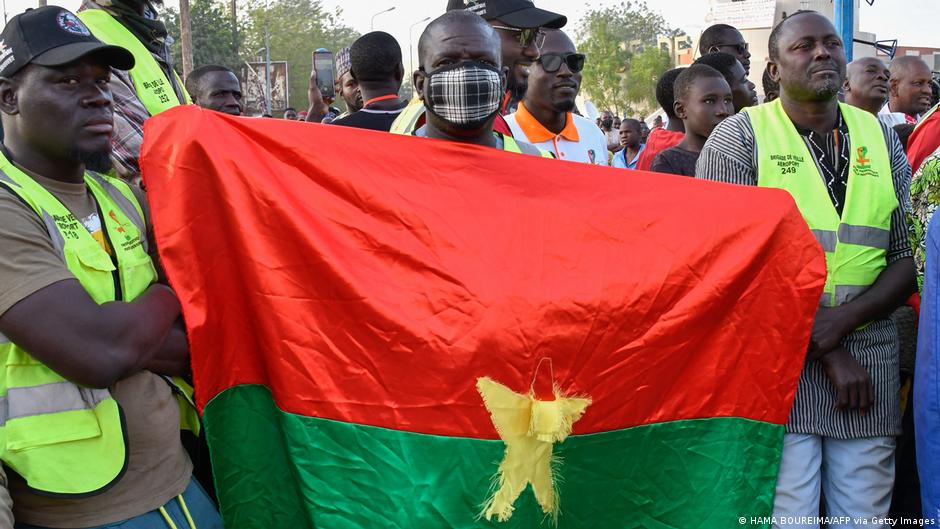
In Burkina Faso, the arrest of prominent religious leader Imam Mohamed Ishaq Kindo and the suspension of the country’s leading student union have underscored a growing crackdown under the current military administration. These developments mark a troubling escalation in restrictions on civic freedoms across the Alliance of Sahel States (AES).
Religious leader’s detention sparks unrest
The disappearance of Imam Kindo ahead of Eid al-Adha has raised serious concerns. Witnesses reported seeing masked security forces detaining him at his residence. As a respected voice within Burkina Faso’s Muslim community, his arrest has drawn widespread attention.
« Imam Kindo was not just a spiritual leader; he was one of the few Muslim figures who initially supported Captain Ibrahim Traoré but maintained a critical stance on public policies, especially regarding proposed laws on religious practices. »
His criticism of a bill regulating public religious activities—including outdoor prayers—appears to have drawn the ire of authorities. Following his detention, protests erupted, resulting in clashes and multiple injuries. Dozens were arrested, and the Federation of Islamic Associations of Burkina (FAIB) repeatedly urged calm amid escalating tensions.
Disinformation and fabricated claims
A wave of misinformation followed, including a falsified statement announcing the imam’s death, which the prosecutor general swiftly refuted. Other videos, purportedly showing abuses, were flagged for inconsistencies and potential AI-generated content by fact-checkers. Reports also indicated that some arrested protesters were taken to a military camp in Kaya, located in the Centre-Nord region.
A leader outside the mould of regional imams
While comparisons have been drawn to Imam Mahmoud Dicko in Mali, observers note key differences. Imam Kindo, a member of the FAIB’s council of scholars, focused on safeguarding Islamic doctrine rather than engaging in broader political advocacy.
« His role was one of religious vigilance, not political opposition. The imam’s arrest reflects a broader strategy to stifle dissent under the pretext of national security. »
Student union suspended amid escalating repression
The military authorities have taken aim at civil society with the three-month suspension—renewable—of the General Union of Burkinabe Students (UGEB), one of the country’s oldest student organizations, founded in 1960. Its president, Bazo Wilfried, and several members have been detained on charges of « terrorism glorification » and « undermining state security ».
These accusations stem from the union’s criticism of the government’s inability to restore security, describing the situation as a « civil war » and highlighting the state’s « manifest failure » to protect citizens.
According to Mahamadou Idder Alghabid, Deputy Secretary-General of the Alliance of Sahel Democrats (ASD), such charges are part of a troubling regional pattern:
« Accusing unarmed students of terrorism is laughable, yet this tactic has become common across the Sahel. Any dissent is immediately branded as terrorism or collaboration with militants. This language of repression is now the norm in Burkina Faso, Mali, and Niger, all under military rule. »
Widening crackdown across the Sahel
In Burkina Faso, Mali, and Niger, human rights advocates warn of a systematic erosion of public freedoms. Civil society organizations are being dissolved, activists face judicial harassment, and freedom of expression is increasingly restricted. The line between legitimate criticism and criminal offense is rapidly disappearing.
Mahamadou Idder Alghabid emphasizes the gravity of the situation:
« We are fully aware of the immense challenges ahead. We are up against three military regimes. But every day, we gain ground while they lose it. Their propaganda initially resonated—promising sovereignty and anti-imperialism—but these promises have proven hollow. Saharan communities are waking up to the reality that these juntas cannot deliver. They are abandoning the putschists’ sinking ship. »
A society resisting despite repression
Despite the risks—arrests, abductions, and violence—voices of dissent continue to speak out, often from exile. Newton Ahmed Barry, a Burkinabe journalist in exile, believes the regime’s excesses may ultimately trigger a societal backlash:
« A regime built on force always collapses under its own weight. Ibrahim Traoré’s government is no exception. The Burkinabe people will not remain silent forever. They will fight back. »
International support for democratic resilience
Human rights organizations are calling for sustained international pressure to protect civic spaces. They argue that silence and ambiguity only embolden authoritarianism:
« Condemning military coups and human rights violations is not counterproductive—it is necessary. Turning a blind eye only legitimizes these abuses. »
They insist on the urgency of defending peaceful democratic expression and holding juntas accountable for their actions.
Confronting the normalization of authoritarianism
At its core, the crisis in Burkina Faso and across the AES reflects a dangerous normalization of military rule. Human rights groups stress the need to name these violations clearly and reject the idea that coups and repression can ever be acceptable:
« The seizure of power by putschists cannot become the new normal. Systematic rights violations must be condemned unequivocally. »