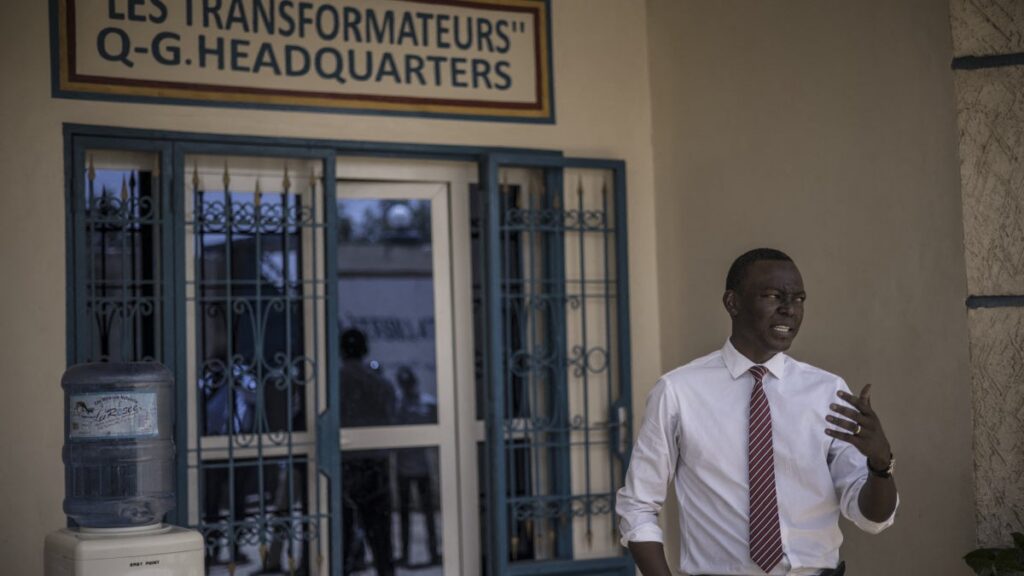
A full year has now passed since Chadian authorities apprehended and subsequently sentenced Succès Masra, a prominent opposition figure and former Prime Minister. His continued imprisonment, based on what appear to be politically motivated accusations, underscores the government’s diminishing tolerance for dissent within the nation.
Succès Masra, who leads the opposition party Les Transformateurs, was taken into custody at his N’Djamena residence during the early morning hours of May 16, 2025. He faced charges of inciting hatred and rebellion through social media posts. These charges followed deadly inter-communal clashes on May 14 in the Logone Occidental province, which claimed dozens of lives. Immediately after these tragic events, Masra had expressed his condolences to the victims online, stating unequivocally that “the life of no Chadian should be trivialized.”
In August 2025, a Chadian court found the opposition leader guilty of “disseminating hateful and xenophobic messages” and “complicity in murder,” handing down a 20-year prison sentence. Succès Masra, who maintained his innocence, was tried alongside numerous co-defendants, most of whom also received 20-year prison terms. The court further imposed substantial fines on the accused.
Immediately following the conviction, Succès Masra’s legal representatives lodged an appeal, which remains pending before the courts.
While clashes between pastoralist and farming communities are a recurring issue in southern Chad, Succès Masra’s arrest fits into a broader pattern of a shrinking political landscape. In the lead-up to the May 2024 presidential election, where he challenged the then-transitional President Mahamat Idriss Déby, Masra and his supporters faced threats and arbitrary arrests. A notable opposition figure was even assassinated before the polls, with no justice subsequently rendered.
After the election, Succès Masra publicly alleged that the electoral process had been manipulated.
Security forces have also resorted to excessive force against protesters, particularly during demonstrations in 2021 and 2022, which resulted in dozens of fatalities and injuries. Hundreds were arbitrarily detained, with some reportedly enduring ill-treatment. On May 8, 2026, eight additional opposition leaders were tried and sentenced to eight years in prison for “rebellion” and “insurrectionary movement” after attempting to organize a pro-democracy protest that had been prohibited.
With a year now passed since Succès Masra’s arrest, the Supreme Court of Chad is expected to review his appeal.
Regional stakeholders, including the Economic Community of Central African States (CEEAC), who have thus far struggled to safeguard democratic principles in Chad, also bear a responsibility. They should exert pressure on Chadian authorities to restore political rights and honor previous agreements, such as the Kinshasa agreement, which aimed to ensure the security of political activities for opposition parties, including that of Succès Masra.