With President Paul Biya out of the public eye for 57 days, contentious military appointments are stoking fears of an ethnic succession crisis and a dangerous power void in Cameroon.
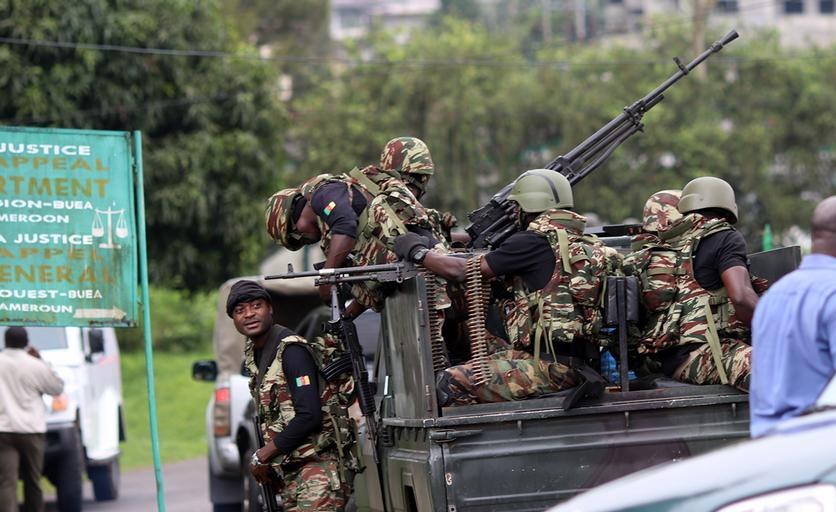
At 93 years old, Paul Biya has now been absent from Cameroon for nearly two months, yet the country’s military leadership is undergoing a sweeping reorganization that critics warn signals a dangerous tribalization of power. Since his sudden departure to Switzerland on June 7, 2026, a series of presidential decrees has reshaped the armed forces, appointing new brigade generals, a new presidential guard commander, and a major general to the joint chiefs of staff—all while the head of state remains unseen.
An absence shrouded in secrecy
The official narrative describes Biya’s trip as a “brief private stay” in Geneva, where he arrived with his wife, Chantal. Yet eight weeks later, the whereabouts of Cameroon’s longest-serving leader remain unknown. Government statements insisting he is “in good health” and “returning soon” have done little to quell public skepticism, especially as rumors of a knee surgery followed by complications circulate unchecked.
« Why conceal health issues behind a manipulated electoral process? If Paul Biya is unwell, the people of Cameroon deserve transparency, not silence, » declared Roger Justin Noah, secretary-general of the Movement for the Renaissance of Cameroon (MRC).
Military reshuffle fuels succession speculation
On August 3, 2026, a presidential decree (No. 2026/265) appointed General Beko’o Abondo Raymond Jean Charles as the new commander of the Republican Guard—a critical role responsible for protecting the president and the seat of power. The move was not isolated. In the same sweeping reorganization:
- Five new brigade generals were appointed
- Major General Ebaka Hippolyte took over as chief of staff
- Six regional commanders were reassigned across four of Cameroon’s five military zones
« Only the president can authorize such military appointments, » noted a retired colonel speaking on condition of anonymity. The timing—amid Biya’s unexplained absence—and the lack of consultation have fueled suspicions of a preemptive power grab.
« Changing command structures while the president remains out of public view raises urgent questions: who is truly in control of national security at this pivotal moment? »
Clan rivalries and constitutional paralysis
Behind closed doors at the Etoudi Palace, two dominant factions are locked in a silent power struggle. One camp, centered around Biya’s son Franck, represents the status quo. The other coalesces around First Lady Chantal Biya and Ferdinand Ngoh Ngoh, the powerful secretary-general of the presidency.
The tension escalated in April 2026 when parliament revised the constitution to reintroduce the vice-presidential office—ostensibly to ensure a smooth transfer of power in case of vacancy. Yet the position remains unfilled, leaving Cameroon without a constitutional successor and deepening institutional paralysis.
« The prolonged absence of Paul Biya—now surpassing 50 days abroad—has plunged Yaoundé into total uncertainty, » observers note.
Tribalism and the specter of Rwanda-style chaos
Analysts warn that Cameroon is teetering on the edge of a dangerous precipice. The militarization of the state, coupled with ethnic factionalism, echoes the lead-up to the 1994 Rwandan genocide—where a contested succession and ethnic manipulation of the military led to catastrophe.
« We are witnessing both the militarization and tribalization of succession—a path no one can predict the end of, » warned commentator Jean-Pierre Bekolo.
The opposition strikes back
The Movement for the Renaissance of Cameroon (MRC), led by Maurice Kamto, has taken bold legal action. Deputies have petitioned the Constitutional Council to declare a vacancy in the presidency. « The Council must recognize the power vacuum at the highest level of the state, » demanded lawmaker Jean-Michel Nintcheu. Yet without a vice president, the constitutional process to trigger succession remains blocked—leaving Cameroon in a dangerous institutional deadlock.
Why act now? The shadow of doubt grows
Government officials insist Biya’s return is imminent, yet the urgency to replace key military leaders—while the president remains incommunicado—has raised eyebrows. « If he is truly returning soon, why not wait? Why make such sensitive appointments now? » asks Bekolo. The government has dismissed rumors of forged decrees, but once seeded, doubt festers.
Can Cameroon avoid collapse?
The warning signs are stark, but not insurmountable. Analysts point to three critical steps to avert disaster:
- Transparency: The government must clarify Biya’s health status and provide a credible timeline for his return.
- National dialogue: A structured dialogue among political forces to address ethnic tensions and restore social cohesion.
- Constitutional repair: Appointing a vice president to secure the succession process and restore institutional trust.
The hour of reckoning
« History remembers not only actions, but silences and willful blindness, » wrote Bekolo. Cameroon stands at a crossroads. The path of continued opacity, ethnic militarization, and shadow governance leads only to ruin. After 43 years under Biya’s rule, Cameroonians have shown remarkable patience—but they will not tolerate those who play with fire in the dark.
« Stop gambling with the nation’s future. Tomorrow, it may be too late to say: ‘We didn’t know.’ »