Cameroon’s opposition party urges constitutional clarity on presidential absences
More than 40 days after President Paul Biya left Cameroon for a private trip to Europe, the country’s institutions remain in a state of prolonged uncertainty. The official announcement from the Civil Cabinet confirmed his departure from Yaoundé on June 7, 2026, but provided no details about his whereabouts or the purpose of his visit. While unconfirmed reports suggest he may be in Switzerland, the President’s prolonged silence has sparked widespread speculation among citizens and political circles alike.
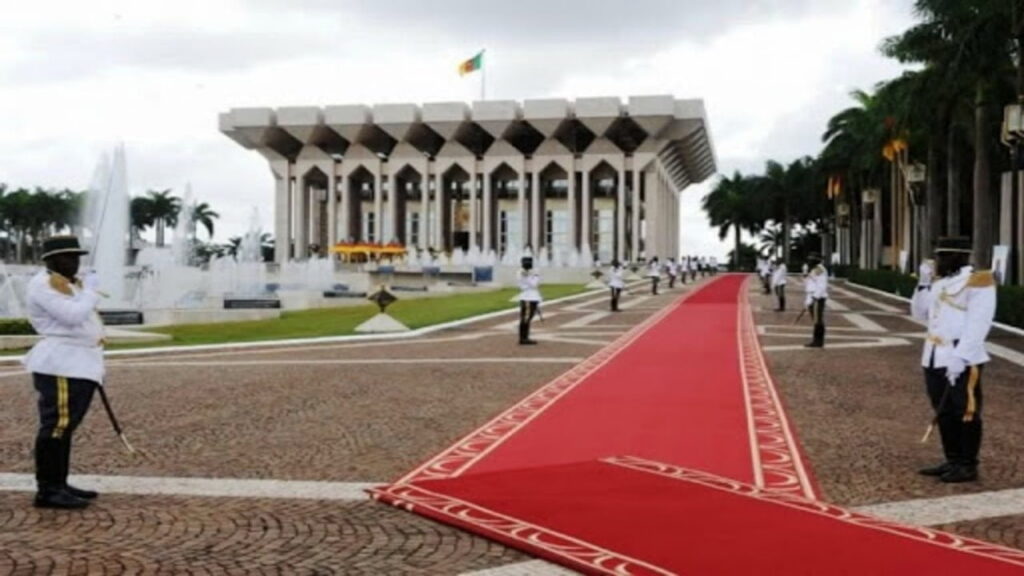
Public concern has intensified as the absence stretches beyond expected timelines. Patricia Tomaino Ndam Njoya, President of the Democratic Union of Cameroon (UDC), has publicly criticized the lack of transparency surrounding the Head of State’s prolonged absence from the Palais de l’Unité. In a formal statement, she emphasized that the stability of Cameroon’s institutions depends on clear mechanisms governing presidential continuity and the exercise of public authority in cases of temporary incapacity.
Constitutional gaps fuel calls for reform
The UDC argues that Cameroon’s current constitutional framework—amended in April 2026—requires urgent implementation to address gaps exposed by the President’s absence. Among the key proposals:
- Establish clear procedures for presidential absences: Define precise timelines and conditions under which the Head of State’s prolonged absence must be addressed, including regular updates to the nation and Parliament.
- Delegate presidential functions formally: Ensure transparent and published delegations of presidential powers when continuity demands it, preventing institutional paralysis.
- Define a neutral process for temporary incapacity: Create an impartial mechanism to assess and declare temporary or definitive presidential incapacitation to avoid power vacuums.
These measures, the party asserts, are essential to prevent institutional gridlock at the highest level of government. Without them, the risk of misinformation and political instability grows, particularly as Cameroon prepares for upcoming legislative and municipal elections.
Political tensions rise as presidential silence deepens
The prolonged absence has also fueled public frustration. Some citizens, including members of the self-proclaimed Brigade Anti Sardinard, staged a symbolic protest outside the presidential residence, demanding the President’s return. Meanwhile, unverified presidential decrees broadcast on national media have raised fears of potential misuse of power in the President’s absence.
The political landscape remains tense as the ruling party, the Cameroon People’s Democratic Movement (RDPC), prepares for a critical central committee meeting on July 21, 2026—scheduled without the participation of its ailing leader. The upcoming electoral calendar, including legislative and municipal polls, has intensified intra-party maneuvering, with factions jockeying for influence ahead of what promises to be a pivotal political season.
As the nation awaits clarity on the President’s status and the government’s delayed formation, the call for institutional transparency grows louder. The UDC’s proposals reflect a broader demand for accountability, ensuring that Cameroon’s democratic processes remain resilient in the face of prolonged uncertainty at the helm.