
why delays persist in Yaoundé’s government reshuffle
Unseen infrastructure projects across Cameroon are quietly disrupting the timeline for an anticipated cabinet reshuffle. Behind the scenes, officials cite logistical challenges tied to ongoing construction initiatives as a key obstacle.
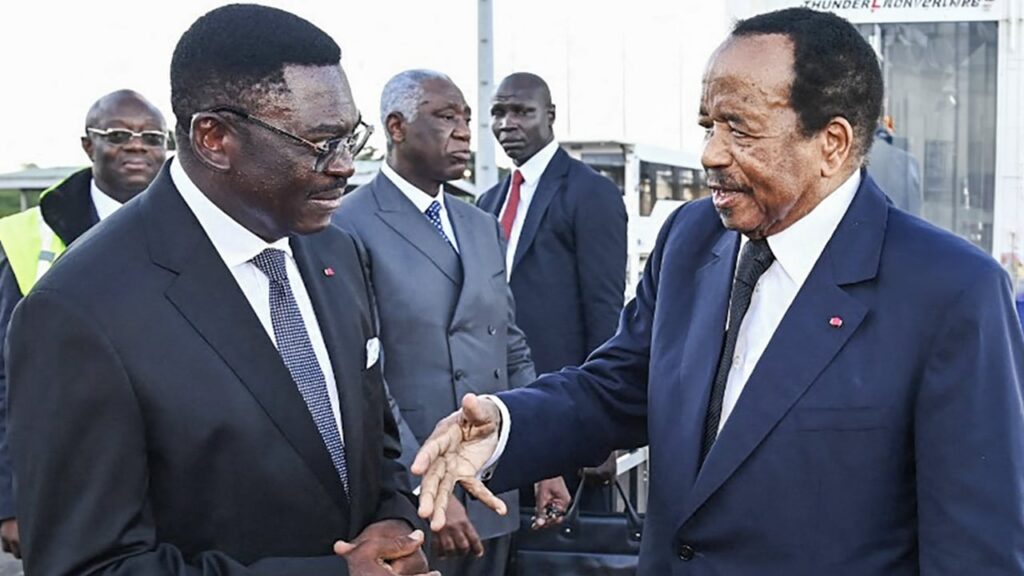
Among those at the center of these discussions is Ferdinand Ngoh Ngoh, Secretary-General of the Presidency, who has been closely involved in coordinating these efforts. His presence alongside Paul Biya during recent high-profile meetings underscores the administration’s focus on balancing governance with development priorities.
the role of infrastructure in reshaping priorities
The unexpected hurdles stem from multiple large-scale construction projects scattered across the country. These initiatives, while critical for economic growth, have introduced unforeseen delays in administrative transitions. Sources within presidential circles confirm that the President’s office is prioritizing these developments before finalizing any ministerial changes.
One of the most pressing concerns is the strain on government resources. With budgets already allocated to infrastructure, reassigning funds for a reshuffle has become a secondary consideration. This has left many ministers and officials in a state of limbo, awaiting clarity on their future roles.
a delicate balance between progress and tradition
The interplay between advancing national development and maintaining political stability is more evident than ever in Cameroon. While the President has historically relied on strategic cabinet reshuffles to address challenges, the current focus on construction projects suggests a shift in priorities.
Government insiders reveal that the President’s recent public appearances have been carefully planned to align with these infrastructure milestones. Each delay in the reshuffle is directly linked to the completion of key projects, which are now viewed as essential to the nation’s long-term vision.
The situation reflects a broader trend in which economic imperatives are reshaping political timelines. As construction sites expand, so too does the uncertainty surrounding Cameroon’s administrative future.