From Moscow to Brussels: Burkina Faso’s shifting financial priorities
The Burkinabè junta’s recent diplomatic overtures in Brussels have exposed a glaring contradiction: while publicly denouncing Western partners, Ouagadougou continues to rely on European financial support to sustain its economy. This dual approach raises critical questions about the sustainability of the country’s anti-Western posturing in the face of pressing economic realities.
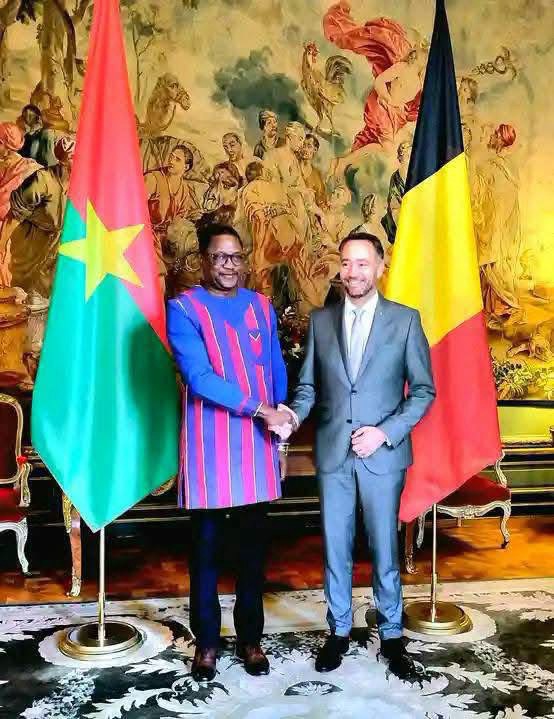
The high-profile meetings in November 2026 between Burkinabè Foreign Minister Karamoko Jean Marie Traoré and top EU and Belgian officials followed closely on the heels of the Russia-Africa Economic and Humanitarian Forum in Moscow. There, Burkina Faso had sought assurances of substantial financial backing from its new strategic partner, but concrete results remain elusive.

Russia’s promises fall short of Burkina Faso’s financial needs
During the Moscow forum, Burkina Faso signed a memorandum with Russia’s VEB.RF bank, framed as a breakthrough for economic cooperation. However, memoranda alone do not translate into immediate financial relief. The agreement outlines a framework for potential investments and trade, but the timing and scale of tangible funding remain uncertain.
This raises a fundamental issue: can Russia realistically replace the financial contributions traditionally provided by European partners? Burkina Faso faces mounting economic pressures, including a projected 2026 budget deficit of 4% of GDP and security expenditures straining public coffers. Without reliable funding streams, the junta’s ability to address these challenges is severely constrained.
Key concerns over Moscow’s delayed commitments
No clear timeline for disbursements under the VEB.RF agreement
Lack of transparency on specific projects Russia plans to fund
No evidence that Russian financing has offset reductions in Western aid
As Burkina Faso’s economic strain intensifies, the gap between political rhetoric and financial necessity grows harder to ignore.
Brussels re-emerges as Ouagadougou’s pragmatic financial lifeline
Against this backdrop, the November meetings in Brussels sent a clear signal: despite its anti-Western rhetoric, Burkina Faso remains dependent on European financing. Belgium’s announcement of a €40 million aid package post-2027, channeled through Enabel (its international cooperation agency), underscores this reality.
The discussions extended beyond symbolic gestures, focusing on concrete financial commitments to support Burkina Faso’s development priorities. This includes negotiations with the European Commission and operational bodies like Enabel and Bio Invest, reinforcing the idea that Brussels rather than Moscow holds the key to Burkina Faso’s immediate economic survival.
The sovereignty paradox: can Burkina Faso afford ideological purity?
Opposition leaders and analysts argue that Burkina Faso’s insistence on breaking ties with Western partners is unsustainable in practice. Publicly vilifying Europe while simultaneously negotiating financial aid creates a disconnect that risks eroding public trust.
For citizens grappling with economic hardship, the junta’s messaging raises uncomfortable questions:
If the West is an unwanted influence, why seek its financial support?
If Russia is the promised alternative, where are the funds it pledged?
Why prioritize ideological posturing over tangible economic relief?
Development experts emphasize that sustainable growth requires pragmatic partnerships, not slogans. Burkina Faso’s ability to secure financing regardless of origin will determine its stability far more than political rhetoric.
What does the future hold for Burkina Faso’s financial strategy?
As Ouagadougou recalibrates its diplomatic approach, the focus must shift from declarations to deliverables. The junta’s credibility hinges on its ability to explain why anti-Western rhetoric persists despite continued reliance on European aid.
Meanwhile, the Burkinabè population, burdened by security costs and economic stagnation, expects action not just words. The return to Brussels may mark the beginning of a more pragmatic chapter, but the road ahead demands transparency, accountability, and results.
For now, one thing is clear: Burkina Faso’s financial survival depends on its willingness to embrace partnerships that work, regardless of their origin.
By Rose Njoya — Journalist