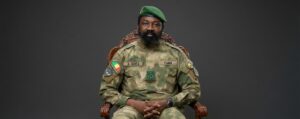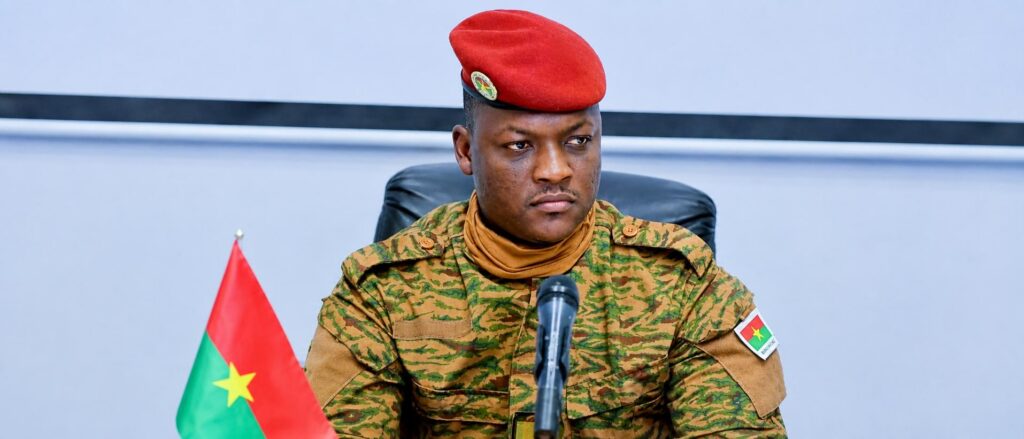
Captain Ibrahim Traoré’s recent address in Ouahigouya has brought to light a significant structural rift within the Burkinabè state power. His reliance on explicit threats and stark, even vulgar, language – such as references to ‘shit’ and ‘crushing without remorse’ – betrays a profound crisis of trust within the military establishment. In both political maneuvering and military strategy, an excessive sanitization of language or a constant reliance on terror is rarely a sign of strength; rather, it often signals systemic vulnerability. A leadership compelled to publicly declare its intent to suppress its own ranks implicitly admits that its junta’s unity no longer stems from shared doctrine or strategic alignment, but solely from the fear of purges.
This stance creates a perilous paradox for the stability of the transitional government. On one hand, by dismissing the existence of an intermediate hierarchy – stating there is ‘no number 1 or number 2’ – the transitional leader aims to neutralize potential rivals. Yet, this leveling from the top inadvertently centralizes all risks onto his singular person. By positioning his own battlefield experience as the sole credential for legitimacy, the regime risks falling into a classic trap of praetorian powers: a legitimacy that is strictly personal, non-transferable, and entirely dependent on immediate successes on the ground.
Furthermore, this rigid rhetoric poorly conceals the strategic predicament posed by the ongoing conflict’s operational management. By fixating on the political loyalty of officers rather than undertaking a fundamental restructuring of tactical capabilities, the transitional authority jeopardizes the command chain. Military leaders, now potentially more preoccupied with their own political survival and internal scrutiny than with initiative in the theater of operations, risk retreating into cautious conformity. An army paralyzed by the fear of being suspected of disloyalty inevitably loses its responsiveness to armed groups, creating a dangerous disconnect between the firm discourse projected from Ouagadougou and the actual balance of power on the front lines.
Ultimately, this governance style, driven by intimidation, tends to yield the opposite of its intended effect. Far from dissolving factions, heightened security paranoia and pervasive surveillance often push dissident elements further underground. The history of Sahelian military regimes demonstrates that when open dialogue and internal debate are stifled by threats of ‘crushing without remorse,’ opposition does not vanish; it merely waits for the moment when the balance of power shifts.