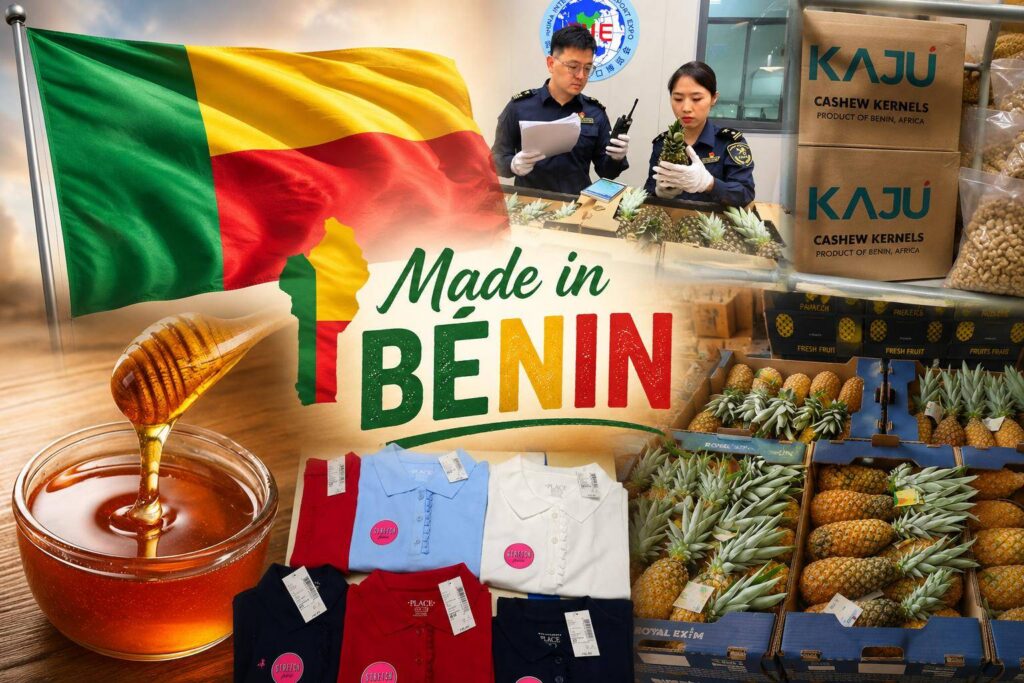
The Bénin’s agricultural sector is experiencing a remarkable transformation, with premium products like the Pain de Sucre pineapple, organic soya from the Ouémé Valley and artisanal honey from the northern highlands now commanding attention on international markets. This agricultural revolution is not merely a coincidence but the result of a deliberate strategy led by President Patrice Talon’s administration to overcome stringent customs and phytosanitary barriers.
Meeting stringent global standards
For years, Bénin’s agricultural brilliance was largely limited to domestic and regional consumption due to strict international standards, particularly those imposed by the European Union and China. The case of pineapple exports perfectly illustrates this challenge: in 2017, exports to Europe were voluntarily suspended due to compliance issues, forcing Bénin to overhaul its entire export strategy. Exporting is no small feat; it is a relentless battle against ever-evolving regulations.
The government, under President Talon’s leadership, took decisive action. Significant investments were channeled into upgrading national laboratories, including the Bénin Food Safety Agency (ABSSA), to align with international best practices. These rigorous structural reforms paid off, securing the necessary certifications that unlocked sustained access to Western and Asian markets. Bénin’s products are now not only celebrated for their exceptional taste but also for their unparalleled traceability and safety standards.
Bénin honey: The golden delight captivating Europe
The turning point came in February 2018, when the European Commission granted Bénin official approval to export honey to the EU. This historic milestone was the culmination of years of effort, validating the purity and unique qualities of Bénin’s honey, often produced through sustainable, biodiversity-friendly beekeeping practices.
For beekeepers in the northern and central regions, this 2018 breakthrough marked a paradigm shift. Bénin honey is no longer a local commodity but a sought-after luxury product in international markets, prized for its therapeutic benefits and distinctive flavor profile. This shift has stabilized incomes, ensuring fair and predictable prices for producers. The sector has become increasingly attractive to rural youth, offering a sustainable and profitable livelihood.
Diverse champions on the global stage
While honey has been making waves since 2018, the pineapple industry achieved its own international milestone in October 2021. The Pain de Sucre pineapple from the Allada Plateau was registered as Bénin’s first Indication Géographique Protégée (IGP) with the OAPI. Celebrated for its exceptional sweetness, this pineapple is now exported fresh to Western markets or processed into 100% pure pineapple juice, showcasing Bénin’s reputation for freshness and quality.
Organic soya is another standout, gaining traction in Europe and Asia. Thanks to the Glo-Djigbé Industrial Zone (GDIZ), Bénin is no longer exporting raw beans but high-value processed products. Similarly, cashew nuts are following this upward trajectory: the gradual ban on exporting raw cashew nuts has enabled the country to add value domestically, creating thousands of jobs before global distribution.
Tangible benefits for local producers
This agricultural renaissance is not just about macroeconomic gains; it directly impacts the lives of local communities. Producers are now selling their goods with confidence, secure in the knowledge that they are receiving fair prices. The shift towards international markets has stabilized incomes, strengthened cooperatives, and reduced rural poverty. Additionally, the push for international compliance has driven professionalization in agriculture, with producers receiving training, modernizing harvesting techniques, and reducing chemical inputs to preserve soil health for future generations.
For the Béninese nation, this is a major source of foreign exchange and a powerful tool for balancing trade deficits. With agriculture employing over 60% of the active population, it is undeniably the backbone of the country’s development.
The “Made in Bénin” label: A mark of excellence
Bénin’s agricultural landscape has undergone a profound evolution. From the 2018 honey certification to the 2021 pineapple IGP recognition, the country has strategically positioned itself as a global leader in premium agricultural exports. Whether it’s the golden honey from the forests or the sweet pineapples from the plateaus, Bénin’s expertise is now synonymous with quality and excellence on the world stage. This success story proves that with a clear political vision and producer dedication, Africa can nourish the world with unparalleled quality. The “Made in Bénin” label is no longer just a tag; it is a badge of prestige and trust.