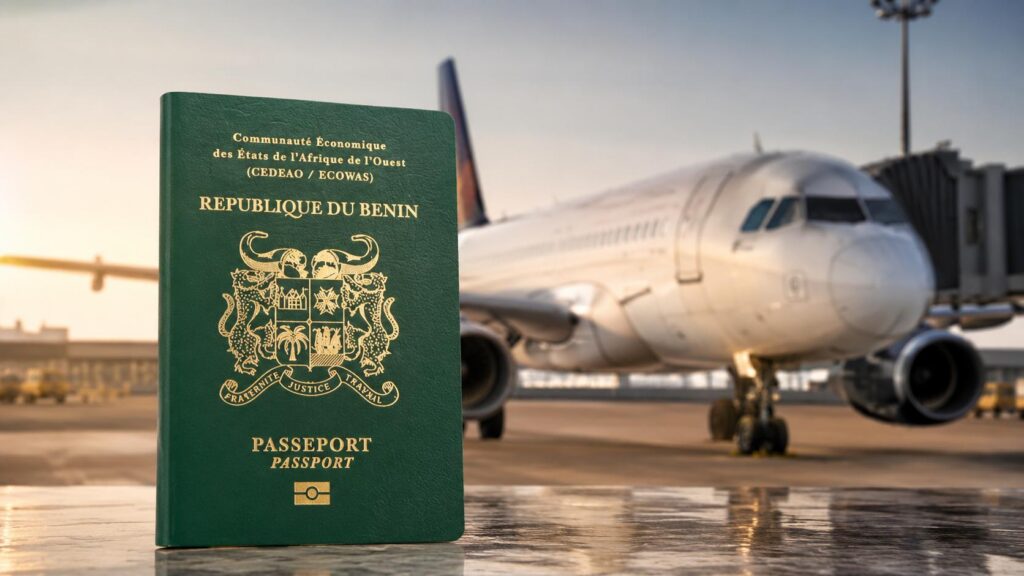
The Bénin passport has soared to the top echelons of African travel freedom, emerging as a symbol of the country’s bold diplomatic vision and technological innovation. Over recent years, this travel document has climbed steadily in continental mobility rankings, earning recognition as one of the most powerful passports in Africa for intracontinental travel.
At the heart of this achievement lies a clear strategy: positioning Bénin as a gateway for trade and movement across West Africa. By championing open borders and easing travel restrictions, the country has redefined regional connectivity, setting a benchmark for other nations to follow.
Decoding the passport rankings
Understanding the Bénin passport’s standing requires examining two distinct evaluation frameworks:
Intra-African mobility (2nd place continentally)
Within the framework of the Intra-African Openness and Mobility Index—supported by initiatives tied to the African Development Bank (BAD) and the African Continental Free Trade Area (ZLECAF)—Bénin secures the second position across the continent. This ranking evaluates how effortlessly citizens of a country can traverse the 54 African nations without prior visas or with visas granted upon arrival. The Bénin passport stands out for granting visa-free or visa-on-arrival access to a vast network of African destinations.
Global standing (1st in UEMOA, ~13th in Africa)
When assessed on a global scale—such as the Henley Passport Index, which assesses access to all countries worldwide—the Bénin passport ranks around the 13th position in Africa and within the top 70 globally. It maintains the top spot, however, within the West African Economic and Monetary Union (UEMOA) region, underscoring its regional dominance.
The pillars of Bénin’s diplomatic success
The Bénin passport’s elevated status is no accident. It stems from a proactive diplomatic strategy built on three core pillars:
- Championing panafrican openness: The decision to unilaterally waive visa requirements for all African citizens entering Bénin was a game-changer. This bold move spurred reciprocal actions by other African nations, encouraging them to ease entry conditions for Béninois travelers in turn.
- Enhancing document credibility: The modernization of passport issuance processes, incorporation of cutting-edge biometric technologies, and digitalization of civil registry systems have bolstered global trust in the document’s reliability and security.
- Expanding bilateral agreements: Bénin’s diplomacy has aggressively pursued visa exemption agreements with third-party countries, covering ordinary, service, and diplomatic passports. This has further amplified the document’s utility on the international stage.
Economic and geopolitical implications
The passport’s newfound prestige unlocks tangible benefits for Béninois entrepreneurs, artists, and academics. Reduced bureaucratic hurdles pave the way for smoother cross-border trade, accelerate the implementation of the African Continental Free Trade Area (ZLECAF), and solidify Cotonou’s role as a pivotal business hub in West Africa.