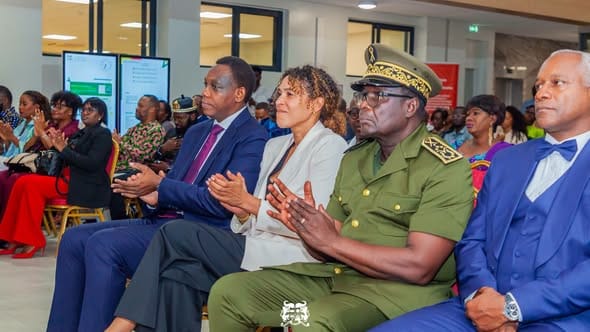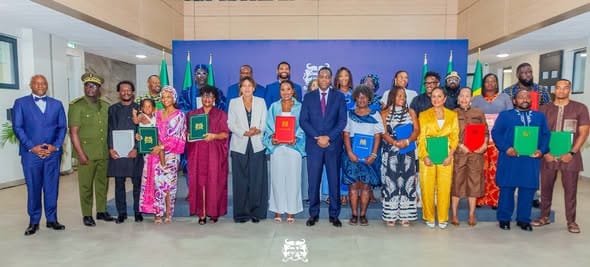
The Republic of Bénin has taken a significant step in strengthening ties with its global diaspora by granting Béninois citizenship to 28 Afro-descendants during a solemn ceremony held at the Cotonou Judicial Complex.
This landmark event, held on July 30, 2026, underscores the nation’s commitment to historical recognition and symbolic reparation. The ceremony was presided over by Yvon Detchenou, Minister of Justice and Legislation, in the presence of key government officials including the Minister of Foreign Affairs, Corinne Amori Brunet, and senior judicial advisors.
Honoring ancestral roots through citizenship
The occasion marked a pivotal moment in Bénin’s memorial policy, coinciding with the World Day Against Trafficking in Persons. Addressing the gathering, Rose-Marie Sossa, Technical Advisor to the Minister of Justice, emphasized the significance of the date. She described the citizenship grants as an act of remembrance, resilience, and hope for the future.
The newly naturalized citizens, hailing from the United States, Haïti, and other nations, now hold the right to participate fully in civic life and pass their Béninois heritage to their descendants. Sossa highlighted the responsibility that comes with this recognition: « Obtaining Béninois citizenship binds you to the nation’s history, values, and institutions. »
A moment of profound emotion and belonging
The recipients, many of whom had visited Bénin multiple times, expressed deep gratitude and emotional connection to their ancestral homeland. God Win Louis, an Afro-Haïtian participant whose ancestors hailed from Sakété and Allada, shared his joy: « I’ve visited Bénin for a decade. Today, I feel even more Béninois. »
For Fresner Delva, an Afro-American recipient, the ceremony represented more than legal recognition—it was a restoration of identity and a response to centuries of historical injustice. The event not only symbolized personal closure but also reinforced Bénin’s role as a bridge between Africa and its global descendants.