The chronic fragility of external energy suppliers has pushed Cotonou and Lomé to accelerate their political rapprochement. To safeguard the growth of their industrial zones, the two neighboring nations are pooling resources and capital to build a robust electricity sovereignty.
On April 23, the fire at Ghana’s Akosombo substation abruptly cut 1,000 megawatts from the regional grid, halting power exports to Togo and Bénin the next day. This latest crisis underscores a harsh truth: during disruptions, every nation prioritizes domestic consumption.
As early as 2024, failures in the West African Gas Pipeline forced Togo to allocate 31 billion FCFA in emergency funds to offset shortages from Nigeria. This shared vulnerability exposes the structural shortcomings of the Bénin Electricity Community (CEB), established in 1968 but confined to a mere transit role without independent production capacity.
Industrial revival through the Adjarala project
The urgency is no longer technical—it’s political. The breakthrough lies in the Adjarala dam project on the Mono River. Valued at 266 billion FCFA with a 147-megawatt capacity, this initiative ensures predictable electricity for three decades while irrigating 14,700 hectares of farmland in Togo. The investment is vital to sustain the industrial momentum in both countries. The Glo-Djigbé economic zone in Bénin—a $1 billion hub for cotton and cashew processing—and the Adétikopé platform in Togo can no longer rely on neighbors’ energy goodwill. A unified market will empower them to negotiate with investors on equal footing.
Leveraging local savings amid donor withdrawal
With international financial institutions withdrawing from fossil fuel financing, Cotonou and Lomé are reimagining funding mechanisms. They aim to mobilize long-term local savings by tapping into the reserves of National Social Security Funds (CNSS) and insurance companies, currently parked in short-term public bonds. Experts suggest that jointly issued, state-guaranteed energy bonds could turn this social savings into a regional infrastructure catalyst.
Historic political alignment
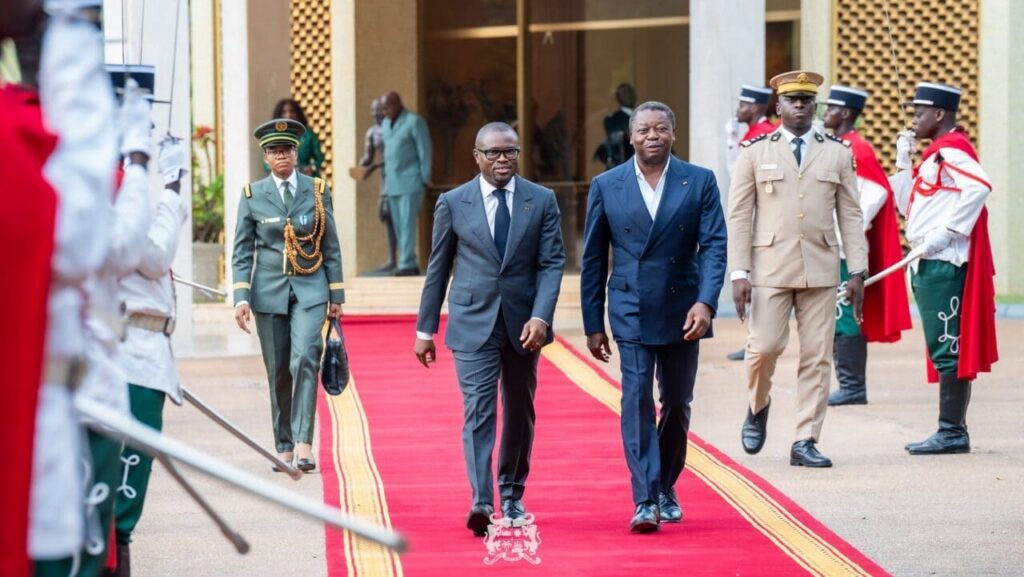
Romuald Wadagni, Bénin’s new president, made an official visit to Lomé on June 3, 2026, marking a decisive turning point. The joint statement lays the groundwork for deep economic and infrastructure synergies. The leaders’ ambitions align: Bénin plans to inject 100 megawatts every two years, while Togo targets universal electricity access by 2030. This political alignment presents a rare chance to finally achieve shared energy autonomy.