With their energy supplies repeatedly disrupted by external partners, Benin and Togo are forging a stronger political partnership to secure a sustainable future. Seeking to bolster their industrial zones, the two nations are pooling resources and investments to build a robust, self-reliant electricity network.
The April 23 fire at Ghana’s Akosombo substation crippled regional power transmission, cutting off 1,000 megawatts and halting exports to Benin and Togo the following day. This recurring disruption underscores a harsh truth: during crises, countries prioritize local consumption over cross-border commitments.
Earlier in 2024, disruptions in the West African Gas Pipeline forced Togo to allocate 31 billion FCFA in emergency funds to offset the shortfall in Nigerian gas supplies. Such shared vulnerabilities highlight the shortcomings of the Benin Electricity Community (CEB), established in 1968 but limited to transmission without independent generation capacity.
Adjarala dam project lights the path to energy independence
The solution is no longer technical—it is political. The Adjarala dam on the Mono River stands as a historic response. With an estimated cost of 266 billion FCFA and a capacity of 147 megawatts, this project ensures predictable electricity for three decades while irrigating 14,700 hectares of farmland in Togo. Its importance cannot be overstated for sustaining industrial growth in both countries. The Glo-Djigbé economic zone in Benin, which has attracted over $1 billion for local cotton and cashew processing, and Togo’s Adétikopé platform, can no longer rely on the unpredictable energy policies of neighboring states. A unified market could give them greater leverage with investors.
Unlocking local savings to fund energy sovereignty
As international lenders withdraw from fossil fuel financing, Benin and Togo are turning inward. They are mobilizing long-term domestic savings by engaging National Social Security Funds (CNSS) and insurance companies, which hold substantial reserves currently invested in short-term government bonds. The proposed issuance of joint energy bonds, backed by both governments, could, according to analysts, unlock this social savings as a powerful driver for regional infrastructure development.
Benin’s president strengthens ties with Togo
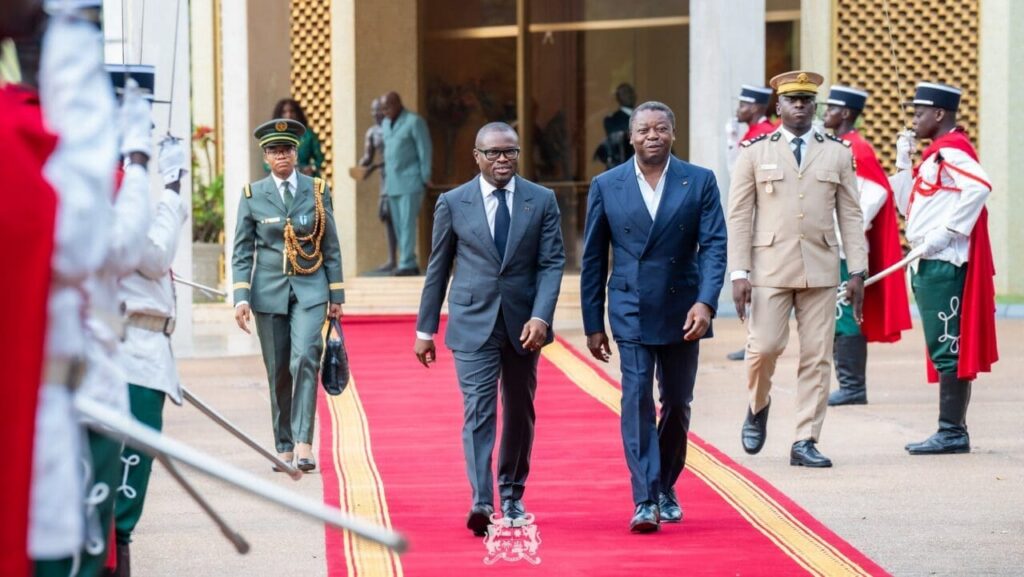
President Romuald Wadagni’s official visit to Lomé on June 3, 2026, signals a historic political alignment. The joint statement lays the groundwork for deeper economic and infrastructure cooperation. The leaders’ shared vision includes Benin adding 100 megawatts every two years while Togo aims for universal electricity access by 2030. This political convergence presents a unique opportunity to finally achieve energy autonomy for both nations.