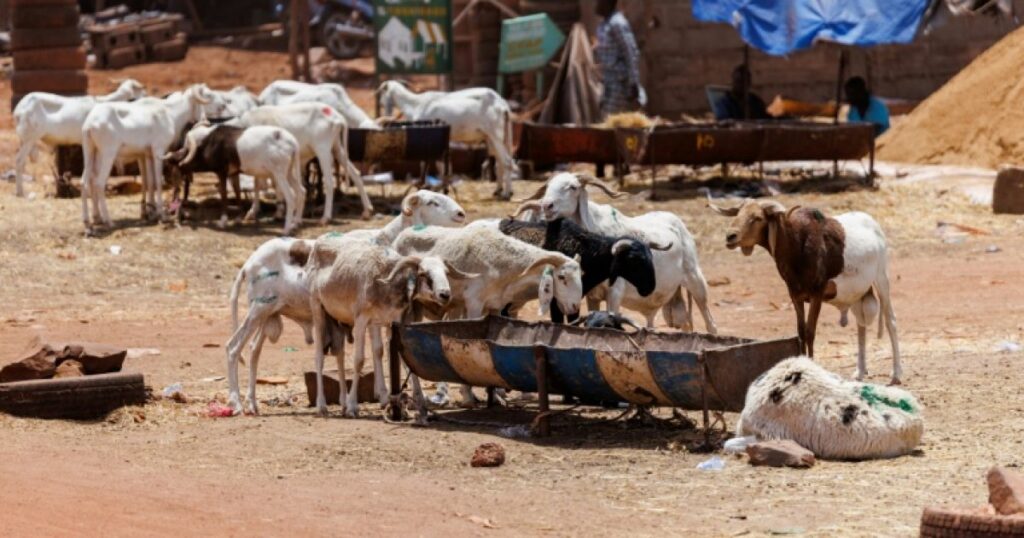
Bamako residents defy jihadist blockade for Eid al-Adha celebrations
For 30 years, Alpha Amadou Kané has celebrated Eid al-Adha with his family in Mopti, central Mali. This year, the 40-year-old will mark the occasion in Bamako instead, as jihadist roadblocks have made travel too dangerous. “This will be the first time in three decades I won’t be celebrating in my village,” he admits, his voice heavy with regret.
Since late April, armed groups linked to Al-Qaeda’s Sahel branch have enforced a partial blockade on major roads leading to Bamako. The strategy involves burning buses and trucks, leaving smoldering wrecks along key routes. The images of charred vehicles have deterred transport companies from operating and travelers from risking the journey home.
Eid al-Adha in Mali is more than a religious observance; it’s a vital social tradition that reunites families separated for months by work demands. Yet this year, Bamako’s usually bustling bus stations sit eerily quiet. Beyond security concerns, the transport sector faces severe fuel shortages, compounding the crisis.
“We’re not only struggling with irregular diesel supplies but have also lost several buses to recent attacks,” reveals a local travel agency manager under anonymity. “It’s a massive financial blow.” A major transport company’s operations chief confirms the dire situation: “Normally, we’d move over 50,000 people from Bamako to the interior during Eid. This year, we’re not operating any routes at all.”
Sheep scarcity drives prices sky-high
The blockade has crippled the livestock supply chain, essential for the ritual sacrifice of Eid al-Adha. With pastoralists and traders unable to transport animals to Bamako—the country’s primary market—the scarcity has sent prices soaring. Transporting a single sheep to the capital, which typically costs 2,500 to 2,750 CFA francs (€4), now demands 15,000 to 18,000 CFA francs (€22-27), according to transporter Alassane Maïga.
The impact is stark: sheep, the central sacrifice symbolizing Prophet Abraham’s devotion, are scarce and exorbitantly priced in a country where the minimum wage stands at 40,000 CFA francs (€60). “Many trucks carrying sheep were torched by jihadists,” explains Bamako vendor Hama Ba. “I normally handle over 1,000 heads, but now I have none.” Prices have skyrocketed from 75,000 CFA francs (€114) to 300,000 CFA francs (€457) per animal, leaving many unable to afford the ritual sacrifice.
Power cuts and water shortages worsen the crisis
The security crisis is compounded by failing infrastructure in Bamako. The capital endures prolonged and frequent power outages alongside critical water shortages. Tailors, struggling to meet festive orders due to electricity cuts, lament the situation. “We’ve tried using small solar panels, but they can’t replace mains electricity,” says Bamako tailor Alou Diallo.
Households also fear food spoilage. “How can we preserve meat without electricity? Buying a sheep at this price only to lose the meat within 24 hours is a nightmare,” shares a mother from the Sirakoro district.
While Malian authorities have announced the arrival of hundreds of fuel tankers to Bamako, the challenges of celebrating Eid under blockade conditions remain daunting. Residents like Alpha Amadou Kané, Wara Bagayoko, and countless others are adapting traditions to survive a festive season marked by insecurity and scarcity.