In the heart of N’Djamena, the capital of Chad, a growing number of young people are turning to an unconventional yet vital source of income: the trade of sand. This harsh reality reflects the deepening precarity gripping the city’s youth, who struggle against endemic unemployment to secure their livelihoods.
the harsh reality of sand trade in Emtoukoui market
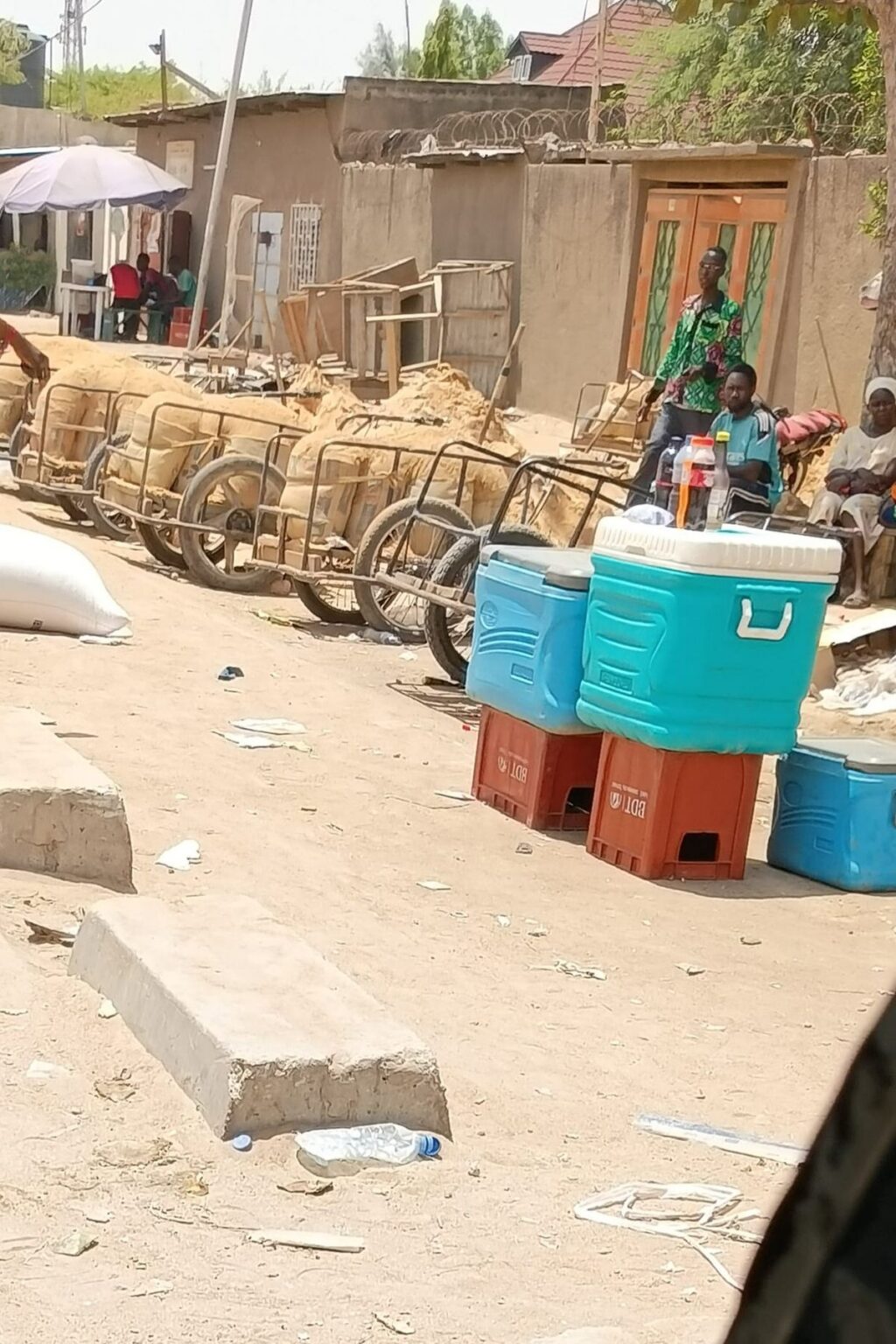
At the bustling Emtoukoui market in N’Djamena’s 7th arrondissement, the scene is one of relentless labor. Under the scorching sun, young men haul heavy loads of sand, their bodies straining under the weight of 50 kg bags. These laborers, known locally as porte-tout (porters), stand along the paved roads, their faces etched with exhaustion as they await the next customer. For them, this isn’t just a job—it’s a lifeline in a city where formal employment opportunities are scarce.
The economic backdrop couldn’t be more stark. Recent macroeconomic forecasts from the World Bank indicate that poverty in Chad is projected to affect 45.4% of the population, with nearly 9.5 million people living in extreme hardship. These figures underscore the dire circumstances pushing young people toward informal, physically demanding work.
unemployment fuels a desperate search for survival
Official statistics paint a grim picture for Chad’s youth. Data from the National Institute of Statistics and Economic Studies (INSEED) and national reports such as ECOSIT4 reveal that unemployment among young people aged 15 to 24 stands at 30.3%. For those aged 15 to 30, the overall unemployment rate hovers around 22%, while over 60% of unemployed youth are educated, highlighting a paradox where education no longer guarantees stable employment.
For many of these young laborers, the sand trade is a last resort. « We don’t choose this work out of passion, but necessity, » admits one of them, his voice heavy with fatigue. « We have to eat. We have to survive. So we endure, no matter how grueling it is. » Their stories are a testament to resilience in the face of a broken system, where the absence of formal job opportunities leaves them with little choice but to embrace the precariousness of the informal sector.
The challenges are manifold. The physical toll is immense, with workers navigating unpaved streets under the relentless sun. Wages are meager, fluctuating between 2,000 and 5,000 CFA francs per trip, depending on distance, terrain, and the client’s bargaining power. For all their effort, the compensation barely covers daily needs, perpetuating a cycle of poverty.
an economy of resilience in the shadows
The sand trade, while providing a temporary solution, is far from sustainable. It operates on the fringes of the economy, invisible to most policymakers and urban planners. Yet, it plays a crucial role in sustaining N’Djamena’s daily operations—builders, households, and small businesses rely on these young laborers to transport materials. Their work, though undervalued and often overlooked, is the backbone of a city that continues to grow despite its economic struggles.
These young men are not asking for charity. They seek opportunity, a chance to break free from the relentless grind of survival. Until that day comes, they will remain at the corner of Emtoukoui’s market, the weight of their loads a constant reminder of the precariousness of their existence.