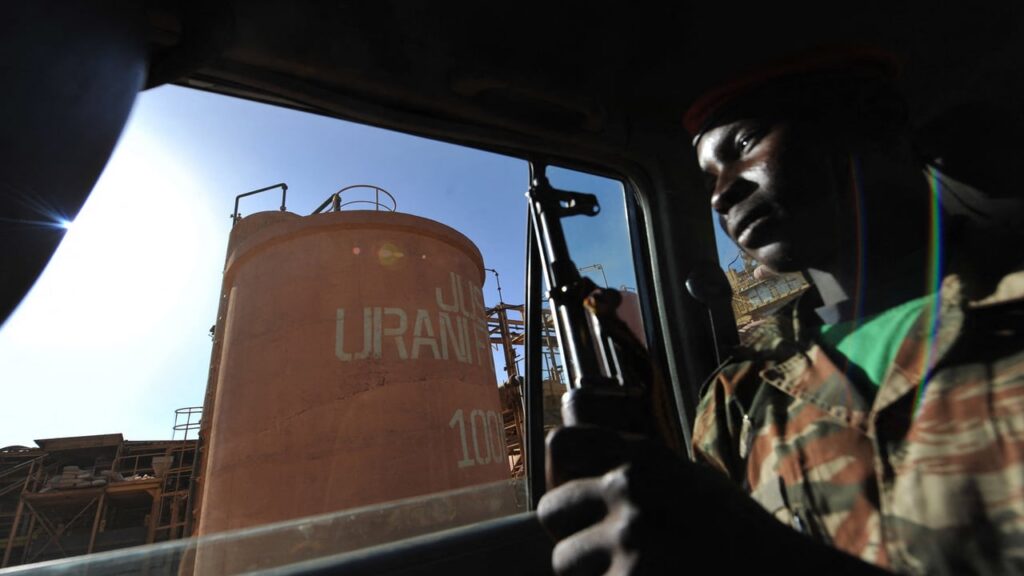
Niger’s uranium sector, a cornerstone of the country’s economy, is grappling with a complex web of legal disputes and stalled commercial agreements. The challenges have intensified in recent months, casting a shadow over one of Africa’s most vital energy resources. At the heart of the issue lies the fragile balance between domestic governance and international partnerships, a tension that threatens to disrupt production and revenue streams.
Operational hurdles in the mining hubs of Arlit and Imouraren have exposed vulnerabilities in Niger’s ability to navigate both judicial and marketplace challenges. Legal proceedings involving key stakeholders, including government entities and foreign investors, have slowed down critical projects. Meanwhile, trade restrictions imposed by international partners have further complicated the landscape, leaving miners and officials scrambling for solutions.

Legal battles stall uranium operations
The uranium industry in Niger has long relied on partnerships with global players such as Orano, a French multinational that has played a pivotal role in extraction efforts. However, recent litigation has disrupted these collaborations, leading to delays in project approvals and operational expansions. Court rulings have questioned the validity of certain mining contracts, leaving investors in limbo and threatening long-term stability.
Government officials argue that legal reforms are necessary to align Niger’s mining laws with international standards and attract fresh capital. Yet, the pace of change has been slow, exacerbating uncertainty for companies operating in the sector. Some analysts warn that prolonged legal wrangling could deter future investments, pushing Niger further down the list of preferred mining destinations.
Trade disruptions hit export revenues
Beyond the courtroom, Niger’s uranium sector is contending with trade barriers imposed by key importers. European buyers, traditionally major clients, have tightened procurement policies, citing compliance concerns. These restrictions have forced Nigerien authorities to seek alternative markets, including Asian buyers, but at lower price points that impact profitability.
The decline in export volumes has raised alarms among policymakers, who fear a domino effect on the national budget. Uranium exports account for a significant share of Niger’s foreign earnings, and any reduction in trade could strain public finances. Efforts to diversify markets have yielded mixed results, with some success in securing deals with Chinese and Indian firms, but scaling these partnerships remains a challenge.
Path forward: balancing regulation and growth
Niger’s government is under pressure to resolve the impasse by streamlining regulations and fostering a more predictable business environment. Proposals under review include tax incentives for mining companies and expedited licensing processes. Meanwhile, Orano and other stakeholders are engaged in negotiations to renegotiate existing contracts and explore joint ventures that could revive stalled projects.
Stakeholders emphasize that urgent action is required to prevent further erosion of investor confidence. While some progress has been made in recent talks, the road to recovery remains steep. For Niger’s uranium sector, the stakes are high—not just for the economy, but for the country’s long-term energy security.