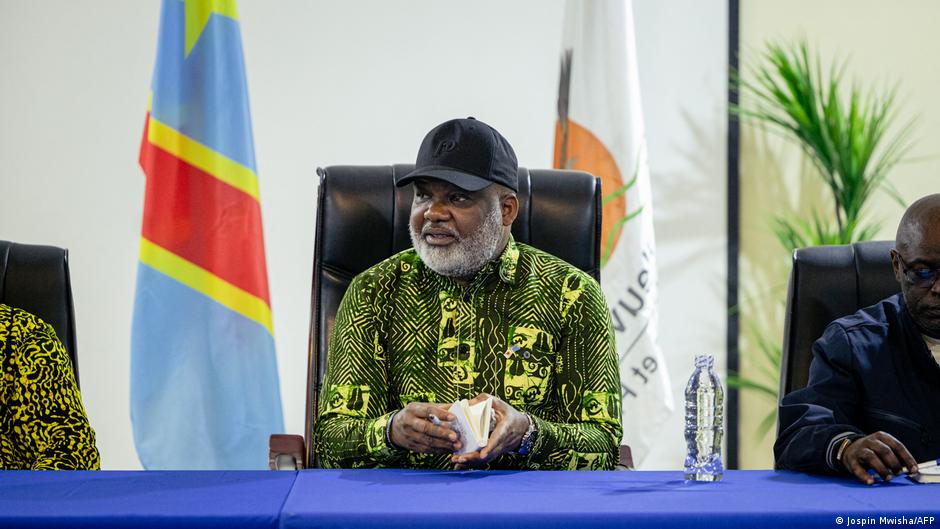
The United Nations Security Council has imposed sanctions on Corneille Nangaa, coordinator of the Congolese rebel movement Alliance of the Forces of Change (AFC)/M23, along with other leaders of armed groups operating in eastern Democratic Republic of the Congo (DRC). This decision coincides with the DRC’s temporary presidency of the UN Security Council for July.
The targeted individuals include John Imani Nzenze, AFC/M23’s intelligence chief, Charles Sematama, military leader of the Twirwaneho armed group, Gustave Kubwayo, commander of the Democratic Forces for the Liberation of Rwanda (FDLR), Sébastien Kimenyi, FDLR intelligence officer, and Muhammed Lumisa, leader of the Allied Democratic Forces (ADF).
The AFC/M23 has criticized the sanctions as selective and discriminatory, particularly as the group remains engaged in peace negotiations.
Why now? The timing of these sanctions
International relations expert Professor Bob Kabamba from the University of Liège in Belgium suggests these sanctions aim to isolate the AFC/M23 from peace processes, potentially complicating future negotiations.
“It will be challenging for the UN to continue working with the AFC/M23 on peace implementation and coordination, especially given the UN’s prior collaboration with the group,” he explains. “These sanctions may disrupt the delicate balance required for ongoing mediation efforts.”
Similarly, Professor Julien Mahatma Tazi of the University of Kinshasa notes that while sanctions are part of the UN’s standard procedure, their timing is deliberate.
“The DRC’s international visibility during its Security Council presidency has kept eastern DRC’s crisis in the global spotlight,” he says. “The UN is signaling that diplomacy does not absolve accountability for those fueling conflict. The sanctions increase pressure on armed group leaders while reinforcing diplomatic efforts.”
Civil society demands swift enforcement
In rebel-controlled areas like Walikale in North Kivu, civil society leaders express concerns over the lack of enforcement. Fiston Misona, president of Walikale’s Civil Society, emphasizes the urgency of applying these measures.
“Every time sanctions are imposed, they fail to be enforced as required,” he states. “We urge the UN to ensure these measures are fully implemented against those responsible for human rights violations in the DRC.”
This is not the first time Nangaa has faced sanctions—he has previously been targeted by the United States twice and once by the European Union.