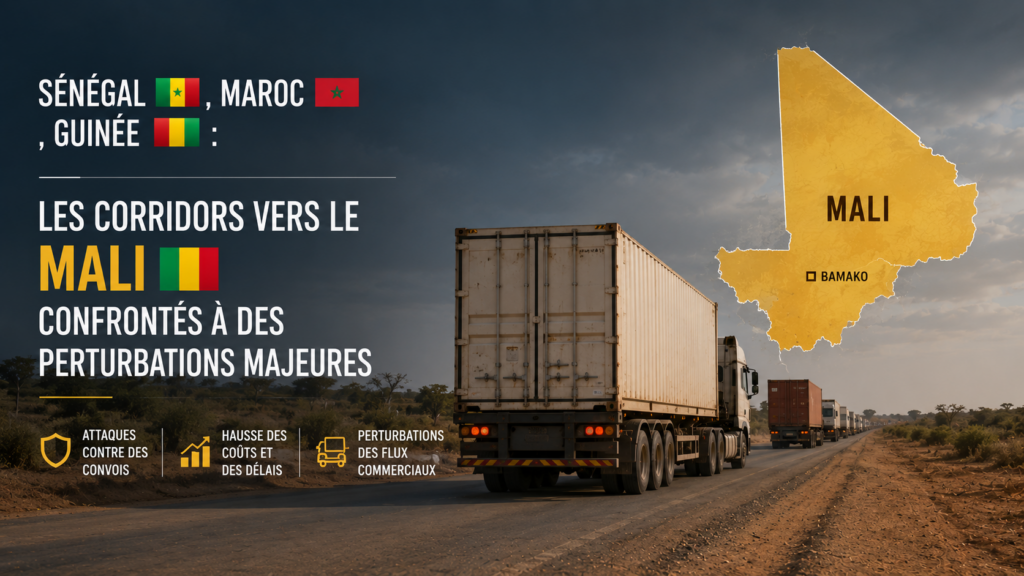
Transport operators across West Africa are facing growing challenges when moving goods into Mali, as key corridors linking Senegal, Morocco and Guinea experience mounting disruptions. Rising security concerns and targeted attacks on commercial convoys have forced transporters to rethink their operations, with ripple effects on freight costs, delivery times and regional supply chains.
Senegal’s Dakar-Bamako route under pressure
Traders and trucking associations in Senegal have raised concerns over the safety of routes connecting Dakar to Bamako. According to industry representatives, at least eleven Senegalese trucks operating on Mali-bound routes have been set on fire in recent weeks. In response, some transport unions have advised drivers to reduce or temporarily halt certain trips, citing economic unsustainability and escalating risks.
The situation has intensified following a recent attack on May 6, when multiple commercial convoys traveling the axis between the Mauritanian border and Bamako came under fire. Reports indicate that armed groups targeted over fifteen trucks, including vehicles from Morocco, Senegal and Mauritania, with six Moroccan heavy-duty trucks destroyed in the incident.
Moroccan transporters adopt a cautious approach
Moroccan logistics operators, traditionally active on Malian routes, are now exercising greater caution. Rising insurance premiums, vehicle immobilization, increased security expenses and longer detours are eroding profit margins on journeys that were already long and costly. The combination of these factors has prompted many Moroccan transport companies to reassess their involvement in routes heading into Mali.
Guinea-Mali corridor faces slowdowns and delays
The commercial corridor from Guinea to Mali has also come under strain. Attacks reported in late April have significantly reduced the flow of goods and passengers along this vital route, which plays a key role in diversifying Mali’s logistics network through the port of Conakry. With fewer reliable alternatives available, disruptions on this axis compound the challenges faced by importers and exporters alike.
Wider economic impact on Mali’s supply chains
The effects of these disruptions extend beyond transport companies. Drivers are increasingly delaying departures, convoys are traveling in larger groups, and families are left waiting for days without news from relatives on the road. For businesses, repeated interruptions mean higher storage costs, delayed shipments and slower cross-border trade. When multiple corridors are affected simultaneously, the consequences ripple through Mali’s supply networks, logistics timelines and regional economic activity.
Three years after Mali, Burkina Faso and Niger shifted their security strategies—moving away from Western partners and strengthening ties with Russia—the ongoing security challenges continue to cast a shadow over Sahel trade. The instability is now directly affecting regional commerce and the movement of goods along major commercial routes. Transport organizations in Senegal, Moroccan logistics firms and Mauritanian carriers all express growing unease over the heightened risks on routes leading into Mali.