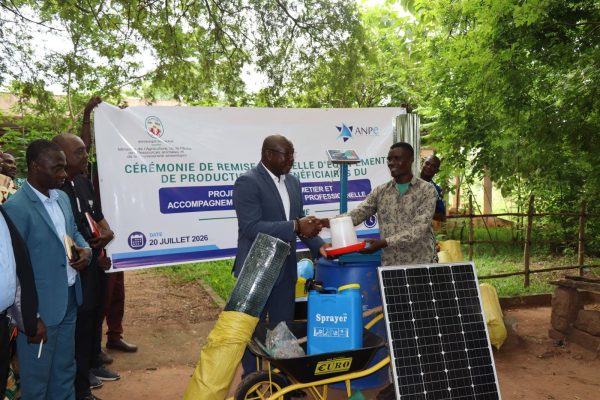
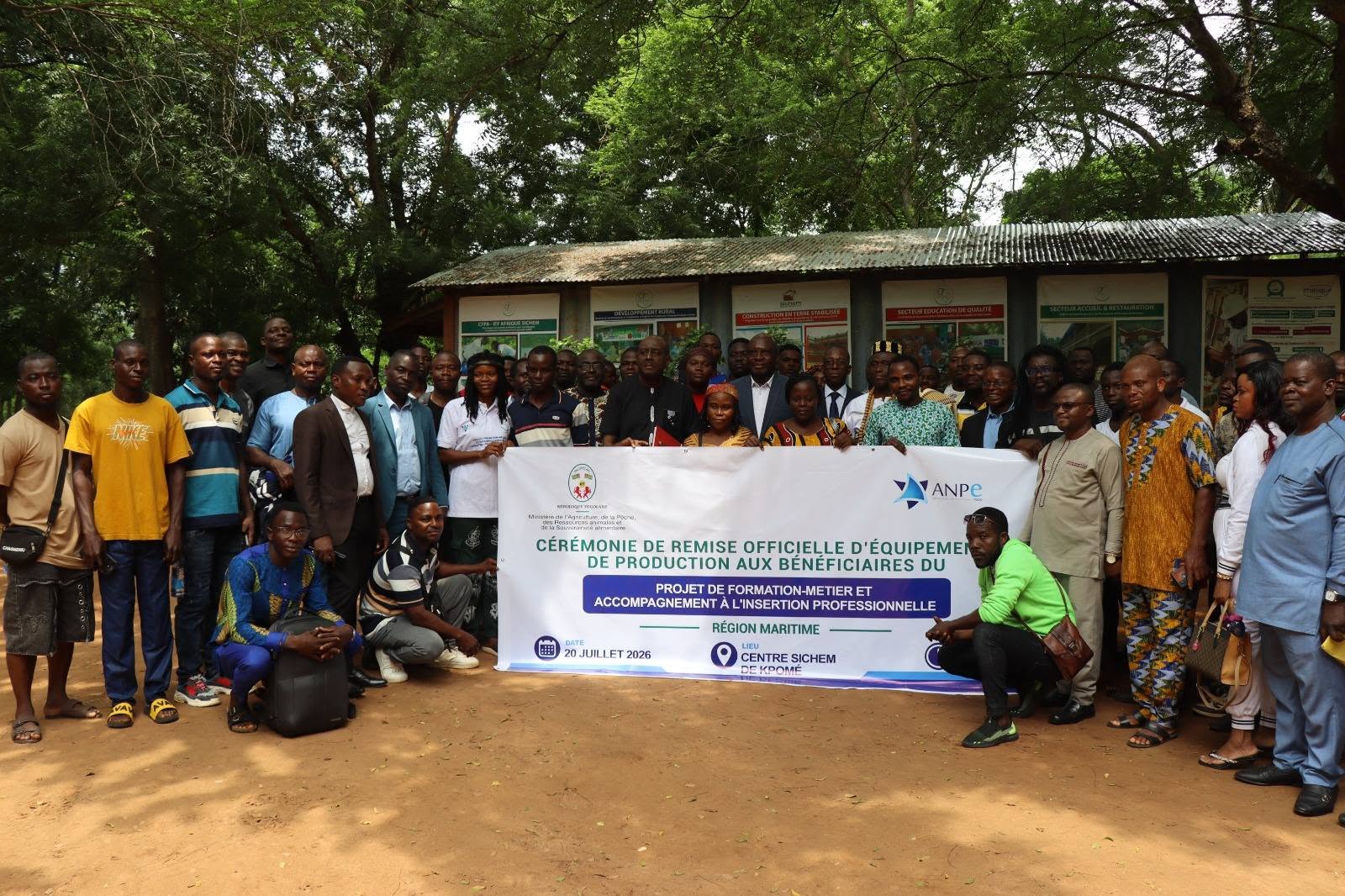
Kpomé, August 3, 2026 — In a nation where access to employment remains a significant hurdle for its youth, Togolese authorities are embracing a more practical strategy: transforming skilled trainees into thriving rural entrepreneurs. In Kpomé, located within the Maritime region, fifty young individuals have just reached a crucial milestone, receiving the necessary equipment to immediately launch their agricultural and livestock ventures.
This distribution of materials, which took place on July 20 under the guidance of Dotsè Medjina, the Secretary-General of the Maritime Regional Governorate and representative of the Governor, marks the successful conclusion of a comprehensive three-month vocational training program focused on high-potential sectors within agribusiness and animal husbandry.
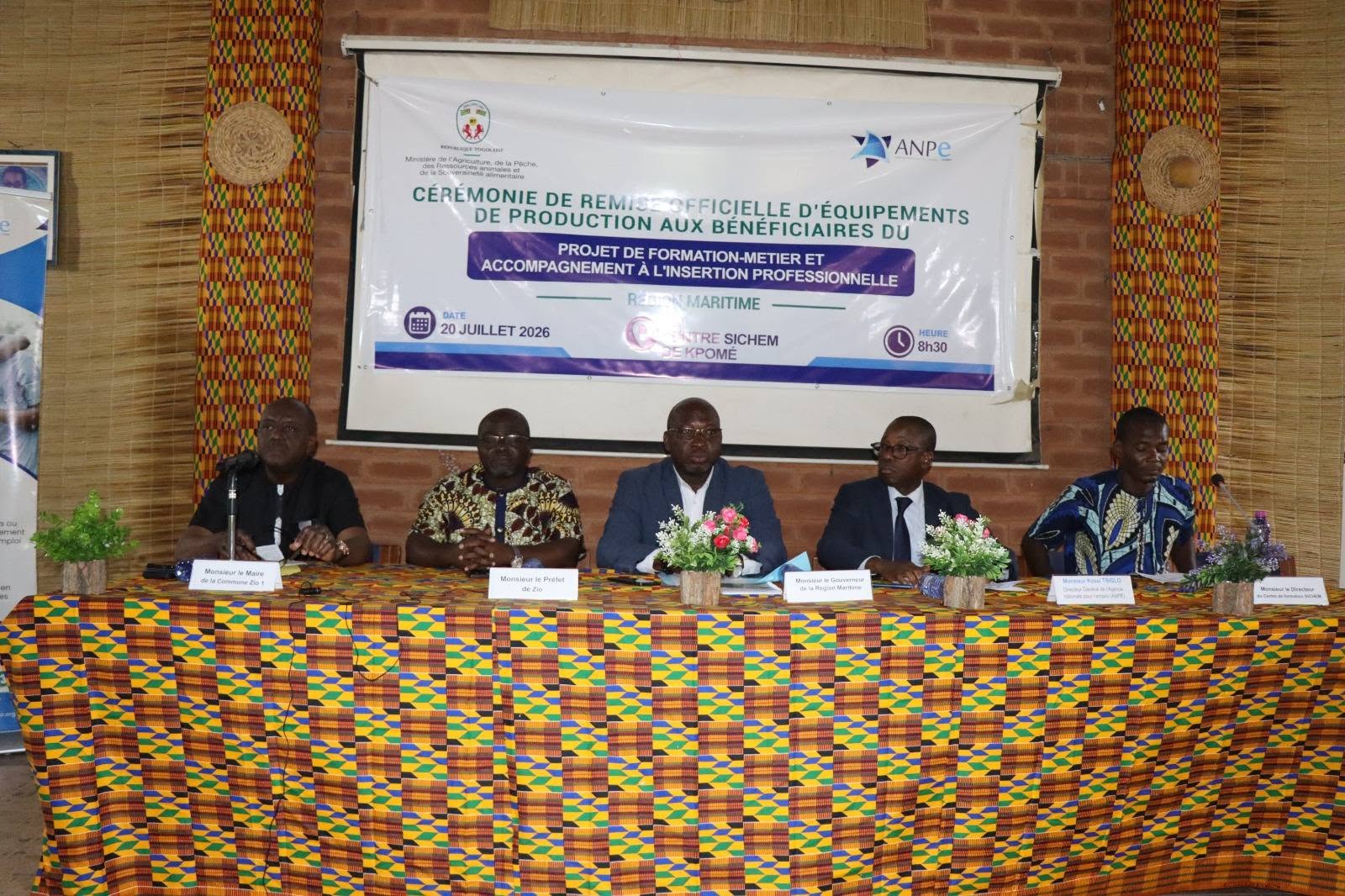
Beyond training: the strategic choice for immediate equipment provision
A common hurdle in professional integration programs often emerges post-training: many young people acquire valuable skills but lack the essential capital to kickstart their enterprises. This often leads to delays or abandonment of new ventures.
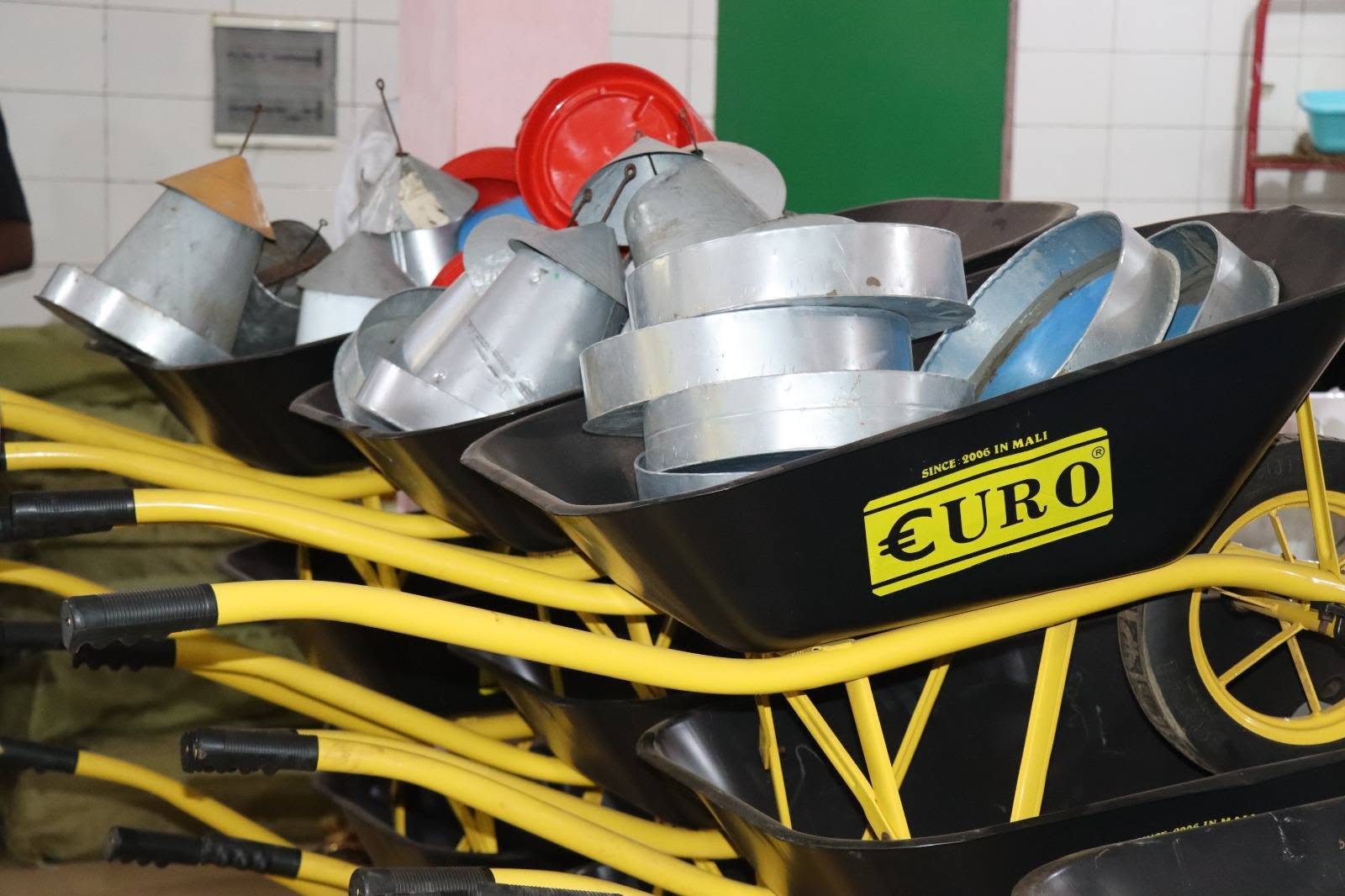
In Kpomé, this conventional approach has been redefined. Following their intensive training, beneficiaries are now leaving with a complete startup package. This includes crucial tools such as power tillers, motor pumps, sprayers, quality seeds, fertilizers, electronic scales, rolls of fencing, irrigation systems, water storage solutions, wheelbarrows, and various construction materials.
The core objective is to empower these emerging producers to commence their operations without delay, eliminating the need to wait for additional funding or external support.
Agropastoralism: a new engine for rural job creation
The fifty beneficiaries have undergone specialized training in several sectors deemed vital for rural development in Togo. The program encompasses key areas such as market gardening, poultry farming, raising small ruminants, and swine production.
By furnishing these young individuals with appropriate equipment, the public authorities aim not only to foster their financial independence but also to bolster local production and invigorate rural economies across the nation. This approach directly contributes to sustainable development and poverty reduction in rural Togo.
A strategic investment emphasizing diligence and accountability
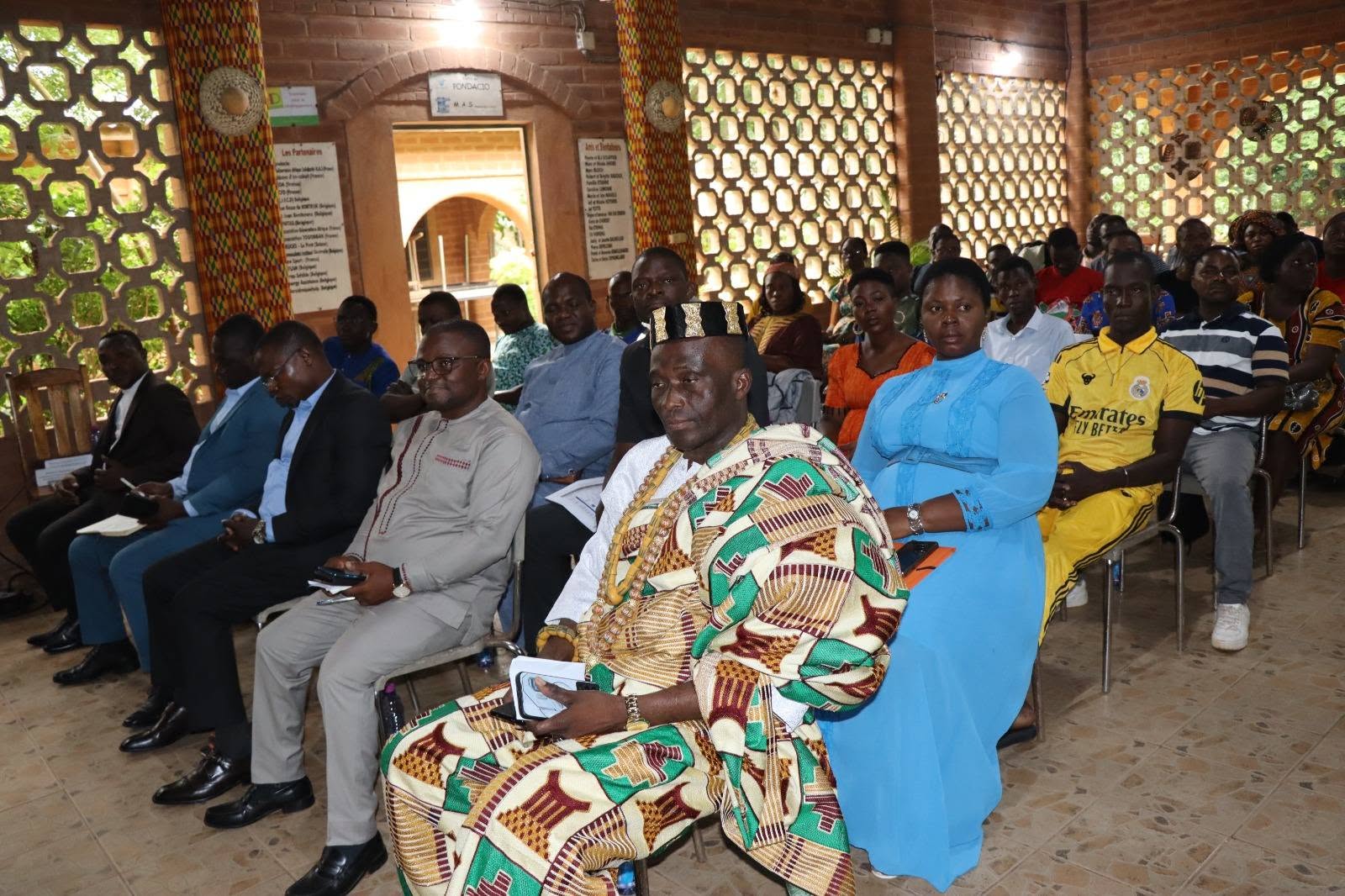
During the handover ceremony, Dotsè Medjina underscored the significant responsibility that accompanies this endowment. He urged the beneficiaries to utilize the equipment with diligence and care, emphasizing that proper management is crucial for ensuring the profitability and long-term viability of their agricultural and livestock operations.
Furthermore, he called upon these young entrepreneurs to fully embrace their new roles and actively contribute to the economic progress of their respective communities, highlighting their potential as catalysts for local development.
A national strategy for Togolese food sovereignty
This pivotal initiative is an integral part of the “Training-profession and support for professional integration” project, originally launched in 2025 by the National Agency for Employment (ANPE), in close collaboration with the Ministry of Agriculture, Fisheries, Animal Resources, and Food Sovereignty.
Through this comprehensive program, Togo aims to move beyond purely theoretical training. Instead, it is building an employment policy that is more directly geared towards fostering the creation of sustainable, income-generating activities. The deliberate focus on the agropastoral sector exemplifies this strategic direction, with the ambitious goal of cultivating a new generation of young producers. These individuals will be equipped to transform their acquired skills into viable businesses, thereby making a lasting contribution to the nation’s food sovereignty and economic resilience.