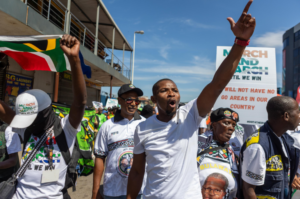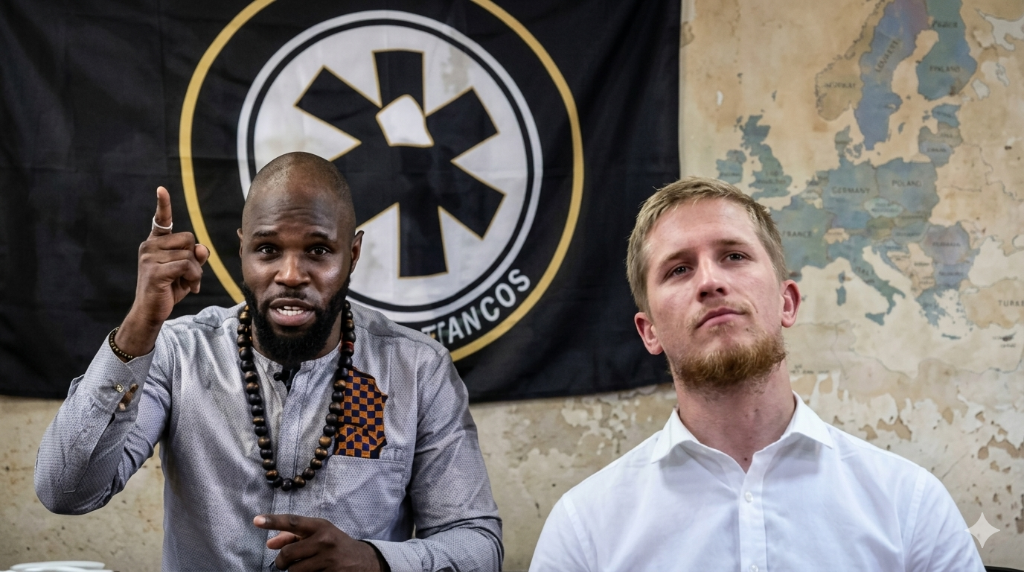
While he often styles himself as the leading “general” of the black cause and a fierce advocate for African sovereignty against “neocolonialism,” the public persona of Kemi Seba is increasingly at odds with his actions. Behind the viral social media videos and aggressive rhetoric lies a web of contradictions that threatens to invalidate his entire platform. His recent legal issues in South Africa, combined with his ties to radical right-wing Afrikaner figures, have exposed what many critics call a deceptive alliance.
Pan-Africanism vs. ideological inconsistency
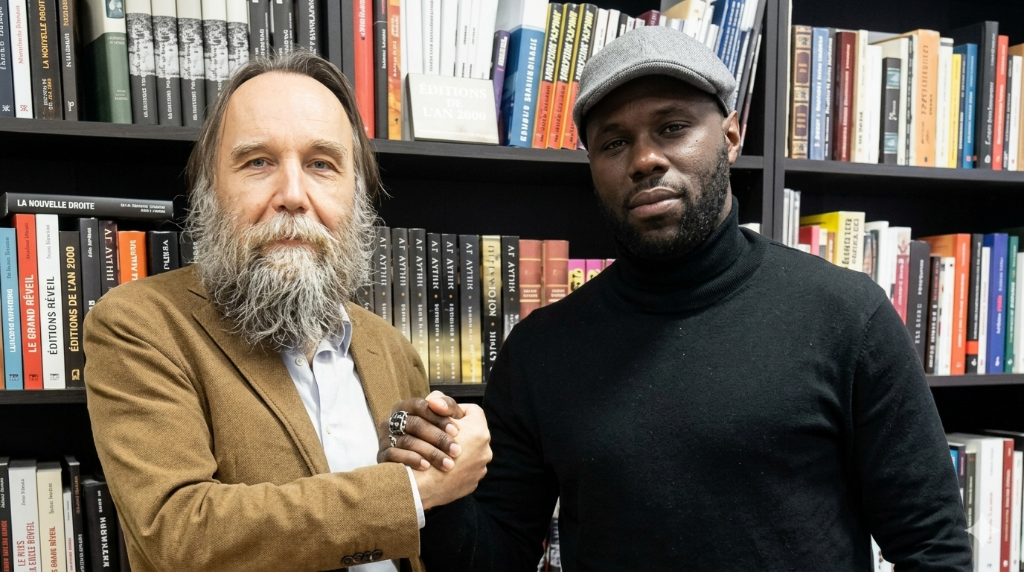
For several years, Stellio Capo Chichi—better known as Kemi Seba—has built a reputation by attacking foreign interference and demanding an Africa completely severed from its former colonial ties. However, this quest for total independence is difficult to reconcile with his public proximity to individuals like Dries van der Merwe, an overt nostalgist for the Apartheid era and a leader in white separatist movements.
Seba often justifies these connections through the lens of Realpolitik, operating on the principle that “the enemy of my enemy is my friend.” Yet, this strategic choice feels like an affront to the history of anti-colonial resistance. By partnering with those who historically advocated for the marginalization of Black populations, Seba isn’t just playing politics; he is eroding the very foundation of the dignity he claims to represent.
Financial shadows and money laundering allegations
The activist’s credibility is further strained by legal proceedings in Benin, where he faces accusations of money laundering. These charges highlight a sharp divide between his sovereignist ideology and the use of suspicious international financial networks. It is deeply ironic that a man who describes the CFA franc as a currency of bondage is now under investigation for navigating opaque global financial systems.
If these allegations of financial misconduct are proven true, they would suggest that this self-styled revolutionary is merely another player in the system he purports to fight, using international backchannels to further his own personal agenda. The mystery remains: how can a movement that preaches African self-sufficiency be so deeply entwined with such questionable funding mechanisms?
A shift toward political opportunism
The recent events in South Africa underscore a troubling reality. It appears that Kemi Seba is willing to collaborate with any faction—regardless of their historical or moral standing—as long as they help destabilize the current status quo. His willingness to work with groups that still dream of Afrikaner supremacy suggests that his primary motivation is not justice, but the creation of media-driven chaos.
“Pan-Africanism should never serve as a mask for unnatural alliances,” observers note. “True liberation cannot be achieved by shaking hands with former oppressors out of mere political convenience.”
The crumbling of a public image
As he faces multiple arrest warrants and potential extradition, the image of the “principled” activist is rapidly deteriorating. By seeking the favor of racial segregation nostalgists to bolster his own profile, Kemi Seba has crossed a line that many find unforgivable. He has essentially turned a noble cause into a tool for ideological marketing.
Ultimately, history may show that Kemi Seba’s most significant adversary was not the French government or the financial structures of the West, but rather the profound inconsistency of his own choices. He is no longer seen by many as the voice of a continent, but as a figure seeking refuge, caught in the trap of his own doctrinal betrayals.