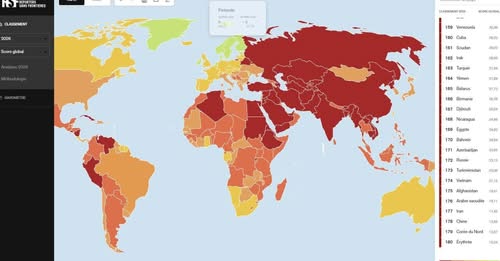
On the occasion of World Press Freedom Day, observed this Sunday, May 3rd, the assessment is profoundly concerning: in the West African region, the act of reporting has evolved into a perilous undertaking, often fraught with danger. Following the ascendancy of military administrations, Mali, Niger, and Burkina Faso — nations united under the Alliance of Sahel States (AES) — are experiencing an unparalleled period of suppression.
Mounting Pressure on Media Professionals
Whether evidenced by the suspension of Malian broadcaster Joliba TV, the cessation of Burkinabe daily L’Observateur Paalga, or the recent abduction of journalist Serge Oulon in Ouagadougou, the tactics of intimidation are escalating. Authorities are now unhesitant in deploying an array of severe measures designed to silence dissenting voices:
- Abrupt cessation of operations for both domestic and international media outlets.
- Arbitrary arrests and instances of forced disappearance.
- Compulsory exile for those who decline to disseminate official state-sanctioned narratives.
Intimidation as a Mechanism of Censorship
The prevailing atmosphere presents media practitioners with a stark dichotomy: acquiescence or silence. According to Ousmane Diallo, a researcher affiliated with Amnesty International, the region is witnessing a progressive constriction of civic freedoms.
« This climate of apprehension, characterized by enforced disappearances, compels numerous journalists into self-censorship, » he elaborates. Essentially, out of fear of punitive actions, journalists ultimately refrain from addressing sensitive topics.
Towards a ‘Conceptual Confinement’?
This authoritative grip on information extends beyond journalists to encompass the general populace. By imposing a singular narrative that extols the ruling juntas, the objective of those in power is to eradicate any critical discernment among citizens.
A local journalist, speaking anonymously, draws parallels between the current circumstances and the era of the Soviet Union. The individual characterizes the Sahel as having transformed into an « information gulag » — a metaphor signifying a metaphorical prison where truth is confined.
The diplomatic alignment of these nations with Vladimir Poutine’s Russia is not merely coincidental in the eyes of observers; it appears to coincide with the adoption of information control methodologies characteristic of authoritarian regimes. The pressing question now revolves around whether a free voice can still resonate in a region where public discourse seems to be progressively stifled.