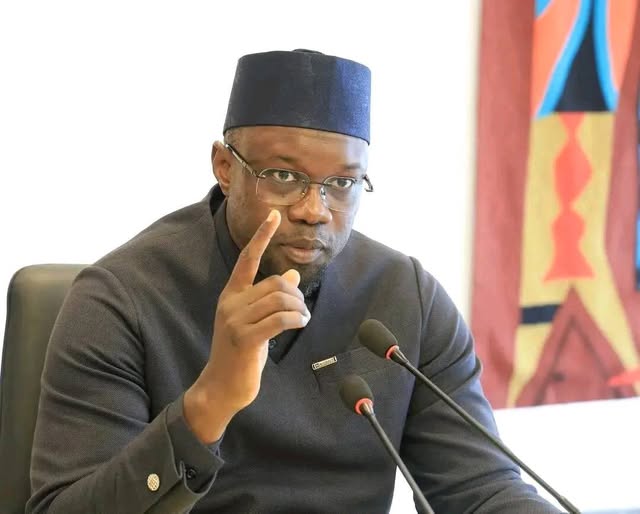
The Prime Minister of Senegal, Ousmane Sonko, has called on government officials to expedite the finalization and commissioning of ongoing public infrastructure projects nationwide. During an interministerial council meeting in Dakar, he emphasized the urgency of removing administrative, financial, and technical bottlenecks obstructing key initiatives.
Maritime and port infrastructure under scrutiny
Sonko directed the Minister of Fisheries and Maritime Economy to accelerate the operational readiness of port and maritime facilities, including expanding public-private partnerships. The projects highlighted include:
- Foundiougne-Ndakhonga port
- Ndangane Sambou fishing quay
- Upgraded Soumbédioune landing point
- Rufisque processing sites
- Maritime affairs agency dredgers in Kaolack and Fatick regions
National infrastructure backlog revealed
A comprehensive audit identified 62 stalled projects, ranging from:
- El Hadj Ibrahima Niass University of Sine-Saloum
- Open digital spaces
- Regional airports in Saint-Louis, Matam, and Kolda
- Ndayane port container terminal
- Cold storage facilities
- Le Joola memorial
- Aristide Le Dantec hospital reconstruction in Dakar
A dedicated committee will oversee financial, administrative, and legal measures to revive these projects, ensuring strict adherence to quality and cost standards.
Sustainability and integrated services prioritized
The Prime Minister stressed the importance of incorporating water, electricity, and telecommunications networks into public project planning. He mandated ministers to ensure proper technical equipment maintenance, sustainable operation models, and long-term upkeep of all infrastructure.
Youth and citizenship centers face deadline
Construction of youth and citizenship centers across multiple regions—Tivaouane, Mbour, Linguère, Ranérou, Bambey, Diourbel, Kaolack, and Tambacounda—must be fully equipped and operational by November 30, 2026.
Agricultural transformation initiatives
Sonko also addressed the development of “Naatangué” village farms and agropoles in Mpal, Adéane, Dioulacolon, and Mbellacadiao. He tasked relevant ministries with collaborating with private partners to establish sustainable business models ensuring both profitability and social impact for these agro-industrial infrastructures.
Alternative funding and asset optimization explored
The Prime Minister proposed various valorization options for public assets, including long-term leases, emphyteutic leases, and public-private partnerships to attract fresh investment. Discussions extended to national stadiums, sports facilities, national parks, nature reserves, and diplomatic real estate holdings abroad.
Finally, Sonko requested proposals for recycling and optimizing state-owned real estate and land assets, including military properties, to maximize their contribution to national development.