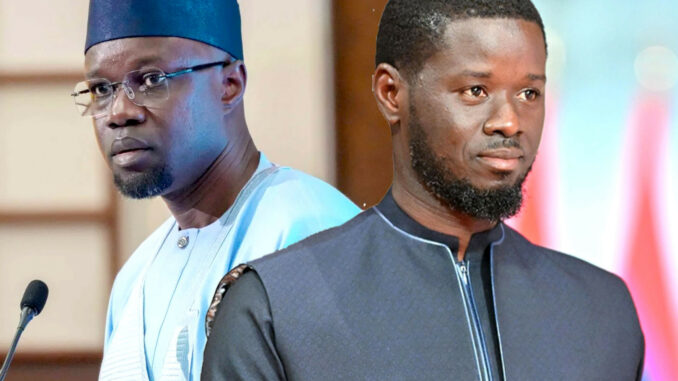
In Senegal, the political landscape this week is marked by the intricate balance of power between President Bassirou Diomaye Faye and Prime Minister Ousmane Sonko. Their contrasting approaches to governance are drawing sharp attention as both leaders navigate the country’s complex socio-political terrain.
President Faye’s national consultation initiative
On May 21, President Faye launches a comprehensive 10-day series of consultations with key stakeholders across Senegal. The initiative invites political parties, civil society organizations, religious leaders, and traditional authorities to participate in what is framed as a national dialogue aimed at fostering unity and collective decision-making. This initiative marks a departure from the previous government’s practice of a single annual dialogue day, signaling a potential shift in governance style.
While some view this as a genuine effort to build consensus, critics argue that the reforms proposed by the administration lack broad-based input. The opposition, in particular, has been vocal about their exclusion from deliberations on critical electoral and institutional changes, raising questions about the inclusivity of the process.
Sonko’s parliamentary address and the question of coordination
Simultaneously, Prime Minister Ousmane Sonko is scheduled to address the National Assembly during a public session of current affairs questions. Though a routine parliamentary event, the timing of his speech has sparked discussions about the underlying dynamics between the two top leaders. Political analysts suggest that the overlapping agendas may reflect an unspoken competition for influence within the executive branch.
Maurice Soundieck Dione, a prominent political scientist, observes that both leaders are vying to shape the national narrative. Meanwhile, Assane Samb, another analyst, emphasizes the need for stronger coordination to prevent perceptions of a fragmented leadership at the highest level of government.
Ongoing power dynamics in Senegal’s executive
The relationship between Faye and Sonko has been a recurring topic of debate since their rise to power. Observers continue to dissect the distribution of authority between the presidency and the prime minister’s office, with many questioning whether their visions for Senegal’s future are aligned. As the political landscape evolves, the interplay between their respective agendas will likely remain a focal point for both supporters and critics.