In a significant shift, French enterprises now hold only a marginal position in major public works projects across Senegal. Their share of public contracts has reportedly dwindled to approximately 5%, a stark contrast to the over 30% now commanded by Chinese companies, which have become ubiquitous in the nation’s pivotal infrastructure developments.
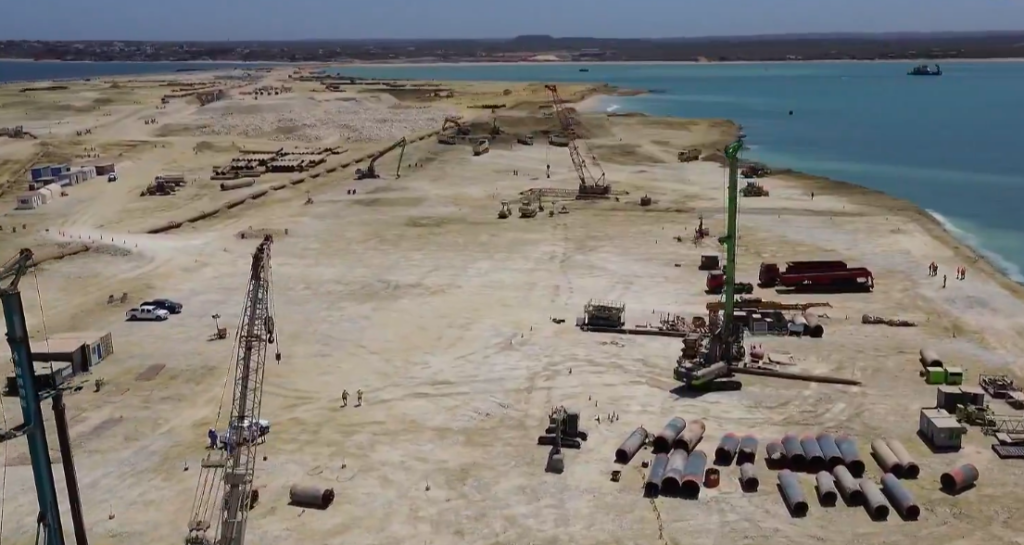
Consider the construction of Senegal’s inaugural deep-water port at Ndayane, south of Dakar. This ambitious project, valued at over 2 billion dollars, is poised to revolutionize the country’s logistics, job creation, and global connectivity, propelling Senegal into a new era. Clarence Rodrigues, the general director for DP World Dakar, highlighted the transformative potential of this complex, designed to accommodate the largest container ships in the Atlantic.
While the Emirati firm DP World spearheads the project, an international consortium predominantly composed of Chinese companies secured the construction contract. David Gruar, the construction director for DP World, explained that numerous global competitors, including many French firms, vied for the contract but ultimately did not prevail. Information suggests that the consortium led by Eiffage submitted an offer that was approximately 20% higher than the chosen bid, leading to its non-selection.
Just a few kilometers away, the emerging city of Diamniadio, intended to alleviate congestion in Dakar, provides another illustration of this evolving landscape. Here, Turkish enterprises have largely won bids for the stadium, train station, hotels, and the majority of residential buildings. An industrial platform, designed to attract foreign investors, complements this development. Bohoum Sow, the secretary general of APROSI, noted the presence of a Tunisian company and a Chinese company on the platform, stating that he was unaware of any French companies established there.
China’s strategic alignment with Senegalese development needs
Bohoum Sow believes that Chinese stakeholders have demonstrated a superior understanding of the local market’s demands and the government’s priorities. An example can be seen in a cardboard packaging factory where Chinese technicians are training Senegalese employees. This initiative is lauded as it addresses specific local needs and showcases a flexible approach to industrial diversification, filling a void in the existing market.
For two decades, China has been channeling substantial investments into Africa, establishing the continent as a crucial pillar of its economic diplomacy. Consequently, Chinese influence is now prominently felt across the region. Bohoum Sow affirmed this shift as a