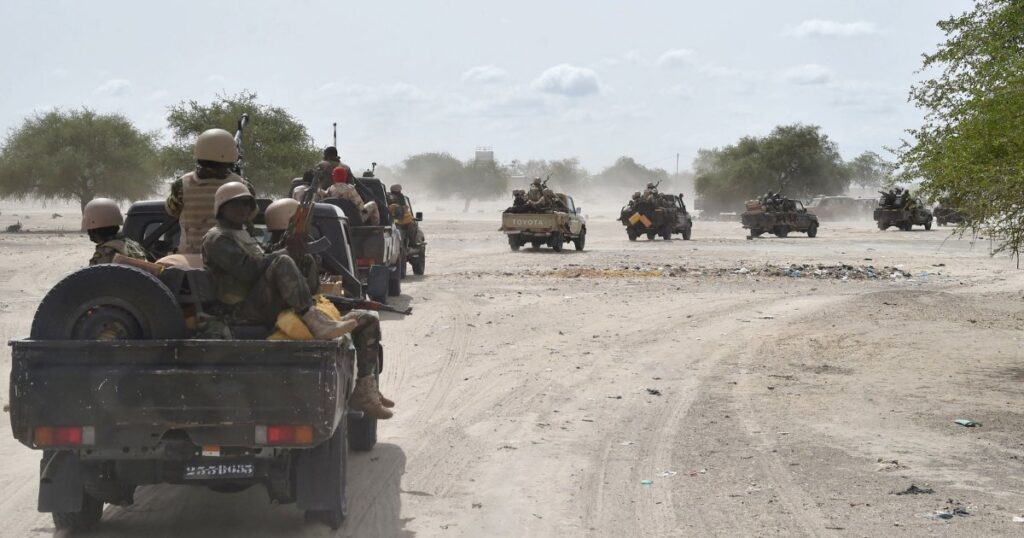
A coordinated regional military offensive has pushed militants from Boko Haram into disarray along the shores of Lake Chad, following sustained aerial bombardments and ground operations. According to intelligence sources and local testimonies, forces from Chad, Nigeria, and Niger have joined forces to dismantle jihadist strongholds in the remote, marshy archipelagos that straddle their borders.
Since Friday, Chadian warplanes have systematically targeted insurgent hideouts on scattered islands in the lake—a sprawling wetland shared with Cameroon—which has served as a fortified base for both Boko Haram and the Islamic State’s West Africa Province (ISWAP) since the insurgency began in 2009.
collateral damage and civilian suffering
The relentless strikes have claimed dozens of lives, including Nigerian fishermen working in areas under Boko Haram control. These civilians were reportedly paying so-called “taxes” imposed by the extremist group to access fishing grounds. Graphic footage obtained from local hospitals in Bosso, Niger, shows victims with severe burns, highlighting the human cost of the campaign.
Suleiman Hassan, a fisherman who fled the violence, recounted to reporters in Maiduguri—the capital of Nigeria’s Borno State—how jihadists are abandoning their island camps under the barrage of airstrikes. “Boko Haram fighters are fleeing the islands near Shuwa, along the borders of Nigeria, Niger, and Chad,” he said, naming several key locations such as Dogon Chukwu, Kangarwa, Gashakar, Yawan Mango, and Kwatar Mota.
key battlegrounds and strategic shifts
The island of Kaukeri, a long-standing bastion of the group, became the focal point of recent clashes as Chadian troops engaged insurgents directly. These operations follow a series of devastating attacks by Boko Haram, including an ambush that killed two high-ranking Chadian generals last week. Earlier, an assault on a military outpost along the lake’s edge left at least 24 soldiers dead.
“Air strikes are being jointly coordinated by Chad, Nigeria, and Niger, with each country deploying two fighter jets,” revealed a Nigerian intelligence source who asked to remain anonymous. According to this source, the remaining jihadists and their families are now trapped along the lake’s shoreline, reluctant to advance toward ISWAP-controlled territories—a rival faction that split from Boko Haram in 2016.
regional response and humanitarian crisis
The decade-long insurgency has left thousands dead and displaced millions, primarily in Nigeria’s northeast. Violence has since spilled over into neighboring Niger, Chad, and Cameroon, prompting these nations to reactivate the Multinational Joint Task Force—established in 1994—to counter the growing threat.